 and now, NASCAR Racing Sponsor


Best Air Conditioning Systems for Large Homes in 2025
-
 By
Michael Haines
By
Michael Haines
- Jun 1, 2025

Hi, I'm Michael Haines. I’ve spent decades helping families size, select, and install the right AC systems for their homes. And one of the most common problems I see? People using a one-size-fits-all mindset in houses that need more than a basic setup. Whether you live in a new construction with vaulted ceilings or a 1990s ranch with an added-on sunroom, there’s a smarter way to cool a big house. Let’s walk through it together.
What Counts as a “Large Home” in HVAC Terms?
In HVAC, any home above 2,000 to 2,500 square feet typically qualifies as a “large home.” If your house has multiple floors, open living spaces, and wide hallways that connect rooms, cooling becomes more complex than just placing one system at the center.
And here’s the tricky part — many homeowners assume that just buying a bigger system will solve the issue. But bigger isn’t always better. A 5-ton system that isn’t zoned correctly might leave the upstairs roasting and the downstairs freezing.
The real solution for a large home comes down to system type, airflow design, and energy management.
The Most Reliable Cooling Systems for Large Homes in 2025
The most effective options fall into three categories: central split systems, multi-zone mini-splits, and hybrid systems. Let’s walk through what makes each one a good fit — or not — depending on your layout.
Central Split Systems (With or Without Zoning)
Still the most common option in U.S. homes, a central air split system has an outdoor condenser and an indoor air handler connected by refrigerant lines. The indoor unit pushes air through ductwork to cool the house.
Pros:
-
Great for homes with existing ductwork
-
Can cool large areas efficiently
-
Compatible with multi-speed and variable-speed blowers
-
Easily combined with furnace or heat pump
Cons:
-
No zoning unless specifically added
-
Less efficient in multi-floor homes without zoning
-
Ductwork leaks reduce efficiency
If your house has one large open floor plan and a single story, a central system in the 4 to 5-ton range (48,000 to 60,000 BTUs) may be enough on its own. But for two-story homes or layouts with hot zones (like sunrooms or kitchens over garages), central alone isn’t usually sufficient.
In 2025, high-SEER2 central air systems make a big difference in monthly utility bills. Look for a system with a SEER2 rating of at least 15.2. That number means it cools more effectively while using less electricity.
How to Tell If You Need More Than One System
Here’s a simple test: if your upstairs is always several degrees hotter than your downstairs, you either need zoning or a second system.
Even the most powerful central AC can’t push enough cold air evenly through an entire large home without help. Air naturally settles downstairs. The result? The second floor bakes while your thermostat insists everything is fine.
The fix is either to add zoning dampers (more on that in a second) or split the house into two systems — one for upstairs, one for downstairs. That might mean two smaller systems instead of one oversized system that underperforms.
What Is a Zoned Central System and Does It Help?
Zoning allows a single central air system to cool different areas of the house to different temperatures. Motorized dampers in the ductwork open and close based on which thermostat is calling for cool air.
Zoning is ideal for:
-
Multi-story homes
-
Homes with hot spots or bonus rooms
-
Houses with large glass exposure on one side
-
Families who want different comfort levels in different rooms
By zoning your system, your 5-ton AC can behave like three smaller systems — only cooling where it’s needed, when it’s needed.
Multi-Zone Mini-Split Systems for Large Homes
Mini-split systems are usually thought of for additions or single rooms, but newer multi-zone systems in 2025 make them viable for entire houses.
Each zone has an indoor air handler connected to a single outdoor unit. You can have up to 5 or even 8 indoor heads per condenser depending on the model.
Pros:
-
No ductwork required
-
Independent temperature control for each room
-
Highly energy efficient (some exceed 20 SEER2)
-
Ideal for homes with additions or inconsistent insulation
Cons:
-
Higher upfront cost for equipment
-
Installation may require more wall work
-
Aesthetics (indoor units mounted visibly on walls)
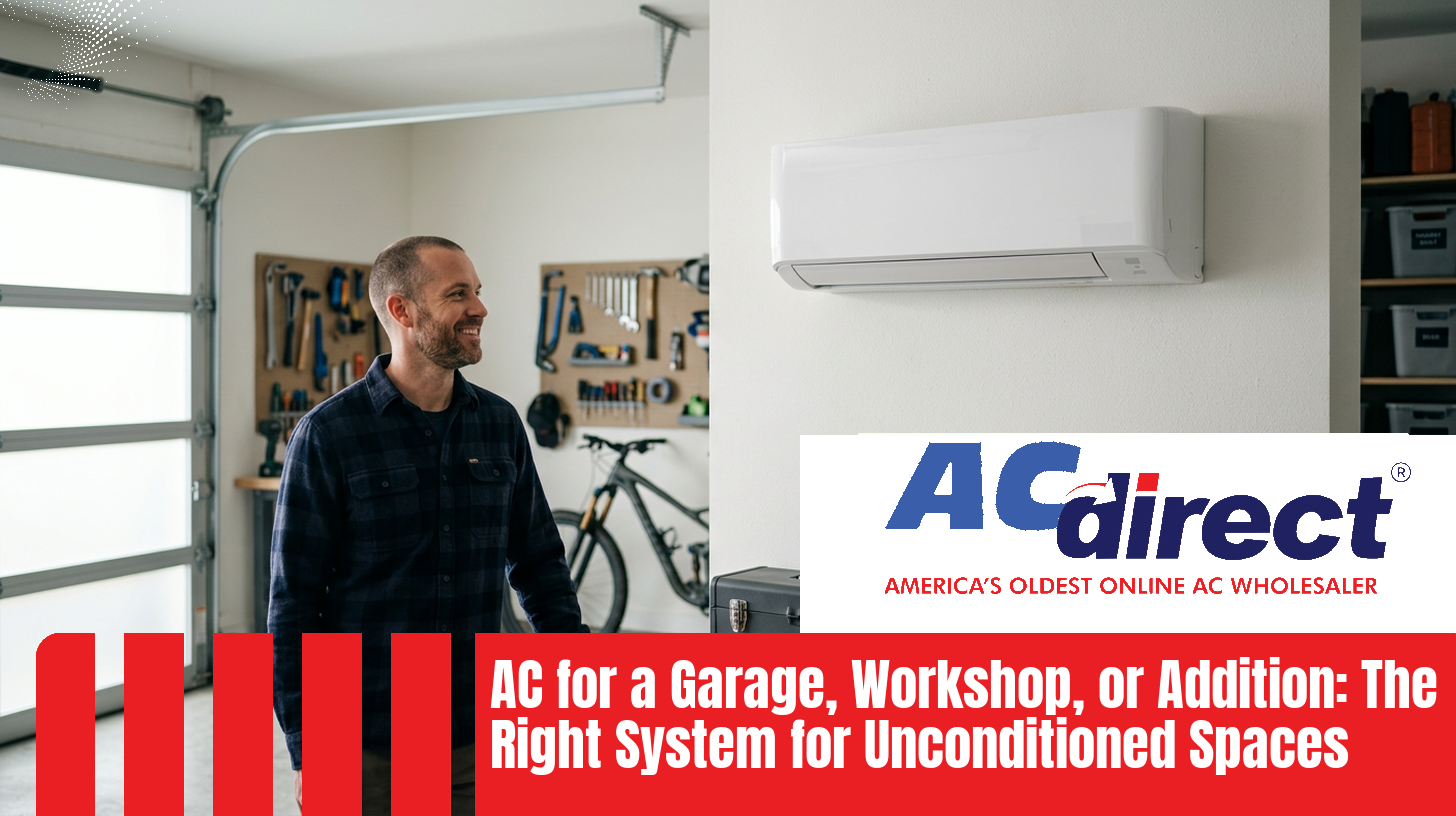
For large homes with lots of disconnected spaces or homes without central ducting, a multi-zone mini-split can outperform traditional AC. It can also be used alongside a central system — especially useful for bonus rooms, sunrooms, or finished garages.
If you go this route, make sure your home’s total cooling load (measured in BTUs) is balanced properly between zones to avoid overworking one condenser.
What Size System Do I Need for My Large Home?
Here’s a rough starting point:
-
2,000–2,500 sq. ft. → 3.5 to 4 tons (42,000–48,000 BTUs)
-
2,500–3,000 sq. ft. → 4 to 5 tons (48,000–60,000 BTUs)
-
3,000+ sq. ft. → May need two systems or zoned ductwork
Of course, these numbers assume average ceiling height and insulation. Vaulted ceilings, poor attic insulation, or sun-heavy orientations can easily add 10 to 20 percent to your cooling needs.
It’s always better to base your final decision on a Manual J load calculation. If you haven’t had one done yet, most HVAC pros or suppliers can walk you through it based on your home specs.
Why Oversized Systems Waste Money
Homeowners often assume a bigger unit means better performance. But in cooling, too big can mean trouble.
Oversized systems short-cycle. That means they cool your home too fast, shut off, and start again a few minutes later. This wears out components, increases humidity, and uses more electricity than necessary.
You’ll also get inconsistent temperatures from room to room, especially on days when the outside temperature is moderate.
A right-sized system runs longer, steadier cycles and removes moisture from the air while keeping your home more consistently comfortable.
Key Takeaways
-
Central systems work well when ductwork is balanced and sized correctly
-
Zoning solves upstairs/downstairs imbalance in large homes
-
Multi-zone mini-splits offer flexibility and high efficiency without ducting
-
Bigger is not better — oversized systems cost more and work worse
If you already have a central system and are struggling with uneven cooling, it may not be a system issue. Check for closed vents, blocked returns, or insulation problems before assuming you need to upgrade.
If you’re building or remodeling, now’s the time to think about airflow zones, return vent placement, and where your thermostat lives. Those small decisions make big differences later.
FAQs
What is the most suitable air conditioner for a large house?
It depends on your layout. A zoned central system or a dual-system setup (one per floor) usually performs best. Large open-concept homes may benefit from a hybrid of central plus ductless mini-splits for tricky rooms.
Should I replace my existing AC if it’s not cooling the whole house?
Not necessarily. First, check ductwork for leaks or blockages. If airflow is fine but one part of the home stays warm, zoning or an additional system may help. Replacement makes sense if your current system is over 15 years old or underpowered for your square footage.
How many BTUs does a 3,000 sq. ft. home need?
Typically between 60,000 and 72,000 BTUs, depending on ceiling height, sun exposure, and insulation. This is usually 5 to 6 tons of cooling. You may need two systems to deliver that evenly across floors.
Can a mini-split cool a large home?
Yes, if it’s a multi-zone model with enough capacity. Some systems allow up to eight indoor units connected to one outdoor condenser. These are excellent for homes without ducts or those needing room-by-room control.
Is it cheaper to run two small ACs or one large one?
Two smaller systems can be more efficient if they’re zoned correctly and only cool where needed. Running one large system that cools unused areas all day wastes money.