 and now, NASCAR Racing Sponsor


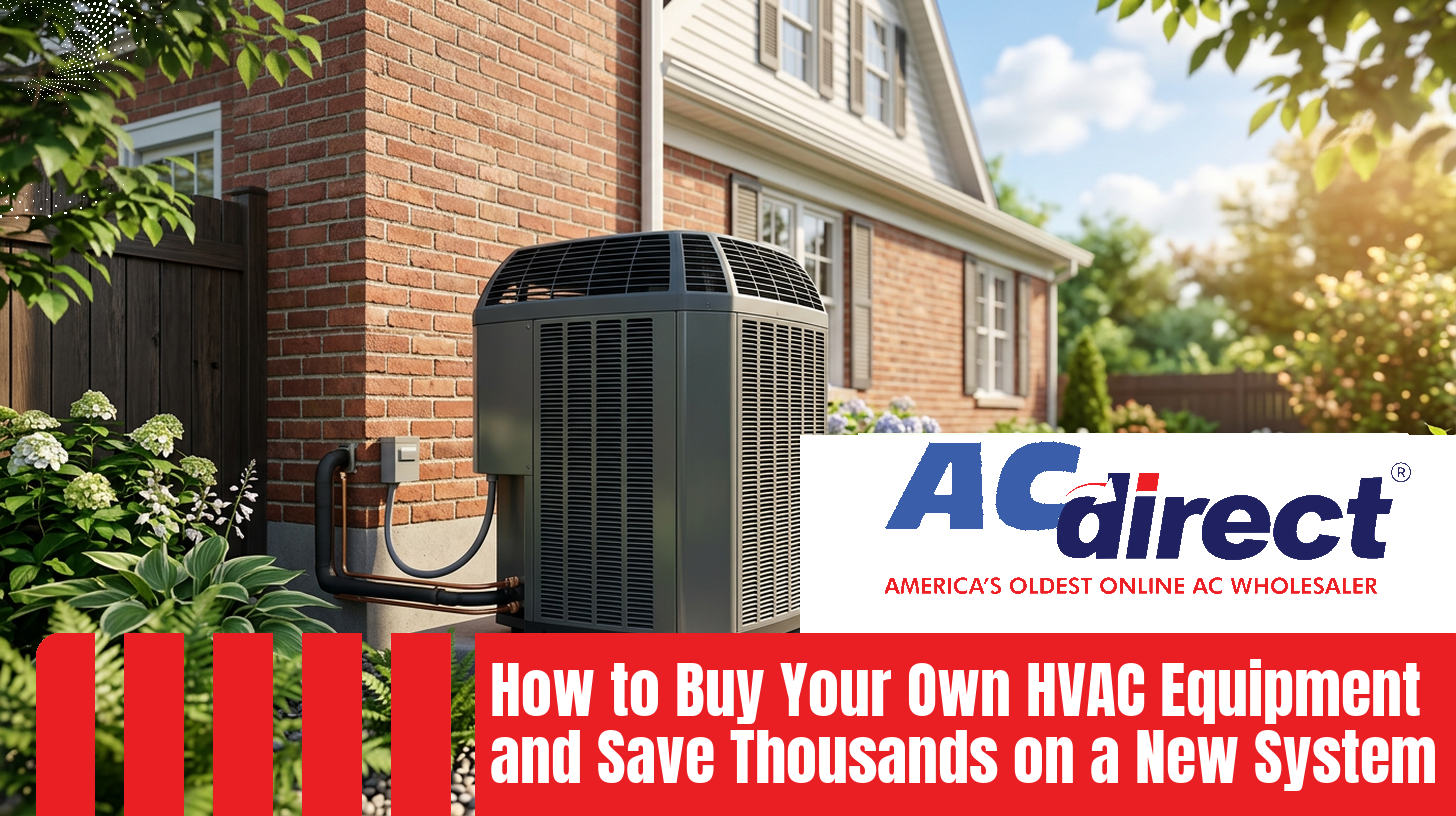
How to Buy Your Own HVAC Equipment and Save Thousands on a New System
-
 By
Michael Haines
By
Michael Haines
- Mar 19, 2026
The step-by-step process for purchasing your own air conditioner, furnace, or heat pump at wholesale and hiring a contractor for labor only. Yes, it's possible. Yes, it's legal. Here's exactly how it works.
Somewhere right now, a homeowner is sitting at a kitchen table staring at a quote for $10,000 or more to replace a central air conditioner. The equipment on that quote might cost $3,500 wholesale. The labor to install it might run $1,500 to $2,500. So where did the rest of the money go? It went to markup. Contractors typically add 20 to 50 percent on top of the equipment cost before it ever reaches your invoice. That markup covers their overhead, their profit margin, and the convenience of bundling everything into one price. It is the standard way the HVAC industry works. But it is not the only way.
There is another option that most homeowners never hear about: buy the equipment yourself at wholesale, then hire a licensed contractor to install it. You pay for their skill and labor. You skip the markup on the hardware. The savings can easily reach $1,500 to $4,000 or more on a typical residential system.
This article walks through the entire process, from figuring out what size you need to finding a contractor who will do a labor-only install. We will cover the warranty question, the permit question, and the "will a contractor even agree to this?" question. All of it.
A fully installed residential HVAC system in the United States typically runs between $5,000 and $12,000 or more, depending on the equipment type, efficiency rating, and complexity of the installation. That number includes two very different things bundled together:
- Equipment cost - the outdoor condenser, the indoor air handler or furnace, the thermostat, the refrigerant line set, and related components.
- Labor and overhead - the technician's time, the truck roll, permits, insurance, disposal of old equipment, and the company's operating costs.
The problem is that when these two things are bundled into a single quote, you have no way to see where your money is actually going. And the equipment portion almost always includes a significant markup.
| Cost Component | Typical Bundled Quote | Supply-Your-Own Approach |
|---|---|---|
| Equipment (wholesale cost) | $3,500 | $3,500 |
| Contractor markup on equipment (20-50%) | $1,200 to $1,750 | $0 |
| Labor and installation | $1,800 to $2,500 | $1,800 to $2,500 |
| Permits, disposal, misc. | $400 to $600 | $400 to $600 |
| Company overhead and profit | $1,000 to $1,500 | $500 to $1,000 |
| Total | $8,400 to $9,850 | $6,200 to $7,600 |
These are representative numbers. Actual costs vary by region, system type, and installation complexity. The point is that removing the equipment markup consistently saves $1,500 to $4,000+.
This is not complicated, but the order matters. Here is how to do it right.
This is the most important step, and it is the one most homeowners skip or guess at. An undersized system will run constantly and never keep up. An oversized system will short-cycle, waste energy, and wear out prematurely. The proper way to size an HVAC system is through a Manual J load calculation, which accounts for your home's square footage, insulation levels, window area, climate zone, and more. Many contractors will perform this calculation as part of a quote. You can also use rough estimates as a starting point, but always confirm with a professional before purchasing.
Once you know the size (measured in tons of cooling capacity), you can select a system. Consider whether you want a straight air conditioner paired with a furnace, a heat pump for both heating and cooling, or a dual-fuel hybrid setup. Pay attention to the efficiency ratings: SEER2 for cooling efficiency and HSPF2 for heating efficiency on heat pumps. Higher numbers mean lower operating costs. Also consider the refrigerant type. Newer systems use R-32 or R-454B, which are more environmentally friendly and will be easier and cheaper to service long-term as R-410A gets phased out.
This is where the savings happen. Retailers like AC Direct sell the same equipment that contractors install, at wholesale pricing, directly to homeowners. The system ships to your door or your contractor's shop. You are buying from an authorized dealer, which means the manufacturer warranty is fully intact.
You need a licensed, insured HVAC contractor for the physical installation. This includes running refrigerant lines, making electrical connections, brazing, charging the system with refrigerant, connecting ductwork, and commissioning the system. This work requires EPA Section 608 certification for refrigerant handling and often requires a permit. Do not attempt this yourself unless you hold the appropriate licenses. More on finding the right contractor below.
Most jurisdictions require a mechanical permit for HVAC replacements. Your contractor typically pulls this permit and schedules the inspection. Make sure this is included in the scope of their labor quote. A passed inspection protects you legally and ensures the system meets local building codes.
After installation, register the equipment with the manufacturer. Most brands offer enhanced warranties (often 10 years on parts) when you register within 60 to 90 days of installation. Keep your purchase receipt and the contractor's installation invoice together for your records.
This is the question that stops most homeowners before they even start. The short answer: yes, many will. But you need to know who to look for and how to approach it.
Some contractors refuse. They make a significant portion of their profit from equipment markup, and a labor-only job is less profitable for them. That is their right. Do not argue with them. Just move on to the next name on the list.
Other contractors are perfectly happy to do labor-only installations, especially smaller shops and independent technicians who value steady work over equipment sales. Some actively prefer it because they do not have to carry inventory, manage supplier relationships, or field warranty calls on equipment they sold.
- State HVAC license - Verify with your state's contractor licensing board. This is non-negotiable.
- Proof of insurance - General liability and workers' compensation. Ask for a certificate.
- EPA 608 certification - Required by federal law for anyone handling refrigerants. The EPA regulates refrigerant handling strictly.
- Willingness to pull a permit - If they suggest skipping the permit, find someone else.
- Reviews and references - Check Google reviews, Yelp, or ask for references from recent labor-only jobs.
Getting the size right is critical. An oversized system wastes energy by turning on and off too frequently. An undersized system runs nonstop and never reaches the temperature you set. Here is a rough starting guide based on square footage, but your installer should always verify this with a load calculation specific to your home.
| Home Size | Estimated Cooling BTUs | Typical System Size |
|---|---|---|
| 800 to 1,000 sq ft | 18,000 to 24,000 BTU | 1.5 to 2 Ton |
| 1,000 to 1,300 sq ft | 24,000 to 30,000 BTU | 2 to 2.5 Ton |
| 1,300 to 1,700 sq ft | 30,000 to 36,000 BTU | 2.5 to 3 Ton |
| 1,700 to 2,100 sq ft | 36,000 to 42,000 BTU | 3 to 3.5 Ton |
| 2,000 to 2,500 sq ft | 42,000 to 48,000 BTU | 3.5 to 4 Ton |
| 2,400 to 3,000 sq ft | 48,000 to 60,000 BTU | 4 to 5 Ton |
Your installing contractor should perform or reference a Manual J load calculation for a precise recommendation. For more detail, see our complete sizing guide.
This is the concern that keeps people up at night. If you buy the equipment yourself, does the manufacturer warranty still apply? The answer matters, so let's be specific.
Manufacturer parts warranties apply to the equipment, not to who sold it. When you buy from an authorized dealer like AC Direct, the equipment comes with the same manufacturer warranty it would carry if purchased through any other authorized channel. You register the warranty with the manufacturer after installation, just like you would with any purchase.
Most major manufacturers offer a base 5-year parts warranty, which extends to 10 years when you register the product within a specified window (typically 60 to 90 days after installation). This registration process is the same regardless of where you bought the system.
One thing to be aware of: some contractors offer their own labor warranty on top of the manufacturer's parts warranty when they sell and install a bundled system. If you supply your own equipment, you will typically not get a labor warranty from the installer unless you negotiate one separately. Ask about this upfront when collecting labor quotes. Some contractors offer a 1-year labor warranty on their work regardless of who supplied the equipment.
A common worry on forums like Reddit's r/HVAC: if something goes wrong, will the contractor blame the equipment and the equipment supplier blame the installer? This can happen, but it is not unique to the supply-your-own approach. It happens with bundled installs too. The best protection is documentation. Keep a copy of the installation invoice showing the contractor's license number, the permit number, and a record that the system was properly charged and commissioned. If a problem arises, having this paperwork makes the warranty claim process straightforward.
When shopping for equipment, you will see acronyms on every product page. Here is what they mean in plain terms and why they matter to your wallet.
You can verify any unit's published efficiency ratings through the AHRI Directory of Certified Products. This independent database confirms performance claims so you are not relying on marketing alone.
The HVAC industry is in the middle of a refrigerant transition. R-410A, the standard for the past two decades, is being phased down due to its high global warming potential. Newer systems use R-32 or R-454B, which are more environmentally friendly and will be easier and cheaper to service in the years ahead. If you are buying a new system today, choosing a unit with a next-generation refrigerant is a smart long-term move. The EPA's refrigerant management regulations provide background on the phasedown timeline.
Here is a detail that surprises many homeowners: the federal tax credits under the Inflation Reduction Act apply to the equipment, not to how you bought it. If you purchase a qualifying heat pump or high-efficiency AC system yourself and have it professionally installed, you are still eligible for the same tax credits as someone who bought a bundled package from a contractor.
The credit covers 30% of the cost of the equipment and installation combined, up to the applicable cap. Keep your receipts for both the equipment purchase and the contractor's labor invoice. You claim the credit on your federal tax return. For current details and eligible models, visit the AC Direct rebate page.
This approach works well when done correctly. But there are a few ways to get it wrong.
- Do not install it yourself (unless you are a licensed HVAC technician). Refrigerant handling requires EPA Section 608 certification. Electrical work may require a licensed electrician depending on your jurisdiction. An improper install can void the warranty, create safety hazards, and violate building codes. The labor savings from DIY are not worth the risk.
- Do not guess the size. Buying a 3-ton system because your neighbor has one is not a sizing strategy. Homes with different insulation, window area, ductwork, and sun exposure can require very different equipment. Get a load calculation.
- Do not skip the permit. An unpermitted installation can cause problems when selling your home, filing an insurance claim, or dealing with a warranty issue. Permits exist to protect you.
- Do not ignore the ductwork. According to the U.S. Department of Energy, duct leakage in a typical home can account for 20 to 30 percent of energy loss. Putting a brand-new high-efficiency system on leaky ducts is like buying a fuel-efficient car and driving it with the windows down.
- Do not forget to register the warranty. This step is free, takes five minutes, and typically doubles your parts warranty from 5 years to 10 years. Do it within 60 to 90 days of installation.
That is their policy, not a universal rule. Find a contractor who is comfortable with labor-only installs. There are plenty of them. The manufacturer's parts warranty is between you and the manufacturer, not the contractor.
This is a legitimate concern, and it is the reason Step 1 (sizing) matters so much. AC Direct's customer support team can help you match a system to your requirements, and your installing contractor should confirm the selection before work begins. Between those two checkpoints, the risk of a mismatch is very low.
It is easier, in the same way that buying a car from the first dealership you walk into is easier. Convenience has a price. If you are comfortable paying the markup for someone else to handle the selection and purchasing, that is a perfectly valid choice. This article is for the people who would rather put that $2,000 to $4,000 toward something else.
AC Direct ships most in-stock systems within 1 to 3 business days, with free shipping on orders over $1,500. Coordinate the delivery date with your contractor's availability before placing the order so the equipment is on site when they arrive to install it.
The best time to buy HVAC equipment is before you need it desperately. When your system fails on the hottest day of July or the coldest night in January, urgency takes over and you lose all negotiating leverage. Contractors charge premium rates for emergency installs, and you are more likely to accept the first quote without shopping around.
If your current system is 12 to 15 years old and showing signs of decline (rising energy bills, uneven temperatures, frequent repairs, strange noises), start researching now. Buy in the spring or fall when demand is lower, contractor schedules are more flexible, and you can take the time to choose the right equipment at the right price.
Buying your own HVAC equipment and hiring a contractor for labor only is not a hack, a loophole, or a gamble. It is a straightforward purchasing decision that separates two costs (equipment and labor) that the industry has traditionally bundled together for its own convenience. The equipment comes with the same manufacturer warranty. The federal tax credits still apply. The installation quality depends on the contractor you hire, not on who sold you the box.
The typical homeowner saves $1,500 to $4,000 or more this way. On the higher end, with a multi-zone heat pump or a large system, the savings can be even larger. The process requires a little more homework than handing everything to a single contractor, but for most people, an afternoon of research translates directly into thousands of dollars kept in your pocket.
AC Direct sells directly to homeowners and contractors at wholesale prices. Same manufacturers. Same warranties. No markup. Browse complete systems, or call our team to help match the right equipment to your home.