 and now, NASCAR Racing Sponsor


Types of AC Systems for Each Room in 2025
-
 By
Michael Haines
By
Michael Haines
- Jun 2, 2025

Hi, I'm Michael Haines. Over the years, I’ve answered the same question in hundreds of ways: “What’s the best AC system for my room?” And the truth is, it depends on the room. A setup that works great in a master bedroom won’t do a thing for a sunroom or a second-story home office. So this post breaks it down by area, using what I’ve seen work for real families across the country. Let’s get into it.
Room-by-Room AC Solutions That Actually Work
Different rooms have different cooling needs. Layout, square footage, insulation, appliance use, and even the number of windows can all impact what kind of system will work best. Here's how to match each room to the right cooling strategy.
Bedrooms
Best Option: Ducted Central AC or Ductless Mini-Split
Bedrooms don’t need aggressive airflow. In fact, too much cold air can be uncomfortable at night. What you want here is quiet, steady, and even cooling.
If you already have a central system, make sure there are individual dampers in the ductwork to balance airflow into bedrooms. If your central system doesn’t reach certain rooms well — often the case with converted attics or basement bedrooms — a ductless mini-split is the best add-on. It allows you to fine-tune temperature while keeping noise levels down.
Tip: Ceiling fans help circulate air, but they don’t lower the temperature. Use them in combination with your system, not instead of it.
Living Rooms and Great Rooms
Best Option: Zoned Central System or High-Capacity Mini-Split
Living rooms tend to have wide open space, vaulted ceilings, and a lot of natural light. That creates a significant load. In two-story homes, the living room often sits below the hottest part of the house, the second floor, which can make it harder to cool from a single central system alone.
If your central system is too small to handle the full load, consider a zone damper that prioritizes the living area when needed. For homes without ductwork, a high-BTU wall-mounted mini-split can handle living room heat surprisingly well, especially in newer models with SEER2 ratings over 20.
Real-world tip: Make sure your thermostat isn't located in the living room if that area has a lot of heat gain. It can cause the rest of the home to freeze before the system shuts off.
Kitchens
Best Option: Mini-Split or Zone-Controlled Central System
The kitchen is often the hottest room in the house, thanks to stoves, ovens, and poor airflow. That heat gain can throw off your whole system if you don’t plan for it.
If you’re renovating or have open ductwork access, installing a dedicated supply vent with a zone damper for the kitchen can help. If not, a ductless unit mounted high on the wall away from cooking grease will give you direct control and reduce hot zones.
Try not to size your whole system around the kitchen’s heat load alone. Otherwise, the rest of your house may end up too cold.
Home Offices
Best Option: Room-Specific Mini-Split or Smart Vent Dampers
Offices are small, often closed off, and filled with heat-producing electronics. If you run a computer, printer, and multiple monitors, you’ve already got an internal heat source that will affect comfort.
A small mini-split in the 9,000 to 12,000 BTU range can keep the space steady without impacting the rest of your house. Alternatively, if you have smart vents or zone dampers, redirect more airflow into the office during the day and scale it back at night.
Upstairs Bedrooms or Bonus Rooms
Best Option: Second Central System or Zoned Ducted System
Heat rises. Upstairs rooms are almost always warmer than downstairs, especially in the late afternoon. If your home has a single central air conditioner and it’s struggling to keep the upstairs cool, the issue is likely airflow imbalance.
Adding a second system just for the upstairs is often more cost-effective in the long run than replacing the main system with a larger one. A two-system home also lets you set independent temperatures by floor, which saves money.
Important: Don’t forget return air paths upstairs. If your central system doesn’t have a way to pull air back down from the second floor, cooling will be uneven no matter how powerful the system is.
Sunrooms
Best Option: Ductless Mini-Split with High SEER2 Rating
Sunrooms and Florida rooms are some of the hardest areas to cool. Glass walls, direct sunlight, and poor insulation all work against you.
A traditional central system will struggle to handle the sudden heat spikes from a sunroom. The best solution is a standalone mini-split with a high SEER2 rating and inverter-driven compressor. It can ramp up cooling quickly when needed and slow down when temperatures stabilize.
Avoid: Running ductwork to a sunroom from your central system. You’ll lose too much pressure and may violate code depending on how well the space is insulated.
Garages and Workshops
Best Option: Ductless AC Unit or Portable AC with Vent
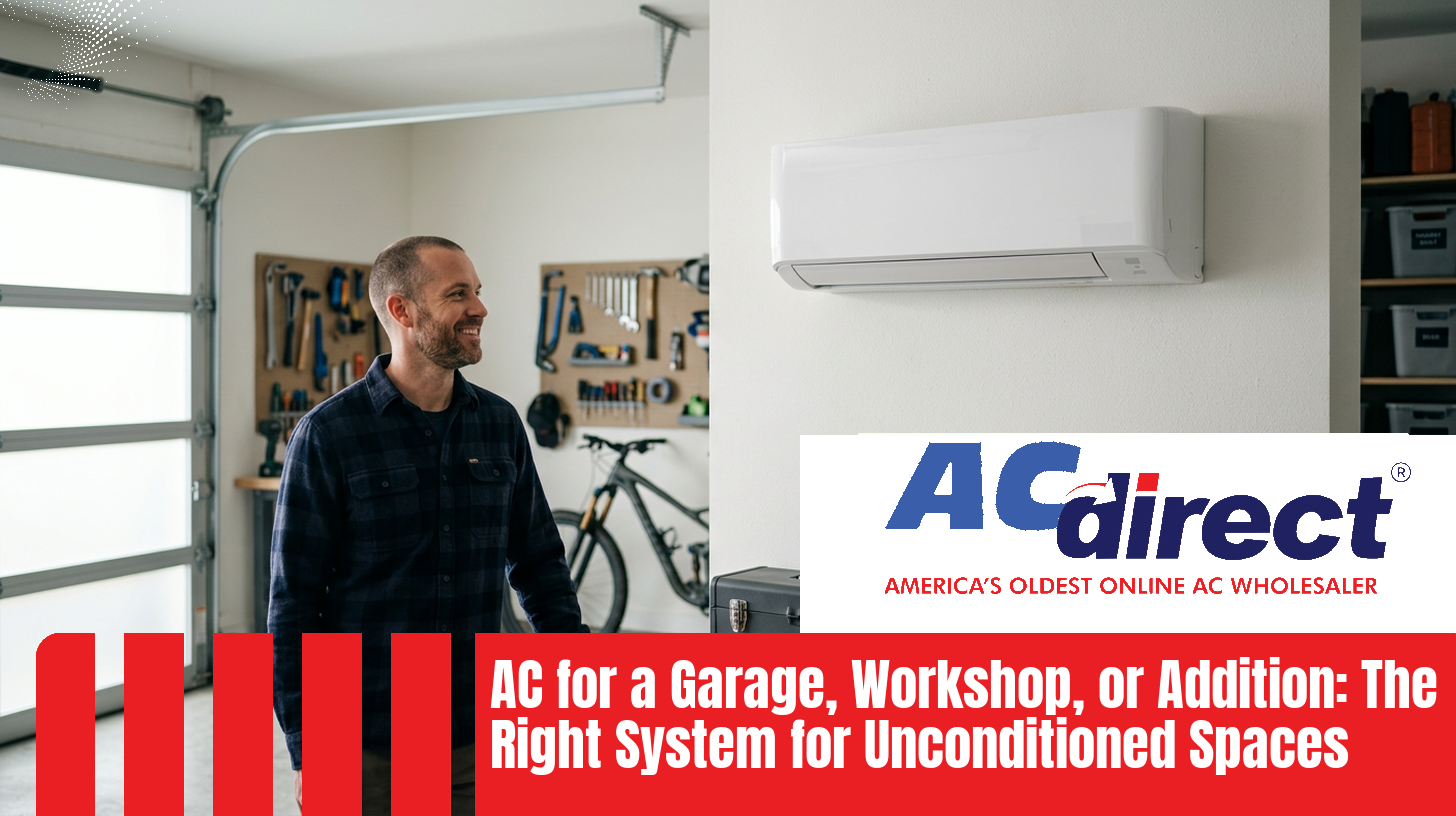
Garages usually aren’t insulated or part of the home’s HVAC design. If you spend time out there — whether for work, projects, or just staying cool — a dedicated ac unit is the way to go.
A wall-mounted ductless system gives you reliable cooling year-round. Some models also include heat pumps for winter. If permanent installation isn’t an option, a portable unit with a proper exhaust vent can give you some relief.
Just don’t expect it to keep the entire garage icy cold in midsummer unless you add insulation first.
Basements
Best Option: Central System with Supply Vent or Dehumidifying Mini-Split
Basements are often cooler than the rest of the home but can feel damp or musty. You don’t always need active cooling, but you do need humidity control.
If your home already uses a central air system, adding a basement supply vent and return can stabilize temperature and dry things out. For finished basements, a small-capacity ductless system with a dry mode works well.
Bonus tip: Never oversize a basement unit. You'll end up with short cycles and even more moisture.
Laundry Rooms
Best Option: Passive Ventilation or Smart Fan Integration
Laundry rooms generate a lot of moisture and radiant heat. Most homes don’t run ducts into laundry areas, and that’s okay. You don’t always need a dedicated AC unit — just better airflow.
If you have a zoned system, make sure the nearest vent stays open while doing laundry. You can also install a wall-mounted exhaust fan with a timer to pull humid air out quickly.
For large homes, treating laundry rooms like small bathrooms — with ventilation over temperature control — is the right call.
When a Single System Isn’t Enough
Sometimes your home just can’t be served by one system alone. Here are signs you may need more than one:
-
Upstairs stays hot no matter how low you set the thermostat
-
Bonus rooms, sunrooms, or additions are always uncomfortable
-
Thermostat location causes overcooling or uneven cycling
-
Ductwork can’t be extended or balanced effectively
In those cases, a combination of central and ductless solutions usually makes the most sense. You can install one high-capacity ac unit for the main areas of the home and use ductless units to supplement rooms that need individual attention.
FAQs
What is the best type of air conditioner for a large open living room?
For large living rooms, either a zoned central system or a high-BTU ductless mini-split works best. The right option depends on duct access and total cooling load.
Can a window AC cool more than one room?
Not effectively. Window AC units are best for single, enclosed spaces. Once air has to turn corners or pass through hallways, performance drops fast.
Is it okay to close vents in unused rooms?
Not usually. Closing vents increases pressure in the duct system and can cause leaks, short cycling, or coil freezing. A zoned system with automated dampers is a better solution.
Can I put furniture in front of an air conditioner vent?
Avoid it if possible. Blocked vents reduce airflow and strain your system. If you must, leave at least 12 to 18 inches of clearance for airflow.
What size AC is right for a 12x12 bedroom?
Assuming average insulation and sun exposure, about 5,000 to 6,000 BTUs is ideal. Too much cooling power in a small room causes short cycling and humidity issues.