Use Code MEGA3 for an Extra 3% Off
Free Shipping On Orders Over $1500

America's Leading Discount HVAC Supplier Since 2001

Ask an Expert
866 862 8922


 Hours of Operation
 8am - 8pm EST
8am - 8pm EST




Compare product
Hotel Air Conditioner Units: PTAC and Mini Split Options for Hotels and Motels
Hotels and motels rely on two primary types of room air conditioner: PTAC (Packaged Terminal Air Conditioner) units and ductless mini splits. A hotel PTAC air conditioner is a self-contained through-wall unit that handles heating, cooling, and ventilation in one cabinet without a separate outdoor condenser. A hotel mini split separates the compressor outdoors and mounts a slim wall unit inside the room, delivering quieter operation and higher efficiency at the cost of a separate outdoor installation. Both are available at AC Direct—the right choice depends on your property type, existing infrastructure, and priorities.
AC Direct stocks hotel air conditioner units across both categories. PTAC heat pump models cover the standard hotel and motel room replacement market—self-contained, ductless, direct drop-in for existing 42-inch by 16-inch wall sleeves. Ductless mini split systems cover boutique hotels, suite configurations, new builds, and any application where aesthetics, noise levels, or energy efficiency are the primary drivers. Both deliver independent per-room climate control without central ductwork.
Browse PTAC units for through-wall hotel room AC, or ductless mini split systems for wall-mounted hotel air conditioner options. Call 1-866-862-8922 for application guidance.
Why Hotels and Motels Use Per-Room Air Conditioning
Central air conditioning conditions an entire building from one system. In a hotel or motel, this creates two practical problems: guests cannot control their own room temperature independently, and a single system failure affects every room in the zone. Per-room air conditioning—whether a hotel PTAC unit, a hotel air conditioner and heater, or a ductless mini split—solves both. Each room is its own climate zone. One unit failing affects one room. Guests control their own comfort without impacting neighbors.
The operational model of a property with per-room air conditioning also simplifies maintenance. Units replace one at a time as they reach the end of life. A failed unit means one room offline while the rest of the property runs normally. For any air conditioner for hotels operating across dozens or hundreds of rooms, that isolation is a significant advantage over systems that condition entire floors or wings from a single mechanical plant.
Two Options: PTAC Units vs. Mini Split AC for Hotel Rooms
The choice between a PTAC hotel air conditioner and a hotel ductless air conditioner comes down to five factors: whether an outdoor unit can be installed, how much noise matters to guests, what your existing infrastructure looks like, your budget per room, and whether ventilation is required from the AC system itself.
|
Factor |
PTAC Hotel Unit |
Mini Split for Hotel Room |
|---|---|---|
|
Outdoor unit needed |
No—all in one cabinet |
Yes—compact outdoor condenser |
|
Noise level |
Moderate—compressor in room cabinet |
Quieter—compressor outside the room |
|
Energy efficiency |
Good—heat pump models can significantly reduce heating energy consumption compared to electric strip heat |
Higher—inverter mini splits typically more efficient |
|
Installation for replacement |
Direct sleeve swap—fastest option |
Requires outdoor unit placement and lineset |
|
Ventilation |
Built-in—draws outdoor air directly |
None—separate ventilation required |
|
Aesthetics |
Visible grille at floor level |
Slim wall-mounted indoor unit, cleaner look |
|
Cost per room |
Lower upfront |
Higher upfront, lower operating cost over time |
|
Best property type |
Standard hotels, motels, high room-count properties |
Boutique hotels, suites, renovations, new builds |
PTAC Hotel Air Conditioner Units
A hotel PTAC unit is the standard choice for properties with existing 42-inch by 16-inch through-wall sleeves—which covers the majority of U.S. hotels, motels, and extended-stay properties built or renovated in the last 40 years. The self-contained cabinet houses every component: compressor, condenser, evaporator coil, blower, and electric backup heating. No outdoor unit. No refrigerant line installation. For direct replacement projects, a hotel heater air conditioner PTAC chassis slides into the existing sleeve and connects to the existing electrical service often in just a few hours per room.
PTAC for Hotels: When It Is the Right Choice
- Replacing existing PTAC units in a property with standard sleeve hardware already in place
- High room-count properties where per-room installation cost matters—a hotel PTAC unit costs less per room than a mini split installation
- Motels with exterior-entry rooms where no suitable wall or ceiling location exists for a mini split indoor unit
- Properties where the PTAC's built-in ventilation function is required to meet building code fresh-air requirements
- Standard hotel and motel room configurations of 200 to 450 square feet where 9,000 to 12,000 BTU capacity covers the load
PTAC Sizing for Hotel and Motel Rooms
PTAC sizing in hospitality settings accounts for occupancy heat load in addition to square footage. A 9,000 BTU hotel room air conditioner unit covers rooms up to approximately 300 square feet in standard occupancy hotel configurations. A 12,000 BTU unit covers 300 to 450 square feet, and handles exterior-entry motel rooms where a higher thermal load from additional exterior wall exposure is a factor. For exterior-access motel configurations specifically, size up by one step from what the square footage alone would indicate.
For motel rooms with exterior access and two exterior walls, use 12,000 BTU as the baseline even for rooms below 300 square feet. The thermal load from direct sun exposure, exterior doors, and less-insulated construction exceeds what square footage alone captures.
Browse PTAC units and heat pump models for hotel and motel room replacement. PTAC accessories, including wall sleeves and replacement grilles, are available separately.
Mini Split AC for Hotel Rooms
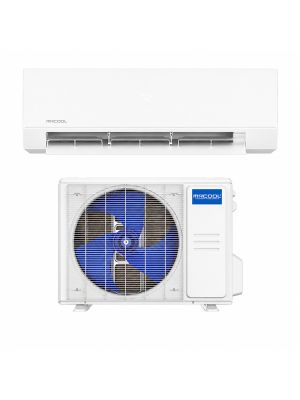
A mini split for hotel room applications separates the compressor into a small outdoor unit and mounts a slim wall-mounted indoor unit inside the room. Because the compressor—the primary noise source in any AC system—is outside the room entirely, ductless mini splits operate at significantly lower decibel levels than PTACs. For boutique hotel properties, luxury properties, and any application where guest noise complaints are a priority concern, a hotel ductless air conditioner delivers measurably better sleep-environment acoustics.
The inverter compressors in modern mini split systems also deliver higher energy efficiency than most PTAC configurations, running at partial load to maintain setpoint temperature rather than cycling fully on and off. For a quiet AC for motels or hotels where unit noise has historically been a guest complaint, an inverter mini split replaces the periodic compressor surge of a PTAC with a constant low background sound level.
Mini Split for Hotels: When It Is the Right Choice
- Boutique hotel air conditioner applications where aesthetics and guest experience justify higher per-room installation cost
- Luxury properties and lifestyle hotels where compressor noise at any level is unacceptable for the brand standard
- Suite configurations where one outdoor unit serves a living area and bedroom independently through a multi-zone mini split setup
- New build hotel projects without existing PTAC sleeves, where mini split infrastructure is being designed in from the start
- Hotel renovations converting from central systems, where PTAC sleeve installation is impractical, but wall penetrations for mini split linesets are feasible
- Properties in moderate climates where the higher efficiency of an inverter mini split delivers a meaningful return on the additional installation cost over time
Mini Split Sizing for Hotel Rooms
Mini split sizing for hotel room applications follows the same BTU-per-square-foot methodology as residential applications, with the same occupancy adjustment that applies to PTAC sizing. A 9,000 BTU mini split covers standard hotel rooms up to approximately 300 square feet. A 12,000 BTU configuration suits rooms from 300 to 450 square feet. For suites and larger configurations, multi-zone mini split systems allow one outdoor unit to serve multiple indoor units across separate zones—a living area and a sleeping area in a suite configuration, for example.
Browse single-zone mini split systems for individual hotel room applications, or multi-zone mini split systems for suite and multi-room configurations where one outdoor unit serves several indoor units.
Important: Mini Splits Do Not Provide Ventilation
A ductless mini split recirculates room air across the indoor unit's coil—it does not draw in outdoor air or provide fresh air ventilation. For hotel and motel applications where building codes require a minimum fresh air exchange rate per occupied room, mini splits must be paired with a separate ventilation system. PTACs include a built-in outdoor air damper that provides fresh air as part of normal operation. This is a meaningful practical difference for properties in jurisdictions with strict ventilation requirements—confirm your local code requirements before specifying mini splits for hotel room applications.
Application Guide by Property Type
Standard Hotels and Motels
For standard hotel room configurations and motel room replacements in properties with existing PTAC sleeves, a hotel PTAC unit is almost always the more practical and cost-effective choice. The infrastructure is already in place—the sleeve, electrical connection, and exterior opening—and a direct chassis swap requires no outdoor unit placement, no lineset routing, and no wall penetration work. Hotel air conditioner units at this scale can be replaced on a room-by-room schedule without disrupting adjacent rooms.
Boutique Hotels and Lifestyle Properties
Boutique hotel air conditioner applications favor mini splits for the aesthetics and noise profile. A wall-mounted indoor unit with no floor-level grille reads as a cleaner, more contemporary installation than a PTAC. The outdoor condenser tucks into a rooftop or courtyard location out of sight. For properties where the room aesthetic is a deliberate brand statement, the hotel ductless air conditioner approach supports the design intent in a way a PTAC grille cannot.
Extended-Stay Properties
Extended-stay properties bridge the two options. Guests staying multiple nights or weeks are more sensitive to noise than overnight hotel guests, which favors the quieter operation of a mini split for hotel room applications. But extended-stay properties often have high room counts that make per-room mini split installation cost significant. A practical approach: use mini splits in the premium rooms and suites where long-stay guests are concentrated, and PTACs in the standard rooms where turnover is higher and the noise sensitivity is lower.
Replacing Hotel Air Conditioner Units Across a Property
Whether replacing PTACs or installing mini splits, room-by-room AC replacement in a hotel or motel does not require taking the property offline. One room closes for the installation, which typically takes a licensed HVAC contractor two to four hours for a PTAC swap or four to six hours for a mini split installation with outdoor unit placement. Adjacent rooms continue operating normally throughout.
For large-scale replacement programs covering dozens of hotel room air conditioner units, plan installation sequences floor by floor or wing by wing to minimize room-night displacement. Confirm sleeve dimensions before ordering PTAC replacements, and confirm outdoor unit placement feasibility before specifying mini splits. Call AC Direct's team at 1-866-862-8922 to discuss project-level shipping coordination and delivery scheduling.
Frequently Asked Questions
1. What type of air conditioner is used in hotels?
Hotels primarily use two types: PTAC units and ductless mini splits. PTAC units are the most common in standard hotels and motels—self-contained through-wall units with no outdoor component. Mini split systems are increasingly used in boutique hotels, luxury properties, and suite configurations where quieter operation and cleaner aesthetics are a priority.
2. What is the difference between a hotel PTAC and a mini split?
A PTAC installs through the exterior wall with all components in one cabinet—no outdoor unit required. A mini split separates the compressor into a small outdoor unit connected to a slim indoor unit by refrigerant lines. Mini splits are quieter because the compressor is outside the room. PTACs include built-in ventilation, have lower installation costs for replacements, and require no outdoor unit placement. The right choice depends on property type, budget, and whether noise or ventilation is the priority.
3. Are mini splits good for hotel rooms?
Yes, particularly for boutique hotels, luxury properties, and any application where quiet operation is a priority. A mini split for hotel room applications runs at lower noise levels than a PTAC because the compressor is outdoors. Inverter mini splits also typically deliver higher energy efficiency. The trade-offs are higher per-room installation cost and no built-in fresh-air ventilation—mini splits require a separate ventilation system where codes mandate it.
4. What size hotel room air conditioner do I need?
For standard hotel rooms of 200 to 300 square feet with interior corridor access, 9,000 BTU is appropriate. For rooms of 300 to 450 square feet, or exterior-access motel rooms with greater thermal load from exterior walls and doors, 12,000 BTU is the right choice. For suites from 450 to 600 square feet, 12,000 BTU handles most configurations; larger suites may benefit from two units or a multi-zone mini split serving separate zones.
5. Do mini splits provide ventilation in hotel rooms?
No. A ductless mini split recirculates room air without drawing in outdoor fresh air. In hotel and motel applications where building codes require a minimum fresh air exchange rate per occupied room, a separate ventilation system is required alongside the mini split. PTACs include a built-in outdoor air damper that provides ventilation as part of their normal operation—a meaningful practical advantage in jurisdictions with strict fresh-air requirements.
6. Can I use mini splits for motel rooms?
Yes, though the practical considerations differ from hotel interior-corridor rooms. Motel exterior-entry rooms need an accessible outdoor wall location for the mini split condenser, which most motels can accommodate. The quieter operation of a mini split addresses the noise sensitivity of guests in motel settings, where exterior-access rooms are more exposed to outdoor sound. Size up by one BTU step for exterior-entry motel rooms to account for higher thermal load from exterior wall exposure.
7. What is the best air conditioner for a boutique hotel?
For boutique hotel applications, a ductless mini split is generally the better choice. The slim indoor unit has a cleaner aesthetic than a PTAC grille. The outdoor compressor eliminates in-room noise. Inverter operation delivers tighter temperature control that suits the premium guest experience expectation of boutique properties. Browse AC Direct's single-zone mini split systems for individual room applications.
8. How long do hotel air conditioner units last?
PTAC units in hotel and motel applications running 24 hours a day year-round typically deliver 8 to 12 years of service. Mini split systems in similar continuous-use applications generally last 15 to 20 years, partly because the compressor operates at variable speed rather than full cycling load. Regular filter cleaning is the most impactful maintenance action for both types.
9. Can I replace hotel PTAC units with mini splits?
Yes, though it involves more work than a direct PTAC replacement. Converting a hotel room from PTAC to mini split requires sealing the existing sleeve opening, identifying an outdoor wall location for the condenser, routing a refrigerant lineset, and mounting the indoor unit. For a full property conversion, this is a significant renovation project. A more practical approach for most properties is using mini splits in premium rooms during renovation and maintaining PTACs elsewhere.
10. What air conditioner is best for motels?
For the majority of motel applications with existing PTAC sleeve infrastructure, a hotel PTAC heat pump unit remains the most cost-effective and practical choice. The direct replacement path minimizes room downtime and installation cost. For motel properties undergoing full renovation, or smaller boutique motel operations where guest noise experience is the priority, a mini split for hotel room applications delivers better acoustic performance at higher installation cost.
Free shipping over $1,500. Both PTAC and mini split options in stock.
Browse PTAC hotel air conditioner units for through-wall replacement. Browse ductless mini split systems for wall-mounted hotel room AC. Browse PTAC accessories for sleeves and grilles. Not sure which option fits your property? Call 1-866-862-8922.