

Is R-410A Flammable? Safety Facts Every Homeowner & Tech Should Know
-
 By
Michael Haines
By
Michael Haines
- May 9, 2026

The straight answer on flammability, toxicity, and how R-410A compares to the new A2L refrigerants replacing it.
Short answer: R-410A is classified non-flammable under the ASHRAE Standard 34 system. It's an A1 refrigerant - the safest category on the chart for both flammability and toxicity. But that one-word answer leaves out the nuance that actually matters when you're servicing a system, brazing a line, or storing a cylinder in a hot truck. There are conditions where even an A1 refrigerant can ignite, and there are real toxicity concerns at high concentrations.
This guide gives you the safety facts in plain language, then explains how R-410A compares to the A2L refrigerants (R-454B and R-32) replacing it in new equipment. If you want the broader background on the refrigerant itself, see our complete homeowner's guide to R-410A.
ASHRAE Standard 34 classifies refrigerants using a letter and number combination. The letter rates toxicity, the number rates flammability:
| Refrigerant | Class | Flammability | Toxicity | GWP |
|---|---|---|---|---|
| R-410A | A1 | No flame propagation | Lower toxicity | 2,088 |
| R-454B | A2L | Mildly flammable | Lower toxicity | 466 |
| R-32 | A2L | Mildly flammable | Lower toxicity | 675 |
Source: ISO 817 / ASHRAE 34 classification. R-410A's A1 rating means it does not propagate a flame when tested at 60°C and atmospheric pressure.
That A1 designation is what manufacturers, code officials, and the EPA rely on. It's the reason R-410A could be used in residential split systems for two decades with relatively simple handling rules - no leak detection sensors required, no special ventilation thresholds, no equipment redesign.
"Non-flammable" is not the same as "cannot burn under any circumstance." According to safety data sheets from National Refrigerants, Inc. and Honeywell, R-410A can become combustible when:
- It's mixed with air under pressure and exposed to a strong ignition source.
- It enters an oxygen-enriched environment (rare in residential work, but possible in industrial settings).
- It contacts a hot surface above approximately 790°C (1,454°F), the published auto-ignition temperature.
That 1,454°F threshold sounds extreme, and it is - well above any normal HVAC operating component. But brazing torches easily exceed it. The AHRI Safe Refrigerant Transition Task Force notes that even 1% oil contamination can lower the hot-surface ignition temperature by more than 120°C, which is why pressurizing a refrigerant line with R-410A and then brazing on it is a textbook way to start a fire that wasn't supposed to be possible.
Whether you're a homeowner watching a tech work or a contractor running the job, these are the practical handling points that come straight off the SDS:
Never braze on a system that still has refrigerant or pressure in it. Recover to the EPA-required vacuum level, then purge with dry nitrogen before applying flame.
R-410A is a zeotropic blend. Vapor charging changes the blend ratio and can damage the compressor. Liquid charging into the liquid line (or carefully into the suction line through a metering device) preserves the mix.
R-410A operates much higher than older refrigerants. Equalized pressure at 70°F is roughly 201 PSIG. High-side discharge typically sits at 370-420 PSIG. Use gauges, hoses, and recovery equipment rated for R-410A.
Even non-flammable refrigerants displace oxygen. A large indoor leak in a closed mechanical room is an asphyxiation hazard, not a fire hazard - but the outcome is just as bad if no one notices.
EPA Section 608 certification is legally required to purchase, handle, or dispose of R-410A. Homeowners cannot legally buy R-410A refrigerant - service and charging must go through a certified technician.
Pulling the most important lines straight from the published SDS documents (Honeywell Freon™ 410A and National Refrigerants, Inc.), here's what's worth knowing:
| Property | Value / Note |
|---|---|
| ASHRAE 34 Class | A1 (non-flammable, lower toxicity) |
| Flammability at ambient | None - does not propagate flame |
| Auto-ignition (hot surface) | ~790°C (1,454°F) |
| Acute toxicity | Low in animal studies |
| Asphyxiation risk | Yes, at 12-14% oxygen displacement |
| Cardiac sensitization | Possible at very high concentrations |
| Combustion byproducts | No hydrochloric acid (no chlorine in formula) |
| Recommended PPE | Safety glasses, gloves, ventilated work area |
One often-missed point: because R-410A contains no chlorine, it does not produce hydrochloric acid if it does combust. That's a meaningful improvement over older refrigerants like R-22, where accidental combustion produced highly corrosive, dangerous byproducts. For a deeper SDS breakdown with cylinder handling and storage details, see our R-410A safety data sheet reference.
Because of the EPA AIM Act, manufacturers stopped producing new residential R-410A equipment as of January 1, 2025. The replacements - R-454B (used by Goodman, Carrier, Rheem, Trane, Lennox, Bosch, MRCOOL) and R-32 (used by Daikin and most mini-split lines) - are A2L refrigerants. Both are legitimate paths forward, just different chemistry.
"A2L" means mildly flammable. They will burn, but only under specific conditions: an ignition source, a refrigerant concentration within the flammability range, and limited ventilation. Their burning velocity is low and their minimum ignition energy is high - much harder to ignite than propane or natural gas, but not impossible.
| Factor | R-410A (A1) | R-454B / R-32 (A2L) |
|---|---|---|
| Flame propagation | None at ambient | Possible under specific conditions |
| Operating pressure | Baseline | R-454B within 2-5% of R-410A |
| Lubricant | POE oil | POE oil (formulation differs) |
| Retrofit existing systems | N/A | Not compatible - new equipment only |
| Leak detection required | No | Often yes (depends on charge size) |
| GWP (100-yr) | 2,088 | 466 / 675 |
From a pure handling standpoint, the operating pressures and gauge readings are very close between R-410A and R-454B. What changes is the safety paradigm around the equipment itself - new A2L systems include leak detection, mitigation circuits, and sometimes ventilation requirements that R-410A units never needed. That's not a knock on either approach; it's just a different design philosophy reflecting a different refrigerant class. For a more detailed look at the comparison many homeowners are searching for, our overstock page covers r32 vs r410a (the comparison they're searching).
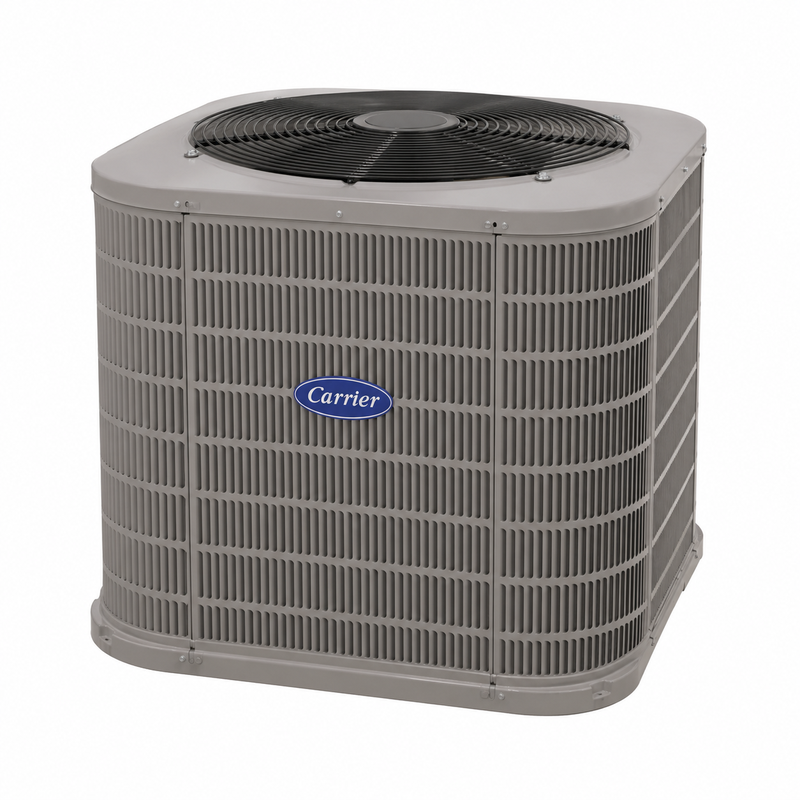
Carrier Condenser Heat Pump 4 Ton 16 Seer2 R410A (16HPX-048-230A)
R-410A is the proven A1 (non-flammable) refrigerant covered above. This Carrier heat pump is part of our R-410A overstock. Once they are gone, they are gone.
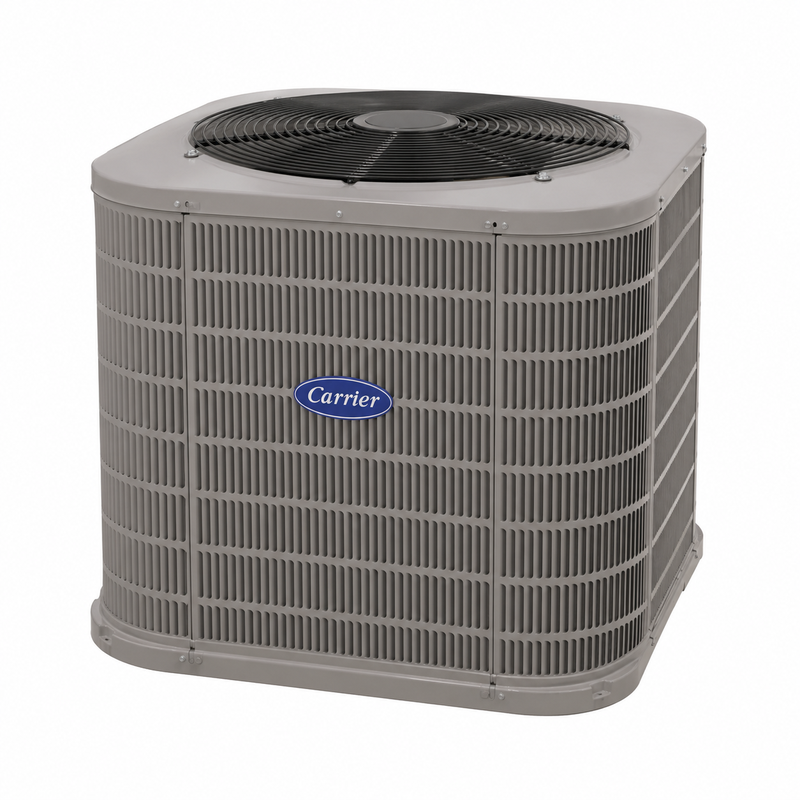
Carrier Condenser Straight Cool 3 Ton 16 Seer2 R410A (GA5SAN43600W)
R-410A is the proven A1 (non-flammable) refrigerant covered above. This Carrier heat pump is part of our R-410A overstock. Once they are gone, they are gone.
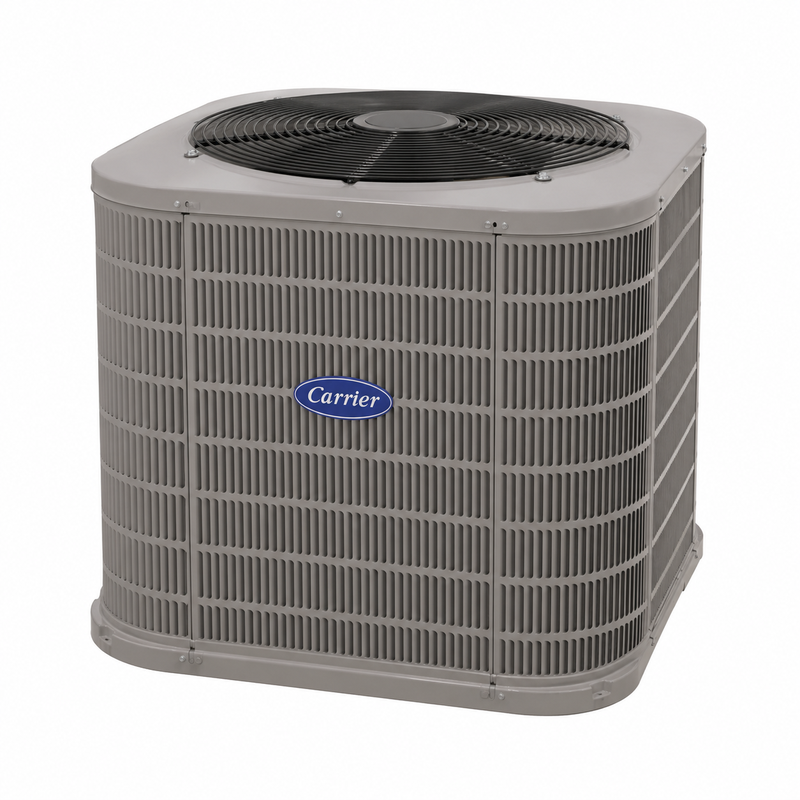
Carrier Condenser Heat Pump 4 Ton Seer2 R410A (GH5SAN44800A)
R-410A is the proven A1 (non-flammable) refrigerant covered above. This Carrier heat pump is part of our R-410A overstock. Once they are gone, they are gone.
These sold fast.
The exact unit featured here is no longer available, but more like it are in stock.
Equipment manufactured before January 1, 2025 is still legal to install, and the EPA has deprioritized enforcement of the original 2026 install cutoff while a final rule is finalized. AC Direct still has overstock R-410A condensers and complete systems from Goodman, Rheem, Carrier, Trane, Daikin, Mitsubishi, LG, and MRCOOL - at phase-out pricing. Once they're gone, they're gone.
Shop our r410a air conditioning system overstock or call to talk to an R-410A expert if you want help matching a system to your home before inventory clears.
R-410A is classified as A1 under ASHRAE Standard 34, which means non-flammable. It does not propagate a flame at ambient temperature and atmospheric pressure. However, under pressure with a strong ignition source, in oxygen-enriched environments, or above its hot-surface ignition temperature of about 790°C (1,454°F), it can become combustible. Always recover refrigerant and purge with nitrogen before brazing.
The SDS rates R-410A as low acute toxicity. The bigger practical risk in a leak is asphyxiation - R-410A can displace oxygen in a confined space, and a 12-14% oxygen reduction is enough to be dangerous. Very high concentrations can also potentially cause cardiac arrhythmia. Ventilation and PPE handle both concerns.
Yes. The AIM Act phased out new manufacturing of R-410A equipment, not the refrigerant itself. Service refrigerant remains legal to purchase through certified Section 608 technicians, and supply (including reclaimed refrigerant) is projected to be available for many years. Your existing system is grandfathered.
"Mildly flammable" sounds alarming, but A2L refrigerants are much harder to ignite than fuels like propane. They require a sustained ignition source, a specific concentration range, and limited ventilation to burn. New equipment is engineered around those conditions with leak detection and mitigation built in. Installed correctly, A2L systems are safe for residential use.
Less so than older chlorinated refrigerants. R-410A contains no chlorine, so it does not produce hydrochloric acid during combustion. It can still produce hydrogen fluoride and carbonyl fluoride at very high temperatures, which is why you never want refrigerant present during brazing - but the worst-case chemistry is meaningfully better than R-22.
The phase-out has nothing to do with safety classification. R-410A has a Global Warming Potential of 2,088, while R-454B sits at 466 and R-32 at 675. The AIM Act targets HFC consumption to reduce greenhouse gas impact - not because the refrigerants are unsafe to use.