

Winter Storm Fern 2026: Power Outages Are The Real Heating Threat
-
 By
Michael Haines
By
Michael Haines
- Jan 21, 2026
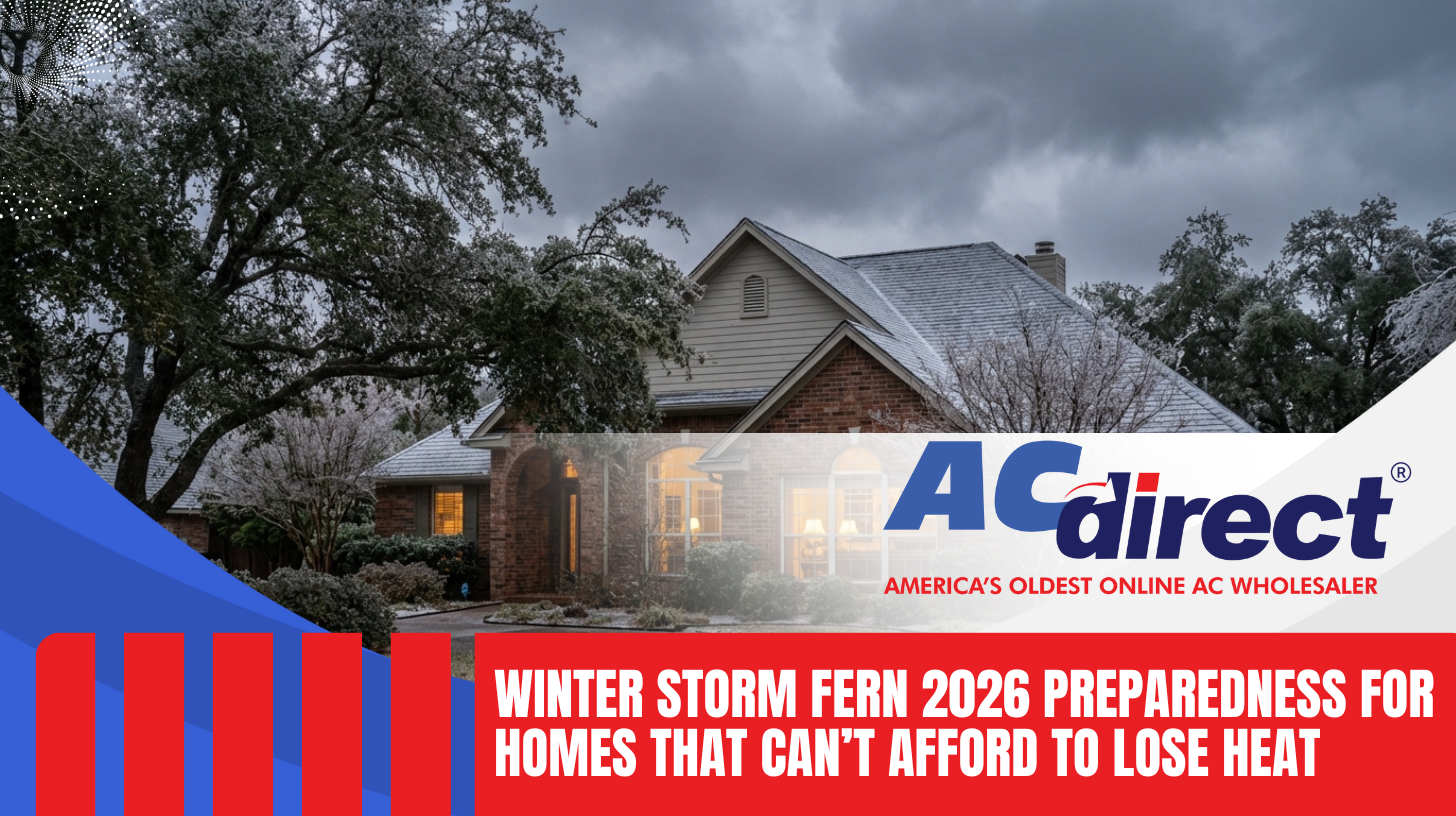
A dangerous winter system is lining up to hit parts of the South and Southeast, and the risk is not just a messy snow forecast. The bigger danger is ice. Ice is what takes down trees and power lines, turns a normal weekend into a long outage, and keeps neighborhoods stuck even after precipitation stops. Multiple outlets and official guidance are warning about heavy snow and damaging ice in a broad corridor from the Southern Plains toward the Southeast, with cold air behind it that can keep problems in place longer than people expect.
Even if your focus right now is staying warm, don’t ignore your HVAC system as a whole. Your ac unit shares critical infrastructure with heating in many homes, including the blower, ductwork, electrical circuits, and thermostat control. When winter weather hits, failures are usually electrical, not fuel-related, which is why people get blindsided when the heat stops during an outage.
-
This winter storm forecast has a meaningful ice component, which is why power outages are a real possibility across parts of the South and Southeast.
-
A modern gas furnace will not run without electricity because ignition, safety controls, and the blower need power.
-
Generator safety is not optional: outside only, at least 20 feet away, and never backfeed through an outlet.
-
Some furnaces fail on generator power due to neutral-ground bonding and flame-sensing behavior, so testing your setup before the storm is the smart move.
-
If heat drops for long enough, frozen pipes become the next expensive problem.
The Forecast People Are Watching Right Now
If you’ve been checking a weather forecast this weekend more than once a day, you’re not alone. With mixed precipitation setups, small shifts change everything. A snowstorm weather forecast can look “fine” while the freezing rain zone is the part that causes real damage.
Broad messaging from major forecast outlets has stayed consistent: this system has the potential to spread heavy snow and damaging ice from the South into parts of the East, and the ice threat is rising in places that do not handle it well.
Here’s the plain-language takeaway you can use regardless of which map you’re looking at:
Freezing rain risk is why you should assume outages are possible, even if your local snow totals look modest.
For timing, many forecasts are centering on late Friday into the weekend, with hazardous cold behind it that can keep roads, trees, and lines in bad shape into early next week.
If you want one reliable baseline to compare against everything else, check your local NWS office updates for your county.
Winter Storm Watch Versus Warning And Why That Should Change Your Plan
A winter storm watch is not a polite suggestion. It is a planning trigger, especially in regions where ice events are less common and restoration can take longer because the damage pattern is different.
A watch means conditions are possible. A warning means conditions are expected or imminent. The practical difference is what you do today.
If your area is under a watch and the track keeps trending your way, shift from “wait and see” to “I’m getting my heating backup ready now.” In mixed precipitation events, uncertainty is normal, and the uncertainty itself is the reason you prepare early.
Will A Gas Furnace Work Without Electricity?
No. A modern gas furnace cannot operate without electricity.
It sounds wrong to a lot of homeowners because the fuel is gas. But the furnace is an electromechanical system with multiple safety interlocks. If there’s no power, the startup sequence never completes, and the gas valve will not stay open.
Here’s what electricity is doing during a call for heat:
-
The control board runs safety checks
-
The draft inducer starts so the exhaust vents correctly
-
The igniter heats up or sparks
-
The flame-sensing circuit proves combustion
-
The blower motor moves heat through ducts
Those steps require power, even though the heat source is natural gas or propane.
The Heating Strategy That Actually Helps During Outages
If your goal is to keep a home furnace running during an outage, the safest path is a code-compliant connection to backup power.
That usually means one of these:
-
Transfer switch
-
Generator interlock kit
-
Proper inlet and breaker arrangement designed for generator use
Do not backfeed your home by plugging a generator into a wall outlet. FEMA is blunt about this because the hazard is real. Here is the generator safety checklist that spells it out clearly.
A bad generator hookup can injure or kill someone and can burn down a home. A proper hookup keeps your family warm without turning your electrical system into a hazard.
Generator Safety That Needs To Be Said Out Loud
Carbon monoxide is the quiet danger during winter outages. It is also one of the most preventable.
The Consumer Product Safety Commission repeats the same guidance for a reason: generators are outdoor-only, placed at least 20 feet away from homes, with exhaust facing away. This is stated directly in their CO safety guidance. Here is the CO alarm guidance and here is FEMA’s generator page again if you want a second authoritative reference.
If you’re tempted to run a generator in a garage “with the door cracked,” don’t. CPSC explicitly warns that open doors or windows are not enough ventilation.
Will My Generator For House Support My Heating?
It can, but only if it is sized correctly and connected correctly.
Most furnace issues during outages fall into three buckets:
-
not enough starting watts
-
unsafe or non-compliant connection method
-
furnace electronics not liking the generator’s output or grounding reference
Sizing is not guesswork. You size for running watts and starting surge.
A typical furnace might run in the hundreds of watts once it is operating, but older blower motors can surge higher at startup. That is why two homes can have the “same” BTU furnace and still need different generators.
If you can find the furnace label, use this:
Volts × Amps = Watts
Most furnaces are on a 120V circuit.
Dallas Winter Storm And Texas Winter Storm 2026 Planning Logic
If you’re in North Texas watching a Dallas winter storm setup, you already know how fast roads can go from wet to slick when temperatures drop. Even if your neighborhood ends up on the edge of the worst snow band, an ice stripe can still knock out power and block travel.
If you’re in the winter storm Texas 2026 zone, treat the prep window like it will shrink quickly once precipitation begins. If the local maps are calling this a weekend winter storm, it is smart to assume deliveries and in-person help get harder by Friday night.
PSC Versus ECM Motors In Plain English
PSC motors are older-style AC induction motors. They often have a bigger startup surge.
ECM motors are electronically controlled and more efficient. They often start more smoothly, but they can be more sensitive to poor power quality.
This matters during a storm because outages do not only cut power. They can also create ugly power when the grid comes back. Voltage swings and generator output issues can trip modern controls.
If you’re shopping because you want reliable heat in rough weather, equipment selection matters. Start with the category here: home furnace.
Inverter Generators And Why Some Furnaces Disagree With Rough Power
Many modern furnaces behave better on cleaner power, and inverter generators are designed to produce a smoother electrical output than many open-frame contractor generators.
This topic usually shows up when someone says, “My furnace lights for two seconds and shuts off on generator power.”
One cause can be power quality. Another common cause is grounding reference behavior that affects the flame-sensing circuit. Either way, the practical advice is the same: test the setup before you need it.
Neutral-Ground Bonding And Flame Sensing
Some furnaces can fail to stay running on certain portable generators due to grounding-reference behavior. This can be tied to bonded versus floating neutral configurations, and generator manufacturers publish explainers on it.
If you want the baseline explanation, start with this bonded vs floating neutral overview and then talk to a licensed electrician if your furnace won’t stay lit on generator power.
The safe approach is simple:
-
Test your furnace on your generator now
-
If it fails, call a licensed electrician
-
Use code-compliant switching equipment
-
Do not improvise wiring or “creative fixes”
If You Lose Heat, Frozen Pipes Are The Next Problem
Winter storms in the South and Southeast tend to create two waves of damage.
First wave: outages and unsafe heating improvisation.
Second wave: frozen pipes once the temperature stays below freezing for a long stretch.
If your home loses heat and you cannot restore it quickly, your pipe plan needs to be immediate. Know where your main shutoff is, open cabinet doors under sinks, and pay attention to exposed lines.
Ready.gov has a clean, general baseline for winter readiness here: winter weather readiness.
The 12 To 48 Hours Before The Storm Is Your Advantage
A lot of people wait until the weather forecast snow storm becomes actual ice on the driveway. That’s the wrong time to hunt for parts, generators, or heating equipment. Shipping gets delayed. Local pros get booked out. Store shelves thin out.
If you’re inside the 12 to 48 hours before conditions deteriorate, you can still take meaningful steps:
-
Confirm the furnace runs normally
-
Check CO alarms
-
Test your generator connection safely
-
Make sure furnace intake and exhaust areas can stay clear if snow or ice piles up
That short checklist is how you avoid learning the hard lessons at 2:00 a.m.
When Replacing Heating Equipment Makes Sense Before A Major Freeze
If your furnace has been unreliable, this is when the delay becomes expensive. You don’t need a perfect forecast to act. If the winter storm setup is threatening, damaging ice, and prolonged sub-freezing temperatures, it’s reasonable to get replacement equipment lined up so you’re not forced into an emergency decision when everyone else is doing the same thing.
If you’re comparing options, start with the equipment category and then confirm sizing and code requirements with your installer. The starting point is a gas furnace.
FAQ
Will A Gas Furnace Work Without Electricity?
No. A modern gas furnace shuts down during an outage because the control board, igniter, safety switches, and blower motor require electricity to run safely.
Will My Gas Furnace Work In A Power Outage?
No. Even with gas service still on, a modern furnace will not operate without electricity for ignition, safety checks, and air movement.
Will Gas Furnace Run Without Electricity If The Gas Is Still On?
No. The furnace will not hold the gas valve open unless the full safety sequence completes, and the blower cannot move heat without power.
Will My Generator For House Support My Heating?
It can, if it is sized correctly and connected safely through a transfer switch or interlock. You should also test the furnace on that generator, because some setups run into power-quality or neutral-ground reference issues.
What Size Generator Do I Need To Run A Furnace?
It depends on running watts and startup surge. The most reliable method is checking the furnace data plate for amps and sizing for both running and starting requirements.
Can I Plug My Furnace Into A Generator With An Extension Cord?
Not by backfeeding the house through a wall outlet. The safe approach is a code-compliant transfer switch or interlock that isolates the home from the utility feed.
How Far Should A Generator Be From The House?
At least 20 feet away, outside only, with exhaust directed away from the home.
Final Thoughts
Winter Storm Fern is shaping up as a high-impact event for parts of the South and Southeast, and ice is the reason it can turn serious fast. If your winter weather forecast 2026 includes freezing rain, treat it like a power-outage forecast too, because that’s often how it plays out.
The best outcome is boring: your heat stays on, the generator never comes out, and the roads clear quickly. The second-best outcome is you planned well enough that, if the power drops, you already know exactly how your furnace behaves and how to run backup power safely. That is the difference between a stressful weekend and a dangerous one.