 and now, NASCAR Racing Sponsor


Cooling Tonnes Explained: Sizing Your AC for Perfect Comfort
-
 By
Michael Haines
By
Michael Haines
- Feb 10, 2024

Hi, I'm Mike Haines, founder of AC Direct. Choosing the right size air conditioner for your home or business is crucial for comfort and efficiency. Many people get confused by the term "cooling tonnes," so I'm here to break it down. This information is geared toward homeowners and small business owners who want to understand how AC sizing works so they can make informed decisions.
- Cooling tonnage refers to the amount of heat an air conditioner can remove from a space in one hour, with one ton equivalent to 12,000 BTUs.
- Correct AC sizing is vital for energy efficiency, comfort, and preventing equipment issues like short cycling.
- Factors such as square footage, insulation, climate, and window size all influence the cooling tonnage needed for your home.
- While online calculators can give a rough estimate, a professional Manual J load calculation is the most accurate method for determining the ideal AC tonnage.
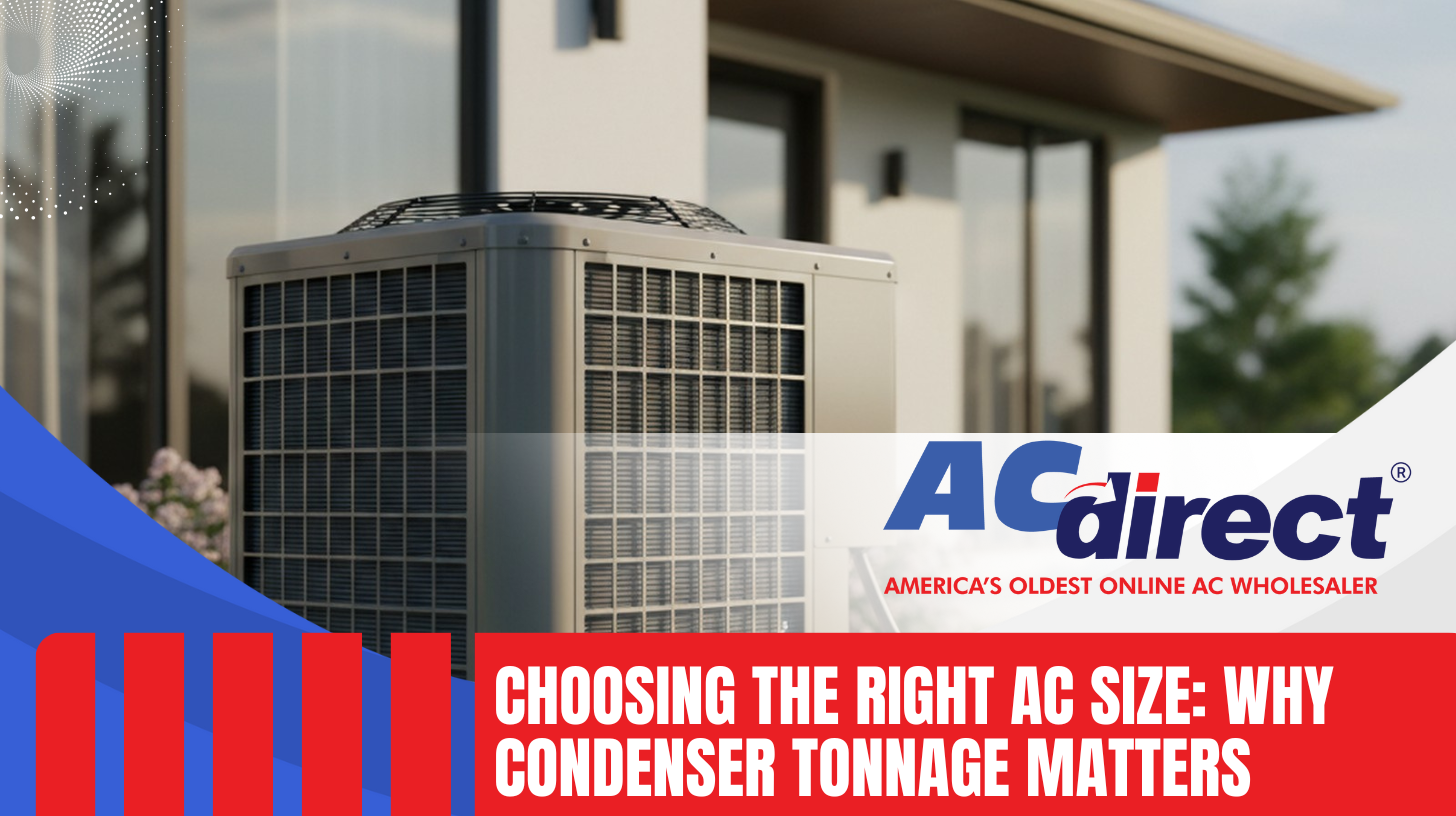
- Oversized AC units can lead to humidity problems and energy waste, while undersized units may struggle to adequately cool the space.
What is Cooling Tonnage?
Cooling tonnage is a term used to describe the cooling capacity of an air conditioner. It represents the amount of heat an AC unit can remove from a room or building in one hour. The term "ton" is derived from the amount of heat needed to melt one ton (2,000 pounds) of ice in 24 hours. In HVAC terms, one ton of cooling is equal to 12,000 British Thermal Units (BTUs) per hour.
So, when you see an AC unit described as a "3-ton unit," it means that it has the capacity to remove 36,000 BTUs of heat per hour (3 tons x 12,000 BTUs/ton = 36,000 BTUs). Residential AC units typically range from 1.5 tons to 5 tons, depending on the size and cooling needs of the home.
Why is AC Tonnage Important for Homeowners?
Choosing the correct AC tonnage is essential for several reasons. First and foremost, it directly affects your comfort. An adequately sized AC unit will maintain a consistent and comfortable temperature throughout your home, even on the hottest days. Secondly, proper sizing impacts energy efficiency. An AC unit that's the right size will operate more efficiently, using less energy to cool your home and saving you money on your utility bills. Finally, correct tonnage helps prolong the lifespan of your AC system by preventing it from overworking or cycling on and off too frequently.
I often see homeowners make the mistake of simply replacing their old unit with one of the same size. This can be a problem if the original unit was improperly sized to begin with, or if changes have been made to the home that affect its heating and cooling needs. It's always a good idea to reassess your cooling needs before investing in a new AC system.
The Consequences of Incorrectly Sized AC Units
Using an air conditioner that isn't the right size for your home can lead to a number of problems. Oversized units tend to cool the air too quickly, without removing enough humidity. This can leave your home feeling cold and clammy. Oversized units also cycle on and off more frequently, which wastes energy and puts unnecessary strain on the system components. Undersized units, on the other hand, will struggle to cool the air adequately, especially during peak heat times. They'll run constantly, driving up your energy bills and potentially leading to premature failure. In either case, you'll end up with a less comfortable home and higher operating costs.
How Cooling Tonnage is Measured
Cooling tonnage is measured in BTUs per hour, as I mentioned before. One ton of cooling equals 12,000 BTUs per hour. AC units are typically labeled with their tonnage, making it easy to identify their cooling capacity. However, it's important to remember that the labeled tonnage is just a starting point. To determine the ideal cooling tonnage for your home, you need to consider several factors, including your home's square footage, insulation levels, window size and orientation, climate, and even the number of people living in the house. All these elements contribute to the heat load of your home, which is the amount of heat that needs to be removed to maintain a comfortable temperature.
Factors Affecting the Required Cooling Tonnage for Your Home
Several factors influence the amount of cooling tonnage your home requires. Here's a breakdown of the most important ones:
- Square Footage: The larger your home, the more cooling capacity you'll generally need.
- Insulation: Well-insulated homes retain cool air more effectively, reducing the demand on your AC system.
- Windows: The size, type, and orientation of your windows can significantly impact heat gain. Windows facing south or west tend to allow more heat into the home.
- Climate: Homes in hotter climates require more cooling tonnage than those in milder regions.
- Ceiling Height: Higher ceilings increase the volume of air that needs to be cooled.
- Number of Occupants: More people generate more heat, increasing the cooling load.
- Appliances: Heat-generating appliances like ovens, stoves, and dryers can also contribute to the cooling load.
- Lighting: Incandescent lights produce more heat than LED lights, impacting cooling needs.
Considering these factors will help you determine the appropriate cooling tonnage for your specific situation.
How to Calculate the Right Cooling Tonnage for Your Home
There are a few different methods you can use to estimate the right cooling tonnage for your home. A simple rule of thumb is to use 20 BTU per square foot. For example, a 1,000 square foot home may need 20,000 BTU, which equates to roughly 1.5 tons. But keep in mind, this is a very rough estimate and doesn't account for the other factors I mentioned earlier. Online calculators can offer a slightly more precise estimate by asking for additional information about your home. However, the most accurate way to determine the ideal cooling tonnage is to have a professional perform a Manual J load calculation.
Manual J Load Calculation: A Deeper Dive
A Manual J load calculation is a comprehensive analysis that takes into account all the factors that contribute to your home's heating and cooling load. It's a standardized method developed by the Air Movement and Control Association (AMCA) and is considered the most accurate way to determine the correct AC tonnage. A qualified HVAC professional will use specialized software to input detailed information about your home's construction, insulation, windows, climate, and other relevant factors. The software then calculates the precise amount of heat that needs to be removed to maintain a comfortable temperature. This calculation provides a much more accurate assessment of your cooling needs than simple rules of thumb or online calculators.
I strongly recommend having a Manual J load calculation performed before you purchase a new AC unit. While it may involve a small upfront cost, it can save you money in the long run by ensuring that you get the right size unit for your home.
Oversized AC Units: More Problems Than Solutions?
Many homeowners assume that a bigger AC unit is always better, but this is often not the case. Oversized AC units can actually cause more problems than they solve. As I mentioned earlier, they tend to cool the air too quickly without removing enough humidity, leading to a cold, clammy feeling. This is because the unit cycles on and off too frequently, a phenomenon known as short cycling. Short cycling wastes energy, puts unnecessary wear and tear on the system components, and can even lead to mold growth due to the excess humidity. In addition, oversized units are often more expensive to purchase and install.
I've seen situations where homeowners have replaced a perfectly good AC unit with a larger one, only to find that their comfort levels actually decreased. It's important to resist the temptation to oversize your AC unit, even if you think it will provide "extra" cooling power. Getting the right size is always the best approach.
Undersized AC Units: Suffering Through the Heat
On the other end of the spectrum, undersized AC units can also create problems. An undersized unit will struggle to cool your home adequately, especially during peak heat times. It will run constantly, trying to keep up with the cooling demand, but may never be able to reach the desired temperature. This constant operation will drive up your energy bills and put excessive strain on the system components, potentially leading to premature failure. You might think you are saving money by purchasing a smaller unit, but you'll likely end up paying more in the long run due to higher energy costs and repair bills.
I advise homeowners not to cut costs by buying an undersized unit. The discomfort and expense that result are not worth the initial savings.
The Relationship Between Cooling Tonnage and SEER Rating
Cooling tonnage and SEER (Seasonal Energy Efficiency Ratio) rating are two different but related concepts. Cooling tonnage, as we've discussed, refers to the cooling capacity of the AC unit. SEER rating, on the other hand, indicates the unit's energy efficiency. A higher SEER rating means that the unit is more efficient at converting electricity into cooling power. While a higher SEER rating will save you money on your energy bills, it doesn't change the amount of cooling tonnage you need. You still need to choose the correct tonnage based on the size and cooling needs of your home, regardless of the SEER rating.
You might consider a Wholesale air conditioning for your home, and pay attention to the SEER rating to maximize your energy savings.
Professional AC Sizing vs. DIY Which is Best?
While it's possible to estimate your cooling tonnage needs using online calculators or rules of thumb, I believe that a professional AC sizing is always the best option. A qualified HVAC technician has the expertise and equipment to perform a thorough Manual J load calculation, taking into account all the factors that affect your home's cooling load. They can also assess your ductwork, insulation, and other system components to ensure that your new AC unit will operate efficiently and effectively. While a professional sizing may involve an upfront cost, it can save you money in the long run by preventing the problems associated with incorrectly sized AC units.
I see a lot of homeowners try to DIY their AC sizing, and while it's admirable to want to save money, it's often a false economy. The cost of an incorrectly sized unit can far outweigh the cost of a professional sizing.
If you are looking at a Propane furnace and air conditioner, be sure to consult a professional about the correct size for your home.
When to Consider Replacing Your AC Unit With a Different Tonnage
There are several situations where you might need to consider replacing your AC unit with a different tonnage. If you've made significant changes to your home, such as adding an addition or improving insulation, your cooling needs may have changed. Similarly, if you're experiencing comfort problems or high energy bills, it could be a sign that your current AC unit is no longer the right size. Before replacing your unit, have a professional perform a Manual J load calculation to reassess your cooling needs and determine the appropriate tonnage for your home.
If you want to research specific models, you may want to check out something like the Ftxv09avju9. But remember that model numbers don't tell you anything about the required cooling tonnes.
Tips for Improving AC Efficiency Regardless of Tonnage
Regardless of the tonnage of your AC unit, there are several steps you can take to improve its efficiency and lower your energy bills. Make sure your home is properly insulated to prevent heat from entering during the summer months. Seal any air leaks around windows, doors, and other openings. Use curtains or blinds to block sunlight during the hottest part of the day. Have your AC unit serviced regularly to ensure that it's operating at peak performance. Clean or replace your air filters regularly to improve airflow. And consider using a programmable thermostat to adjust the temperature automatically when you're away or asleep.
Cooling Tonnage and Your Home's Resale Value
While it may not be the first thing that comes to mind, the cooling tonnage of your AC unit can actually impact your home's resale value. A properly sized and efficient AC system is an attractive selling point for potential buyers. It demonstrates that the home is comfortable and energy-efficient, which can increase its appeal and potentially boost its value. On the other hand, an improperly sized or outdated AC system can be a turnoff for buyers, as it suggests potential comfort problems and higher energy bills. Investing in a properly sized and well-maintained AC system can be a smart way to enhance your home's value and make it more attractive to potential buyers.
Frequently Asked Questions About Cooling Tonnage
What does 'ton' mean when referring to AC cooling capacity?
A 'ton' in AC terms refers to the amount of heat required to melt one ton (2,000 pounds) of ice in 24 hours. One ton of cooling capacity equals 12,000 BTUs (British Thermal Units) per hour.
Why is it important to have the correct AC tonnage for my home?
Having the right AC tonnage ensures efficient cooling and prevents issues like short cycling (when the AC turns on and off frequently) and humidity problems. An incorrectly sized unit can lead to higher energy bills and reduced comfort.
How can I determine the correct AC tonnage for my home?
The most accurate way is to have a professional perform a Manual J load calculation. This takes into account factors like square footage, insulation, window size and orientation, and climate. You can also use online calculators for a rough estimate.
What happens if my AC unit is oversized?
An oversized AC unit cools the home too quickly and doesn't run long enough to properly dehumidify the air, leading to a cold, clammy feeling. It also wastes energy and puts unnecessary wear and tear on the system due to short cycling.
What happens if my AC unit is undersized?
An undersized AC unit will struggle to cool the home adequately, especially during peak heat times. It will run constantly, leading to higher energy bills and potential system failure.
Is it better to slightly oversize or undersize my AC unit?
It's generally better to slightly undersize than drastically oversize. Oversizing leads to more problems with humidity and short cycling. A slightly undersized unit might run longer but will still provide adequate cooling in most situations.
Can I increase the cooling tonnage of my existing AC system?
No, you cannot increase the cooling tonnage of your existing system. The tonnage is determined by the size of the compressor and other components. If you need more cooling capacity, you'll need to replace the entire unit.
Does a higher SEER rating mean I need less cooling tonnage?
No, SEER rating and cooling tonnage are independent. SEER rating indicates the energy efficiency of the unit, while tonnage indicates its cooling capacity. You still need the correct tonnage regardless of the SEER rating.
Should I rely on online calculators to determine my AC tonnage?
Online calculators can provide a rough estimate, but they are not as accurate as a professional Manual J load calculation. It's best to consult with an HVAC professional for a precise assessment.
Final Thoughts
Choosing the right cooling tonnage for your AC unit is a critical decision that can significantly impact your comfort, energy bills, and the lifespan of your equipment. By understanding the factors that influence your cooling needs and taking the time to assess them accurately, you can ensure that you select the ideal AC unit for your home. Remember that a professional Manual J load calculation is the most accurate way to determine your cooling needs, and that oversizing or undersizing your AC unit can lead to a variety of problems.
I encourage you to carefully consider all the information I've provided and to consult with a qualified HVAC professional before making a purchase. By making an informed decision, you can enjoy a comfortable, energy-efficient home for years to come.