

MRCOOL DIY vs Mitsubishi: Which Mini Split Is Better in 2026?
-
 By
Michael Haines
By
Michael Haines
- Apr 1, 2026
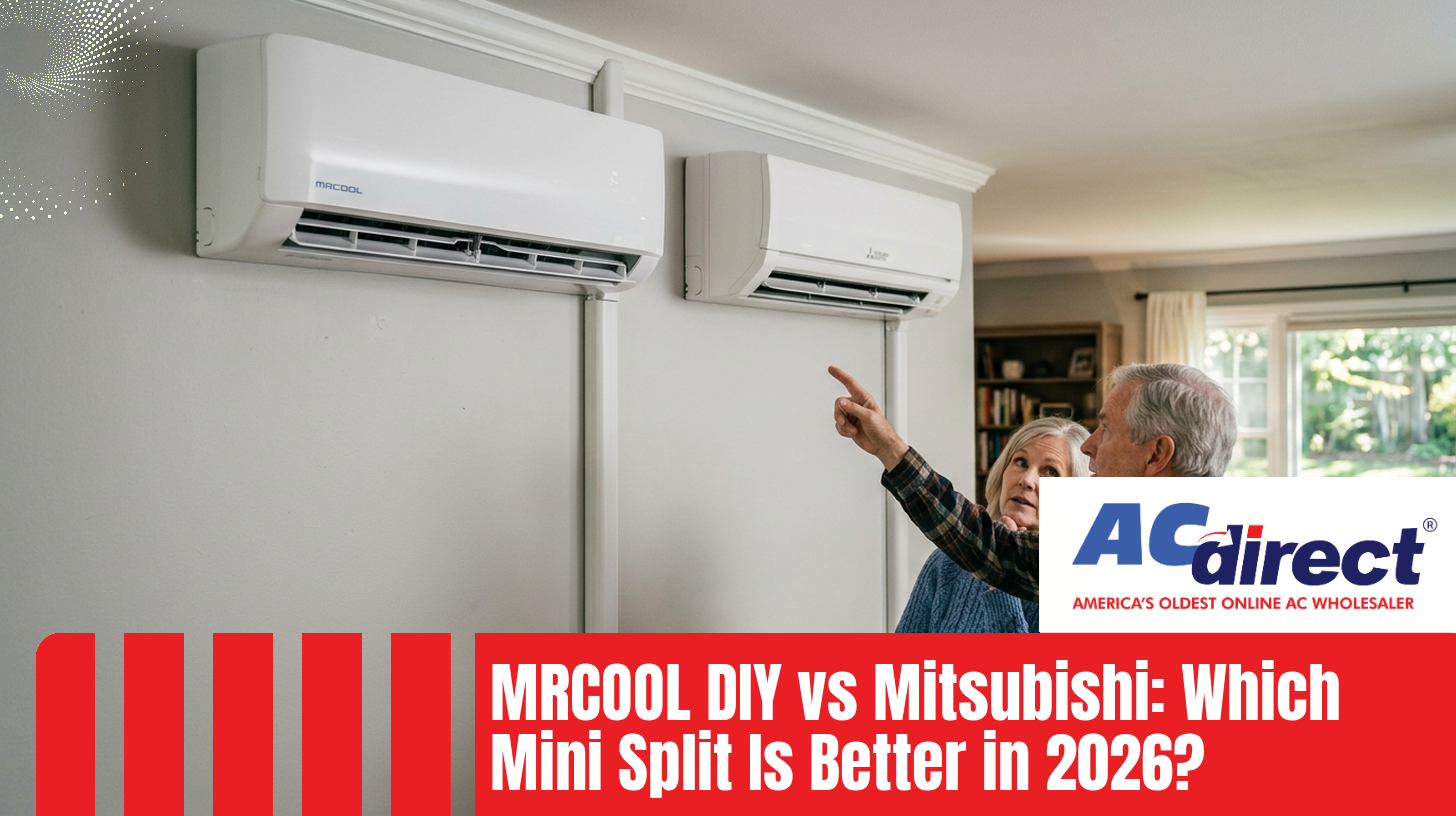
Two highly respected mini split lineups, two different design philosophies. One is built for the hands-on homeowner. The other is built around premium pro installation. Here's how to choose between them in 2026.
If you've spent any time researching ductless mini splits, you've already run into the two names that dominate the conversation. MRCOOL DIY is the homeowner-friendly line with pre-charged refrigerant lines that make self-installation realistic. Mitsubishi is the long-running premium brand that helped define cold-climate ductless heating in North America. Both have released significant 2026 updates, both now use R-454B refrigerant, and both qualify for the federal tax credit.
So which one is right for your home? That depends on your budget, your tools, your climate, and how comfortable you are spending an afternoon with a hole saw. This comparison sits inside our broader MRCOOL DIY vs the competition guide, but here we're zeroing in on the matchup most homeowners actually want to see — and both systems are available right here at AC Direct.
Both manufacturers updated their lineups for 2026, including a refrigerant transition from R-410A to the lower-GWP R-454B. Here's how the two flagship single-zone systems compare on paper.
| Spec | MRCOOL DIY 5th Gen 12K | Mitsubishi FX-Series H2i 12K |
|---|---|---|
| SEER2 Rating | 23.6 | 29.9 (up to 33.1 on top models) |
| Refrigerant | R-454B (GWP 466) | R-454B (GWP 466) |
| Cold Heating Floor | 5°F standard / -22°F Hyper Heat | -13°F (-18°F some models) |
| Pre-charged Line Set | Yes, 25 ft Quick Connect | Field-charged by tech |
| Multi-Zone Max | 6 indoor units | 8 indoor units |
| Compressor Warranty | 7 years (lifetime via Care Kit) | 10 years |
| Parts Warranty | 5 years | 10 years |
| Install Type | DIY or pro | Certified dealer install |
This is usually where the comparison comes into sharpest focus for most homeowners. The pricing gap between the two systems is meaningful, and most of it comes from the labor model each brand is built around.
| Cost Component | MRCOOL DIY 5th Gen | Mitsubishi H2i |
|---|---|---|
| Equipment | $1,549 and up | $4,000 to $7,000+ |
| Professional Install | $0 (DIY) or $200 to $400 for electrician | $1,500 to $3,000+ per zone |
| Total Installed (12K) | $1,749 to $1,949 | $4,200 to $6,800 |
| Federal Tax Credit Eligible | Yes, up to $2,000 | Yes, up to $2,000 |
Looking at the larger picture, a typical MRCOOL DIY system runs $2,000 to $6,000 depending on size and zones, while a fully configured 6-zone DIY setup tops out around $7,300. Mitsubishi installations frequently land north of $10,000 once professional labor and commissioning are folded in — and that premium reflects the certified install, the longer warranty, and the engineering reputation behind the brand. If you want current pricing on specific configurations, browse pre-charged DIY systems at AC Direct.
This is the single biggest practical distinction between the two brands, and it goes way beyond saving money — it's really about which install path fits you.
The whole MRCOOL DIY concept hinges on the pre-charged Quick Connect line set. Refrigerant is sealed in the line and the outdoor unit at the factory. That means no vacuum pump, no manifold gauges, and no EPA 608 certification needed. A Mini Split Sizer test install of a 12K unit went from box to running in 4.5 hours using nothing but a drill, a level, and a hole saw. Most homeowners will want to hire an electrician for the 240V circuit, which typically runs $200 to $400.
Mitsubishi line sets ship empty by design. A licensed HVAC tech pulls a vacuum on the lines to evacuate moisture and air, then charges the system from a separate tank. That commissioning step — done by a certified Diamond dealer — is part of why Mitsubishi systems perform and last the way they do, and it's required to keep the warranty in force. For homeowners who'd rather have a pro handle every detail, that's a feature, not a hurdle.
DIY installation isn't for everyone. You need basic mechanical aptitude, the patience to read a manual, and willingness to handle a 50-pound outdoor unit. Some MRCOOL owners choose to hire an HVAC tech to double-check their final connections, and that's a perfectly reasonable middle path. For the homeowner comfortable with weekend projects, the MRCOOL approach delivers strong value. For the homeowner who'd rather hand the keys to a contractor and never think about it again, Mitsubishi's pro-install model is exactly the right fit. For more on the install experience, see real MRCOOL DIY owner reviews from people who have lived with these systems for a year or more.
Both lines are strong performers, with each brand engineered around a slightly different priority. Mitsubishi leans into peak efficiency and extreme-cold heating, and MRCOOL's 5th Gen platform delivers excellent everyday performance at a different price point.
Mitsubishi's top single-zone H2i units hit a remarkable 33.1 SEER2, with the FX-Series 12K rated at 29.9 SEER2. MRCOOL's DIY 5th Gen 12K reaches 23.6 SEER2. Both are excellent, ENERGY STAR-class numbers. In real-world dollars, the difference might mean $50 to $150 per year in operating cost depending on your climate and electric rate — meaningful over a long ownership window, modest over a short one.
This is where Mitsubishi built its reputation. Hyper-Heating H2i has been on the market since 2007 and is a default choice for many installers in Canada and the northern US. Mitsubishi delivers 100% of rated heating capacity at 5°F and operates reliably down to -13°F, with some models stretching to -18°F.
MRCOOL's cold-climate offering is also strong. Standard DIY 5th Gen units heat down to 5°F. Hyper Heat 5th Gen models are rated to operate as low as -22°F, and a Garage Journal forum user running a 36K multi-zone in Texas reported holding 62°F indoors at 12°F outdoor temp, calling the performance "phenomenal."
Mitsubishi's indoor units run as quiet as 19 dB(A), with outdoor units down to 46 dB(A). MRCOOL Easy Pro units run around 54 to 55 dB(A). For a bedroom application, the Mitsubishi reads as essentially silent, while MRCOOL is closer to a quiet conversation. Most users find both perfectly acceptable; very light sleepers may notice the difference.
Both brands carry strong, brand-backed coverage. Mitsubishi offers a longer warranty term — typically 10 years on both compressor and parts — backed by its certified dealer network. MRCOOL's DIY 5th Gen comes with 7 years on the compressor and 5 years on parts, with an optional limited lifetime compressor warranty available through the Care Kit Program (which requires twice-yearly cleaning and registration).
A couple of practical points to plan for: Mitsubishi requires a certified dealer installation for the warranty to apply, which is straightforward if you were planning a pro install anyway. MRCOOL warranties remain valid through DIY installation, and parts ship quickly — though if a repair requires refrigerant work, you'll still want a licensed tech for that portion (typical for any A2L-refrigerant system).
This isn't really a contest of which brand is "better" — it's a question of which fits your situation. Both make capable, efficient, R-454B-equipped mini splits in 2026. The decision comes down to four variables: budget, climate severity, install comfort, and how long you plan to live in the home.
- You want to handle the install yourself or with a handy friend
- Your climate winters bottom out around 5°F (or you're getting Hyper Heat for colder)
- The job is a garage, ADU, sunroom, or single-room addition
- You want to keep total project cost under $3,000 per zone
- You're comfortable with a 7/5 year warranty and the optional Care Kit lifetime compressor coverage
- You live in a true cold climate with regular sub-zero spells
- You value the longest proven cold-climate track record (since 2007 in North America)
- The project is a whole-house, multi-zone (5+ zone) primary HVAC system
- You want professional installation, sizing, and commissioning baked in
- The 10/10 year warranty backed by the certified dealer network is a priority
If you've decided MRCOOL is the right call, you can view AC Direct's MRCOOL DIY collection to find pricing on every available size. Comparing other DIY-friendly options? Our breakdown of MRCOOL DIY vs Pioneer covers another popular alternative.
Sometimes the right answer depends on details a comparison article can't cover — your home layout, electrical capacity, climate zone, and how many rooms need conditioning. Talk to someone who sells and supports both brands every day.
Is MRCOOL DIY as good as Mitsubishi?
They're built for different buyers. Mitsubishi has higher peak SEER2 (33.1 vs 23.6), longer warranty terms (10/10 vs 7/5), and a longer cold-climate track record. MRCOOL DIY 5th Gen offers R-454B refrigerant, Hyper Heat options down to -22°F, and a strong reliability record at a notably lower total cost. For most moderate-climate homes where DIY install is on the table, MRCOOL is excellent value. For premium pro-installed whole-home systems in severe cold, Mitsubishi is a great choice. Both are well-engineered and well-supported at AC Direct.
Can I install Mitsubishi myself?
Mitsubishi is designed around certified Diamond Elite Contractor installation, and that's required for the warranty to remain valid. If self-installation is the goal, MRCOOL DIY is the line engineered specifically for that path — same R-454B refrigerant, same federal tax credit eligibility, designed to be installed by the homeowner.
Do both brands now use R-454B refrigerant?
Yes, as of 2026. MRCOOL's DIY 5th Gen and Mitsubishi's new H2i lineup have both transitioned from R-410A to R-454B, which has a Global Warming Potential of 466 versus R-410A's 2,088 — roughly 78% lower. Both also include built-in safety features like leak detection sensors required for A2L-class refrigerants.
How much can I really save going DIY with MRCOOL?
Professional install on a single-zone Mitsubishi runs $1,500 to $3,000+ per zone — appropriate pricing for the certified work it requires. A homeowner installing MRCOOL DIY pays $0 in labor (or $200 to $400 if hiring an electrician for the 240V circuit). Over a 10-year ownership window, real owner reports show savings of around $4,800 on a 12K system versus the cheapest professional quote.
Which one is better for cold climates?
For severe cold, Mitsubishi has the longest proven track record. The Hyper-Heating H2i delivers 100% rated heating capacity at 5°F and reliably operates down to -13°F (some models -18°F). MRCOOL Hyper Heat 5th Gen is rated to -22°F and performs well in real-world cold-weather use. For homes that occasionally dip below zero, either is a strong choice. For homes where -10°F is a regular winter event and the mini split is the only heat source, Mitsubishi's track record offers extra peace of mind.
Do both qualify for the federal tax credit?
Yes. Most MRCOOL DIY 5th Gen and Mitsubishi H2i systems meet the SEER2 16+, EER2 12+, and HSPF2 9+ thresholds for the Section 25C credit, which is worth up to $2,000 (about 30% of project cost) in 2026. The credit applies regardless of whether you install yourself or hire a pro, as long as the equipment qualifies.