 and now, NASCAR Racing Sponsor


How to Choose the Right Size Central AC for Your Home (Without Getting Oversold)
-
 By
Michael Haines
By
Michael Haines
- Mar 12, 2026
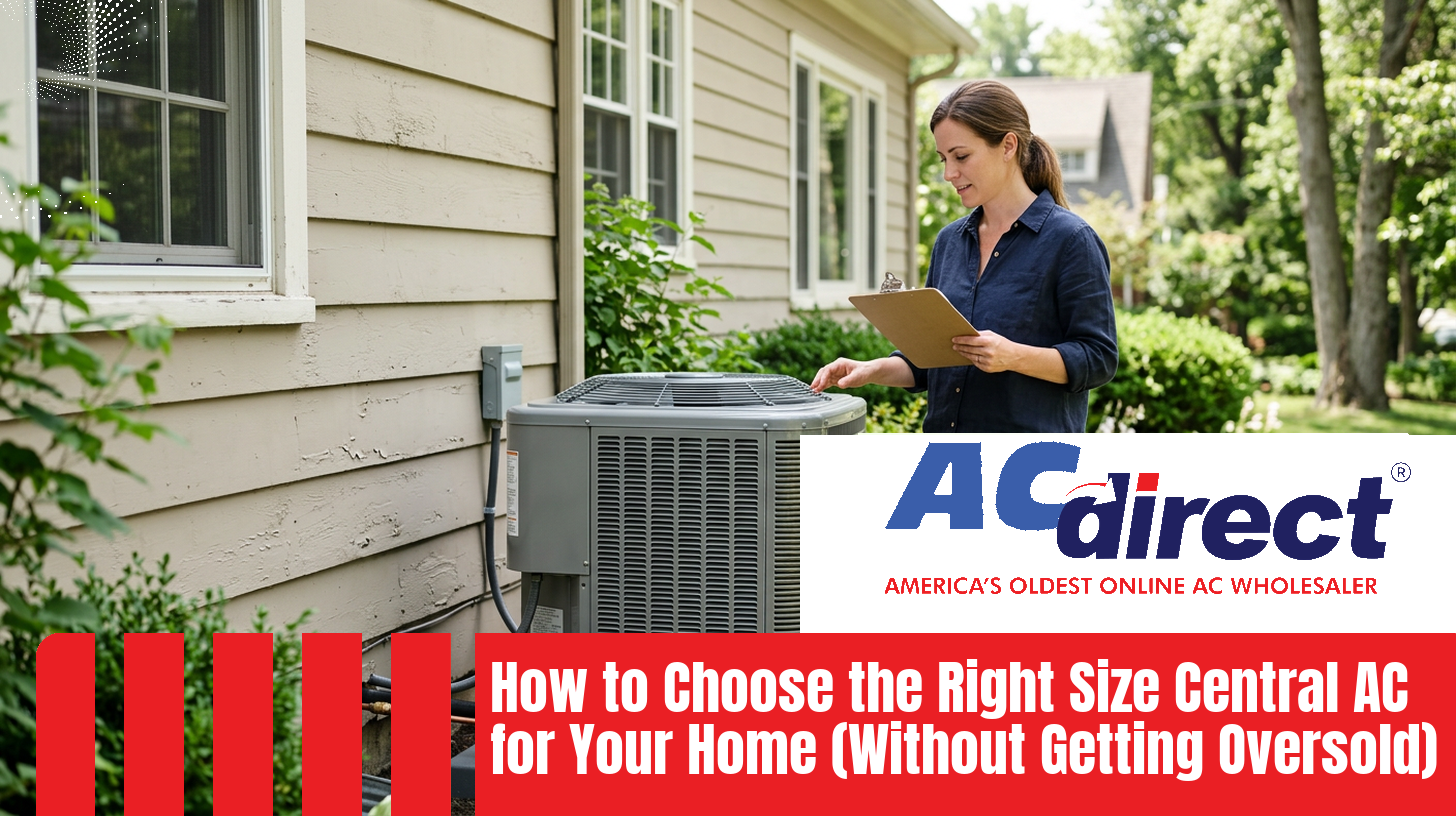
Nearly half of all residential AC units are the wrong size. Most are too big. Here's how to figure out what your home actually needs before a salesperson decides for you.
Sizing is the single most common question homeowners ask about central air conditioning. It shows up on Reddit constantly, it drives the most anxious phone calls to HVAC shops, and it's the decision most likely to go wrong. Not because it's complicated, but because the person helping you choose often has a financial reason to steer you toward a bigger, more expensive unit.
Here's the uncomfortable truth: studies from the Air Conditioning Contractors of America (ACCA) and various industry reports estimate that 30 to 50% of residential AC systems are improperly sized, and the overwhelming majority of those are oversized. That means millions of homeowners are paying more upfront, spending more on electricity every month, and getting worse comfort in return.
This guide explains how AC sizing actually works, why bigger is genuinely not better, and how to make sure you end up with the right unit for your home. Whether you're buying through a contractor or purchasing equipment yourself at wholesale and hiring someone to install it, this is the information you need before you spend a dime.
When people shop for a new central air conditioner, they tend to fixate on the brand name or the efficiency rating. Those things matter. But the single most important decision is getting the capacity right. An AC unit's capacity is measured in tons (1 ton = 12,000 BTUs per hour of cooling), and most homes need somewhere between 1.5 and 5 tons.
Get the size wrong and no amount of brand prestige or high SEER numbers will save you. Here's why.
This is the far more common mistake. An oversized AC cools the air near the thermostat very quickly, then shuts off. A few minutes later, the house warms up again and the unit kicks back on. This rapid on-off pattern is called short cycling, and it causes a cascade of problems:
- Higher energy bills. Starting the compressor draws the most electricity. Short cycling means the unit starts and stops constantly, which according to the American Council for an Energy-Efficient Economy (ACEEE), can increase energy consumption by 8 to 30%.
- Poor humidity control. This is the one that surprises people. Your AC removes moisture (latent heat) from the air, but only when it runs long enough for water to condense on the evaporator coil and drain away. An oversized unit shuts off before it finishes dehumidifying, leaving your home feeling cool but clammy. That sticky feeling people blame on cheap equipment? Often it's an oversized unit.
- Shorter equipment life. All that starting and stopping puts mechanical stress on the compressor, contactor, and other components. Equipment wears out faster.
- Uneven temperatures. Some rooms feel cold while others stay warm, because the system never runs long enough to fully circulate conditioned air throughout the house.
Less common, but also a problem. An undersized unit runs constantly on the hottest days and never reaches your set temperature. Your bills climb, the equipment runs itself ragged, and your house is uncomfortable when you need cooling the most. The fix is the same: get the sizing right from the start.
The HVAC industry has a standard method for determining how much cooling (and heating) a specific home needs. It's called a Manual J load calculation, and it's published by ACCA. It's not a rough guess or a rule of thumb. It's an engineering calculation that accounts for the unique characteristics of your home.
A proper Manual J considers:
- Square footage (but that's just the starting point)
- Insulation levels in walls, attic, and floors
- Window size, type, and orientation (south-facing windows add way more heat than north-facing ones)
- Local climate data (design temperature for your specific area)
- Number of occupants (people generate heat)
- Heat-generating appliances (ovens, dryers, computers)
- Ceiling height
- Air leakage and ductwork condition
- Roof color and material
Two identical-looking 2,000-square-foot homes can have dramatically different cooling needs. One with new double-pane windows, spray foam insulation, and a light-colored roof might need 2.5 tons. The one next door with single-pane windows, minimal attic insulation, and a dark asphalt roof might need 4 tons. Square footage alone cannot tell you the answer.
You've probably seen the common guideline: 1 ton of cooling per 400 to 600 square feet of living space. Some versions say 1 ton per 500 square feet as a middle ground. This is fine as a ballpark to make sure you're in the right neighborhood, but it should never be the final basis for a purchase.
| Home Size (sq ft) | Estimated Cooling Need | Typical System Size |
|---|---|---|
| 800 - 1,000 | 18,000 - 24,000 BTU | 1.5 - 2 Ton |
| 1,000 - 1,300 | 24,000 - 30,000 BTU | 2 - 2.5 Ton |
| 1,300 - 1,700 | 30,000 - 36,000 BTU | 2.5 - 3 Ton |
| 1,700 - 2,100 | 36,000 - 42,000 BTU | 3 - 3.5 Ton |
| 2,100 - 2,500 | 42,000 - 48,000 BTU | 3.5 - 4 Ton |
| 2,500 - 3,000 | 48,000 - 60,000 BTU | 4 - 5 Ton |
These ranges assume average insulation and a moderate climate. Homes in Phoenix or Houston will trend toward the higher end. Homes in Portland or Charlotte with good insulation may trend lower. A Manual J calculation gives you the precise answer.
For a deeper dive into sizing with specific product recommendations by square footage, our comprehensive sizing guide covers both ducted and ductless systems.
Let's put real numbers on this. Say your home actually needs a 3-ton system, but your contractor installs a 4-ton unit because "you don't want to be without AC on the hottest day." Here's what happens to your wallet:
| Cost Factor | 3-Ton (Right-Sized) | 4-Ton (Oversized) |
|---|---|---|
| Equipment Cost (Wholesale) | $2,200 - $3,500 | $2,800 - $4,500 |
| Annual Cooling Cost | $600 - $900 | $700 - $1,100 (short cycling penalty) |
| Humidity Comfort | Good - runs long cycles | Poor - clammy feeling |
| Expected Compressor Life | 12 - 18 years | 8 - 14 years (more wear) |
| Extra Cost Over 10 Years | Baseline | $1,600 - $3,600+ more |
Energy penalty estimate based on ACEEE data showing 8-30% increased consumption from short cycling. Equipment costs reflect AC Direct wholesale pricing ranges for 2025-2026.
You pay more upfront for a bigger unit, more every month in electricity, and you replace it sooner because of the extra wear. There is no upside to oversizing. It's just money out the window.
SEER (Seasonal Energy Efficiency Ratio) measures how efficiently an AC unit converts electricity into cooling over an entire season. Higher SEER means lower operating costs. But SEER and sizing are separate decisions, and people often confuse them.
A 3-ton unit with a 16 SEER rating and a 3-ton unit with a 20 SEER rating have the same cooling capacity. They both remove the same amount of heat. The higher-SEER unit just does it using less electricity. Think of it like two cars that both go 70 mph, but one gets 25 miles per gallon and the other gets 35.
Upgrading from SEER 14 to SEER 16 can save 15-25% on cooling costs according to ENERGY STAR. Higher SEER ratings continue to save, but with diminishing returns per dollar spent on equipment.
The takeaway: get the size right first, then decide how much efficiency you want to pay for. A perfectly sized 16 SEER system will outperform an oversized 20 SEER system on both comfort and total cost of ownership.
One technology worth mentioning here: inverter-driven (variable-speed) compressors. Unlike traditional single-stage units that are either full-on or fully off, inverter systems can ramp their output up or down to match the actual cooling demand. On a mild day, they coast at 30-40% capacity. During a heat wave, they ramp up to full power.
This makes them more forgiving of slight oversizing because they can dial back instead of short cycling. They also run longer at lower speeds, which dramatically improves dehumidification. That said, they still need to be sized reasonably close to correct. A variable-speed system that's two tons oversized will still have problems.
If you live anywhere from Houston to Atlanta to Miami, humidity is not optional to think about. It's the whole game. Your AC handles two types of heat:
- Sensible heat: The temperature you can feel. This is what the thermostat reads.
- Latent heat: Moisture in the air. This is what makes 78°F feel tolerable or miserable.
An oversized AC in a humid climate is especially problematic because it cools the air (drops the sensible temperature) so fast that the thermostat is satisfied before the system has run long enough to wring moisture out of the air. The result: your thermostat says 74°F, but the indoor air is so humid that it feels like 78°F. You turn the temperature down further, the unit short-cycles even more, and your bill goes up while you still feel uncomfortable.
Not every contractor who recommends a larger unit is trying to rip you off. Some genuinely believe bigger is safer. But the data says otherwise, and you should know what to watch for.
If someone walks through your house, eyeballs the square footage, and quotes you a system size without asking about insulation, windows, or doing any calculation, that's a problem. Square footage is one input out of a dozen.
"You had a 4-ton, so we'll put in a 4-ton." But your old system might have been wrong too. And if you've added insulation, replaced windows, or sealed ductwork since that unit went in, you might now need less capacity.
"You don't want to be sweating on the hottest day of the year, do you?" A properly sized system handles the design temperature for your area. That's what Manual J calculates. A right-sized unit handles the hottest days just fine.
Ask for it. A Manual J report is a document with inputs and outputs. If they can't produce one, they didn't do one. Any contractor worth hiring should be willing to perform this calculation, or at minimum explain why they're recommending a specific size.
If two contractors say 3 tons and one says 5, ask the outlier to explain. There might be a reason, or there might not be.
You don't need to become an HVAC engineer. But doing a little homework before you start getting quotes puts you in a much stronger position.
Use the square footage table above to get a rough idea of what size system your home probably needs. This gives you a sanity check. If your 1,800-square-foot home with good insulation gets quoted a 5-ton system, you know to ask questions.
Walk through your house with fresh eyes. Are there rooms with lots of west-facing windows? Is the attic insulation thin or missing? Are there obvious air leaks around doors and windows? These details all affect your cooling load, and knowing about them helps you have an informed conversation with any contractor.
Three quotes is the minimum. Compare not just the price but the recommended system size. If they're all within half a ton of each other, you're probably in the right ballpark. If one is significantly different, dig into why.
Request that at least one of your contractors perform a Manual J load calculation. Some charge a small fee for this, and it's worth every penny. It's the only way to know for sure what your home actually needs.
This is where AC Direct's model comes in. When you buy your own equipment at wholesale pricing and hire a contractor for installation only, you remove the incentive for anyone to upsell you on a bigger or more expensive unit. You choose the right size based on your research and your load calculation. The contractor installs what you've selected. For more on how this works, see our full cost breakdown guide.
The Inflation Reduction Act provides meaningful financial incentives for energy-efficient HVAC equipment. Getting the size right is actually a prerequisite for maximizing these benefits, because many rebate programs require proper installation practices.
For current rebate details and eligible models, visit the AC Direct rebate page.
If you're shopping now, you'll see systems using different refrigerants: R-410A, R-32, and R-454B. The EPA is phasing down R-410A production due to its high global warming potential, which means R-410A units will become more expensive to service over time. Newer systems using R-32 or R-454B are the direction the industry is heading. This doesn't directly affect sizing, but it's worth factoring into your purchase decision for long-term service costs. Our article on older systems explains more about why newer refrigerants matter.
Getting your AC size right is not a luxury. It's the foundation that everything else depends on. An oversized system wastes energy, fails to control humidity, short-cycles itself to an early death, and costs you more at every stage from purchase to operation to replacement.
The right approach: get a Manual J load calculation (or at minimum, understand the factors that drive it), get multiple quotes, compare the recommended sizes, and be skeptical of anyone who sizes by square footage alone or pushes you toward a bigger unit without data to back it up.
And if you want to take the guesswork out of pricing, AC Direct sells the same equipment contractors install, at wholesale prices, shipped directly to your door. You pick the right size. You pick the right efficiency. Your contractor installs it. No markup on the equipment. No incentive for anyone to oversell you.
Browse central AC and heat pump systems by size, efficiency, and price. AC Direct offers wholesale pricing on equipment from Goodman, ACiQ, Daikin, and more. No contractor markup. Ships nationwide.