

Hybrid Heat Pump Systems: The Best of Both Worlds for Cold-Climate Homeowners
-
 By
Michael Haines
By
Michael Haines
- Mar 11, 2026
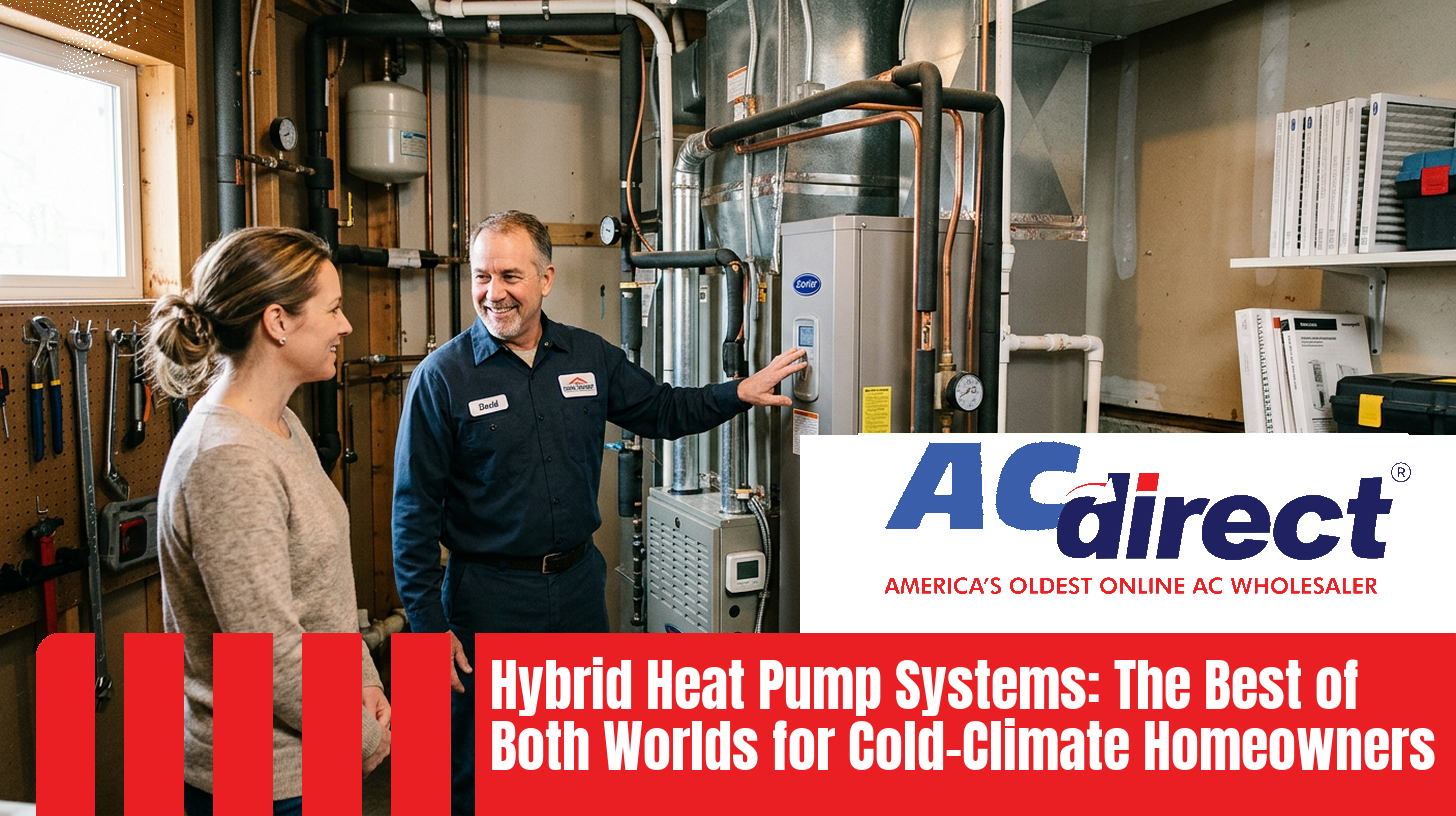
How a dual fuel setup gives you heat pump savings 80% of the year and gas furnace backup for the handful of nights that actually get brutal.
There is a conversation that plays out on Reddit, in Facebook groups, and across kitchen tables every fall. Someone mentions heat pumps. Someone else says they looked into it but they live in Minnesota, or upstate New York, or northern Ohio, and they are not convinced a heat pump can handle a real winter on its own. A third person jumps in with the answer that keeps coming up again and again: "What about dual fuel?"
That third person is usually right. A hybrid heat pump system - also called a dual fuel system - pairs a heat pump with a gas or propane furnace. The heat pump handles heating and cooling during the majority of the year, when it is by far the cheapest and most efficient option. When temperatures drop to a point where the economics or comfort shifts in favor of gas, the furnace takes over automatically. You never have to flip a switch or make a decision.
For homeowners in climate zones 4 through 7, this setup is quietly becoming the standard recommendation among well-informed HVAC professionals. Here is why, what it costs, and how to decide if it makes sense for your home.
At its core, a hybrid system is two heating sources managed by one thermostat. The system automatically chooses the most efficient or effective heat source based on outdoor temperature.
From about 30°F and above, the heat pump is your primary heating source. It transfers heat from outside air into your home using refrigerant and a compressor. During this range, it operates at a COP of 2.5 to 4.0, meaning you get 2.5 to 4 units of heat for every 1 unit of electricity you pay for. No furnace in the world can match that ratio.
When the temperature drops below the "balance point" - typically somewhere between 20°F and 35°F depending on your home and equipment - the furnace kicks in. A modern gas furnace delivers consistent, high-output heat regardless of outdoor temperature, with AFUE ratings of 80% to 98%.
In warm months, the heat pump reverses direction and works as a high-efficiency air conditioner. This is a full year-round system, not just a winter solution.
The "balance point" is the outdoor temperature where your home's heat loss equals the heat pump's heating output. Below that temperature, the heat pump can still run, but it has to work harder and costs more per unit of heat delivered. At some point, burning gas becomes the cheaper or more comfortable option.
For most homes in climate zones 5 and 6, the balance point falls somewhere between 25°F and 35°F. The exact number depends on three things:
- Your home's insulation and air sealing. A well-insulated home loses heat more slowly, which pushes the balance point lower and lets the heat pump do more work.
- The heat pump's cold-weather capacity. Modern cold-climate models maintain strong output well below freezing. Older or economy models lose capacity faster.
- Local energy prices. If electricity is cheap relative to gas, the heat pump stays the winner to lower temperatures. If gas is unusually cheap, the crossover happens sooner.
This is the key insight most homeowners miss. Even in cold-climate zones, the majority of winter hours are above the balance point. A study from climate zone 5 weather data shows that in a typical winter, only about 10% to 20% of heating hours fall below 20°F. The heat pump covers the rest at a fraction of the cost of running gas full-time.
This is where numbers matter more than opinions. A heat pump's efficiency, measured by COP (Coefficient of Performance), drops as temperatures fall. But it stays above 1.0 - meaning it is always more efficient than electric resistance heat - well into negative territory. The question for dual fuel owners is: at what temperature does gas become cheaper than the heat pump?
COP values based on field-tested cold-climate heat pump performance from the NEEP Cold Climate Air Source Heat Pump List. Actual balance point depends on local electricity vs. gas pricing.
Notice the "crossover zone" around 20°F. In many parts of the country, this is roughly where gas becomes competitive with the heat pump on a cost-per-BTU basis. A smart dual fuel thermostat is programmed to switch at exactly this point, so you are always running whichever source saves money.
Fair question. Modern cold-climate heat pumps can absolutely operate as the sole heating source in many homes, even in climate zones 5 and 6. The technology has come that far. But there are practical reasons why dual fuel still makes sense for a lot of homeowners:
If your home already has a working gas furnace with years of life left, adding a heat pump alongside it is significantly less expensive than replacing the entire system. You keep your furnace as backup and add a heat pump to handle the lion's share of heating and all of your cooling. This is the most common dual fuel scenario.
An all-electric heat pump system typically relies on electric resistance heat strips as emergency backup. Those strips run at a COP of exactly 1.0 - meaning you pay full price for every unit of heat. If your area experiences multiple days below 0°F each winter, those heat strips can spike your electric bill dramatically. A gas furnace avoids that problem entirely.
This one is emotional, but it is real. Homeowners in northern climates worry about polar vortex events, multi-day cold snaps, and ice storms. Knowing you have a gas furnace that can run independently of the heat pump (and that can operate with minimal electricity during a brownout scenario) provides genuine comfort beyond the BTU numbers.
Homeowners who switch from a gas-furnace-only setup to a dual fuel system can expect to save 30% to 70% on their annual heating bills. The wide range reflects differences in climate, energy prices, home insulation, and equipment efficiency. Here is a more specific breakdown:
| Heating Setup | Est. Annual Heating Cost | vs. Dual Fuel |
|---|---|---|
| Oil furnace only | $2,800 - $3,400 | $1,500 - $2,200 more |
| Propane furnace only | $2,200 - $2,800 | $900 - $1,600 more |
| Electric resistance only | $2,600 - $3,200 | $1,300 - $2,000 more |
| Gas furnace only (95% AFUE) | $1,400 - $1,800 | $100 - $600 more |
| Heat pump only (with strip backup) | $1,100 - $1,600 | Similar, varies by cold snaps |
| Dual fuel (heat pump + gas) | $900 - $1,300 | Lowest overall cost |
Savings are largest for homes replacing oil or propane systems. Homes with cheap natural gas will see more modest savings but still benefit from the heat pump's high-efficiency cooling. Source: U.S. Department of Energy.
The reason dual fuel edges out even an all-heat-pump system in many cold climates is simple: it avoids electric resistance backup. Those heat strips are the hidden cost killer in an all-electric setup. A gas furnace running at 95% AFUE during a polar vortex costs a fraction of what electric strips cost during the same event.
Upfront cost is the main hesitation for most homeowners considering a hybrid setup. Here is what to expect in 2025 and 2026:
- Heat pump unit: $3,000 to $8,000 for equipment, depending on size and efficiency tier.
- Gas furnace: If you already have one in good condition, this cost is $0. If you need a new one, expect $2,000 to $4,500 for equipment.
- Total installed system: $8,000 to $15,000+ for a complete dual fuel installation with both components and labor. Homes with existing ductwork and gas lines will be at the lower end.
That initial number can cause sticker shock. But two things bring it back down quickly: federal incentives and annual savings.
The Inflation Reduction Act made heat pumps meaningfully cheaper. Here is what is currently available. For eligible models and current details, visit the AC Direct heat pump rebate page.
When you combine a $2,000 federal tax credit, a potential state rebate, and $600 to $1,500+ in annual energy savings, many homeowners see payback within 5 to 7 years. After that, the savings are pure upside for the remaining 10 to 15 years of the equipment's lifespan.
One of the most common questions homeowners ask about dual fuel systems is: "Do I have to manually switch between the heat pump and furnace?" The answer is no. A dual fuel thermostat handles everything automatically.
A dual fuel compatible thermostat monitors the outdoor temperature (via an outdoor sensor or weather data) and your indoor temperature setpoint. You or your installer program a switchover temperature - the balance point - and the thermostat decides which system runs. Many modern smart thermostats, including popular models from Honeywell and Ecobee, support dual fuel configurations right out of the box.
Make sure your installer disables the electric heat strips (auxiliary/emergency heat) in the air handler if your system has them. In a dual fuel setup, the gas furnace is your backup, not the strips. If the strips are left enabled, the system might default to expensive electric resistance heat instead of switching to gas. This is one of the most common setup mistakes, and it is the reason some homeowners see unexpectedly high electric bills after installing a dual fuel system.
Not every heat pump pairs well with a furnace in a dual fuel configuration. Here are the specs that matter most:
The most critical spec for cold-climate performance is the inverter compressor. Variable-speed inverter heat pumps can ramp up output during cold weather and cruise at low power during mild conditions. They do not short-cycle, they maintain steadier indoor temperatures, and they deliver meaningfully better COPs at low temperatures compared to single-speed units. If you are investing in a dual fuel system, the heat pump side should absolutely have an inverter compressor.
As of January 2025, new systems must use low-GWP (Global Warming Potential) refrigerants. The two main replacements are R-454B and R-32. Both perform well. Both are classified as A2L (mildly flammable, but safe in residential use with proper installation). The key thing to know: if you are buying a new system in 2025 or 2026, it will use one of these newer refrigerants, and that is a good thing for both performance and environmental impact.
This is where many installations go wrong. In a dual fuel system, the heat pump should be sized based on the cooling load, and the furnace covers whatever heating gap exists during extreme cold. If you oversize the heat pump to handle the full heating load, it will short-cycle during cooling season, leading to humidity problems and wasted energy.
| Home Size | Typical HP Size | Furnace Output |
|---|---|---|
| 1,000 - 1,200 sq ft | 2 Ton | 60,000 - 80,000 BTU |
| 1,200 - 1,500 sq ft | 2.5 Ton | 80,000 - 100,000 BTU |
| 1,700 - 2,100 sq ft | 3 - 3.5 Ton | 80,000 - 100,000 BTU |
| 2,000 - 2,500 sq ft | 3.5 - 4 Ton | 100,000 - 120,000 BTU |
| 2,400 - 3,000 sq ft | 4 - 5 Ton | 100,000 - 120,000 BTU |
These are rough estimates. Your installing contractor should perform a Manual J load calculation to determine the correct sizing for your specific home, insulation, windows, and climate zone.
One thing to check before installation: your home's insulation and air sealing. Many homeowners discover after installing a heat pump that their home leaks air like a sieve, forcing the system to work harder than it should. Addressing insulation gaps and air leaks before or during installation can lower your heating load, improve comfort, and let the heat pump handle an even larger share of the year.
AC Direct carries a range of heat pump systems that pair well with existing or new gas furnaces in a dual fuel configuration. Here are some standout options. Not sure what size you need? Our sizing guide walks through the basics.
17 SEER2 · Inverter compressor · R454B refrigerant · Heats to 5°F and beyond · Ideal for 1,200 - 1,500 sq ft homes
View Product17 SEER2 · R32 refrigerant · Variable-speed inverter · Strong cold-weather output for larger homes
View Product16.7 SEER2 · Heats to -22°F · R454B · One of the most cold-resilient options available for harsh climate zones
View ProductR32 refrigerant · Variable-speed fans · Budget-friendly cold-climate entry point with consistent airflow
View Product17.5 SEER2 · R32 · High-efficiency inverter · Top-tier performance for homes up to 2,500 sq ft
View Product19 SEER2 · 80% capacity at -22°F · Learning mode optimizes to your home · R454B · Great for smaller homes or additions
View ProductFor a deeper dive into heat pump technology and how modern systems handle cold weather, see our detailed guide: Hybrid Heat Pumps: Efficiency and Comfort.
Most dual fuel problems are not equipment problems. They are setup and installation problems. Here are the ones that come up again and again:
If your air handler has backup heat strips and they are not disabled, the system may default to expensive electric resistance heat instead of switching to gas. This is the number one cause of "my electric bill spiked after I got a heat pump" complaints.
If the switchover is set to 40°F, your furnace runs far more than it needs to, and you miss out on heat pump savings during mild cold. Work with your installer to set the balance point based on local energy prices and the heat pump's actual performance curve.
A rule-of-thumb sizing approach often leads to oversized or undersized equipment. Insist on a Manual J calculation. It takes your home's actual insulation, windows, square footage, and climate into account.
A heat pump in a drafty house is like a sports car on bald tires. Address obvious insulation gaps, seal ductwork, and weatherstrip doors and windows. This improves performance of any heating system, but it makes the biggest difference with heat pumps.
Not every thermostat can manage a dual fuel configuration. Make sure yours has a dedicated dual fuel mode with an outdoor temperature sensor or weather data integration. Most popular smart thermostats support this, but check the specs before purchasing.
This still happens. Some contractors are unfamiliar with cold-climate heat pump technology, and some are biased toward the equipment they have always installed. It is worth knowing the facts so you can evaluate their advice:
- Modern cold-climate heat pumps maintain rated capacity down to 5°F and operate effectively to -15°F or colder. Models on the NEEP Cold Climate Air Source Heat Pump List have been independently tested and verified for low-temperature performance.
- The U.S. Department of Energy states that modern heat pumps can deliver two to four times the energy they consume, even in cold weather.
- Heat pump sales have outpaced gas furnace sales in the U.S. since 2022, with strong adoption in cold-climate states like Maine, New York, and Minnesota.
If a contractor tells you a heat pump flat-out will not work, get a second opinion from someone experienced with inverter-driven, cold-climate equipment. A dual fuel system specifically addresses the concern they are raising - you still have gas backup for the worst conditions.
A hybrid heat pump system is not a compromise. It is an optimization. You get the high-efficiency, low-cost heating of a heat pump for 80% to 90% of the year, and the reliable, high-output warmth of a gas furnace for the handful of extreme cold events that define northern winters. You get air conditioning built in. You get federal tax credits that knock thousands off the price. And you get annual savings that can reach 30% to 70% compared to running a furnace alone.
If you already have a gas furnace in decent shape, adding a heat pump to create a dual fuel system is one of the highest-ROI upgrades you can make. If you are replacing everything, building a dual fuel system from scratch gives you the most flexible, resilient, and cost-effective heating and cooling platform available today.
AC Direct offers wholesale pricing on inverter heat pumps from ACiQ, Goodman, and more - all compatible with dual fuel configurations. No contractor markup. Ships nationwide.