 and now, NASCAR Racing Sponsor


Heat Pump for a New Build vs. Replacing Gas: Two Very Different Decisions
-
 By
Michael Haines
By
Michael Haines
- Mar 10, 2026

The sizing, electrical, and ductwork considerations are not the same. Here is what actually changes depending on which path you are on.
New residential construction is booming across the Sun Belt, with the Southeast and Southwest accounting for nearly 40% of all new homes being built. At the same time, millions of homeowners with aging gas furnaces are weighing whether to switch to a heat pump during their next replacement cycle. Both groups end up shopping for the same equipment, but the decisions they face could not be more different.
If you are building new, you have a blank canvas. No existing ductwork to work around, no undersized electrical panel to upgrade, no gas line to decommission. You get to design the system right from the start. If you are replacing gas, you are inheriting someone else's decisions - or your own from 15 years ago - and adapting around them.
This article walks through both paths side by side so you can see exactly where they overlap, where they diverge, and what each one actually costs. Whether you are framing walls or staring at a furnace that is on its last legs, the goal is the same: the right heat pump, sized correctly, installed properly, running efficiently for the next 15 to 20 years.
Walk into any HVAC forum and you will find homeowners asking "how much does a heat pump cost?" as if there is one answer. There is not. A heat pump installation in a new build and a gas-to-heat-pump conversion are fundamentally different projects with different budgets, different timelines, and different gotchas.
The equipment itself might even be the same unit off the same production line. But everything surrounding it - the electrical service, the ductwork, the thermostat wiring, the backup heating strategy - changes based on whether you are starting fresh or retrofitting.
Let's break down each scenario, starting with the easier one.
If you are building a new home, installing a heat pump is as close to a no-brainer as HVAC decisions get. You are designing the entire house around the system rather than cramming a system into an existing house. Here is what that means in practice.
A heat pump draws more electricity than a gas furnace because it runs on electric power for both heating and cooling. In new construction, your electrician specs the panel to handle this from the start. A 200-amp panel is standard in most new homes, and that is more than enough for a heat pump, an electric dryer, an EV charger, and everything else a modern household needs. No surprise upgrade. No second permit. No extra $2,000 to $4,000 bill that nobody warned you about.
This is a bigger deal than most people realize. Gas furnaces push air at around 120 to 140 degrees Fahrenheit. Heat pumps deliver air at a gentler 90 to 105 degrees. That cooler supply air still heats your home effectively, but it needs to move through ducts that are properly sized for higher airflow at a lower temperature. In new construction, the HVAC designer specs the duct system for the heat pump's actual airflow requirements from the beginning. No compromises, no workarounds, no rooms that never quite get warm enough.
Your builder's HVAC contractor should perform a Manual J load calculation on the house plans before selecting equipment. This calculates exactly how much heating and cooling your specific home needs based on square footage, insulation values, window types, orientation, and your local climate. In a new build, this calculation is clean because you know every variable. There are no unknowns like "what's behind that wall" or "how leaky is the attic."
Skipping the gas hookup entirely saves money upfront. No gas line trenching to the street, no meter installation, no monthly minimum charges from the gas utility even during months you barely use it. In many municipalities, eliminating the gas line shaves $1,500 to $3,000 off the construction budget before you even get to equipment.
This is the harder path, not because the technology is different, but because your house was built around assumptions that no longer apply. Here is what you are actually dealing with.
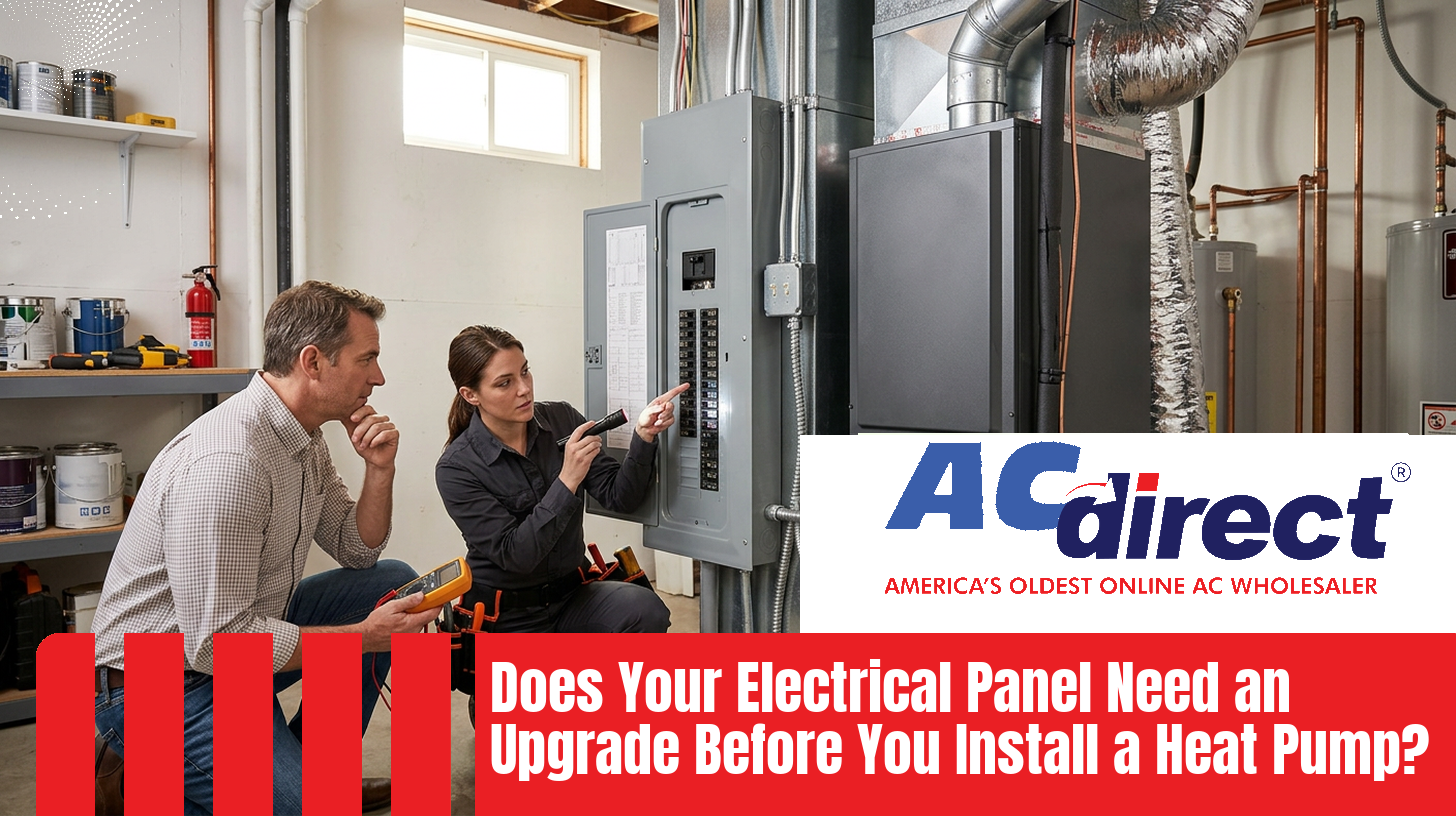
A gas furnace uses very little electricity - maybe 5 to 10 amps for the blower and controls. A heat pump needs a dedicated 30 to 60 amp circuit depending on the size. If your home has a 100-amp or 150-amp panel that is already close to capacity, you may need an upgrade to 200 amps before installation can begin. This is not optional and it is not cheap.
Panel upgrades typically run $2,000 to $4,000 including permits and inspection. Some older homes with outdated wiring may cost more. This is the single most common "surprise" that homeowners on Reddit and HVAC forums report when switching from gas to electric heating. It is not really a surprise if you plan for it, but many contractors do not mention it until deep into the quoting process.
Gas furnaces and heat pumps move air differently. A furnace blasts very hot air through relatively small ducts. A heat pump moves a higher volume of moderately warm air. If your ducts were sized tightly for a furnace, a heat pump may struggle to distribute enough air to every room. The result: some rooms feel cool while the system works harder than it should, and your electric bill climbs.
A good HVAC contractor will inspect your ductwork before recommending a heat pump. They are looking for:
- Undersized supply ducts that restrict the higher airflow a heat pump needs
- Leaky connections where heated air escapes into attics or crawlspaces (common in homes over 15 years old)
- Missing or crushed return air paths that starve the system
- Uninsulated ductwork in unconditioned spaces like attics, which lose heat before air reaches the room
Sometimes the existing ducts are fine. Sometimes they need sealing. Occasionally they need modification or partial replacement. The point is that this evaluation needs to happen before you buy equipment, not after.
When you had a gas furnace, it was probably sized primarily for heating. When you install a heat pump, it handles both heating and cooling. In warmer climates, the cooling load often drives the sizing decision. In colder climates, the heating load does. Your contractor still needs a Manual J calculation, but now they are working with an existing building that may have insulation gaps, air leaks, or other unknowns that make the math less clean than in new construction.
The common mistake: picking a heat pump with the same BTU rating as your old furnace without accounting for the differences in how the two systems deliver heat. Do not do this. Let the load calculation drive the decision.
You have a few options. If you are going fully electric, you can have the gas line capped and decommission the meter. Some homeowners keep the gas connection for a gas range, water heater, or fireplace. Others opt for a dual-fuel (hybrid) setup that pairs the new heat pump with the existing gas furnace as backup heat for the coldest days. More on that below.
Here is where the two paths diverge most sharply. The equipment cost is similar, but everything around it changes.
| Cost Category | New Construction | Gas Furnace Replacement |
|---|---|---|
| Heat pump equipment | $3,500 to $7,000 | $3,500 to $7,000 |
| Installation labor | $1,500 to $3,000 | $2,000 to $4,000 |
| Ductwork | Included in build | $0 to $3,000 (if modification needed) |
| Electrical panel upgrade | Included in build | $0 to $4,000 (if needed) |
| Gas line elimination savings | Save $1,500 to $3,000 | N/A or minimal |
| Permits and inspection | $200 to $500 | $200 to $800 |
| Typical Total Range | $5,000 to $12,000 | $7,000 to $18,000 |
Ranges reflect national averages for ducted split systems. Actual costs vary by region, system size, and home-specific conditions. See the incentives section below for credits that reduce these totals.
The takeaway is not that replacement is too expensive. It is that the ancillary costs - panel upgrades, duct modifications - are real line items that need to be in your budget from the start. When homeowners feel burned by a heat pump conversion, it is almost always because those costs appeared unexpectedly, not because the equipment itself was overpriced.
Whether you are building new or replacing gas, an oversized or undersized heat pump creates problems. Oversized systems short-cycle (turn on and off too frequently), waste energy, and fail to dehumidify properly in summer. Undersized systems run constantly and lean on expensive backup heat strips to make up the difference.
| Home Size | Estimated BTU Need | Typical System Size |
|---|---|---|
| 1,000 to 1,200 sq ft | 24,000 BTU | 2 Ton |
| 1,200 to 1,500 sq ft | 30,000 BTU | 2.5 Ton |
| 1,700 to 2,100 sq ft | 42,000 BTU | 3.5 Ton |
| 2,000 to 2,500 sq ft | 48,000 BTU | 4 Ton |
| 2,400 to 3,000 sq ft | 60,000 BTU | 5 Ton |
These are rough starting points. Insulation quality, ceiling height, window area, and climate zone all affect the real number. Your contractor should use ACCA Manual J methodology. For more detail, see our sizing guide.
Heat pump efficiency is measured two ways: SEER2 for cooling and HSPF for heating. Think of these like miles-per-gallon ratings for your HVAC system. Higher numbers mean more comfort per dollar spent on electricity.
Look for models with HSPF of 8.5 or higher and SEER2 of 16 or higher for meaningful energy savings over the life of the system. Source: U.S. Department of Energy.
The difference between a minimum-efficiency unit and a premium one is real money. On a 2,000 square foot home, moving from a 14.3 SEER2 system to an 18 SEER2 system can save $200 to $400 per year on cooling costs alone. Over a 15-year lifespan, that adds up to $3,000 to $6,000, often more than covering the price difference.
Whether you are building new or replacing, prioritize an inverter-driven compressor over a single-stage or two-stage model. Inverter compressors adjust their speed continuously - running at low power when the load is light and ramping up during peak demand. They use less energy, maintain more even temperatures, dehumidify better, and run quieter than traditional on-off systems. Think of it like cruise control versus slamming the gas pedal and brake over and over.
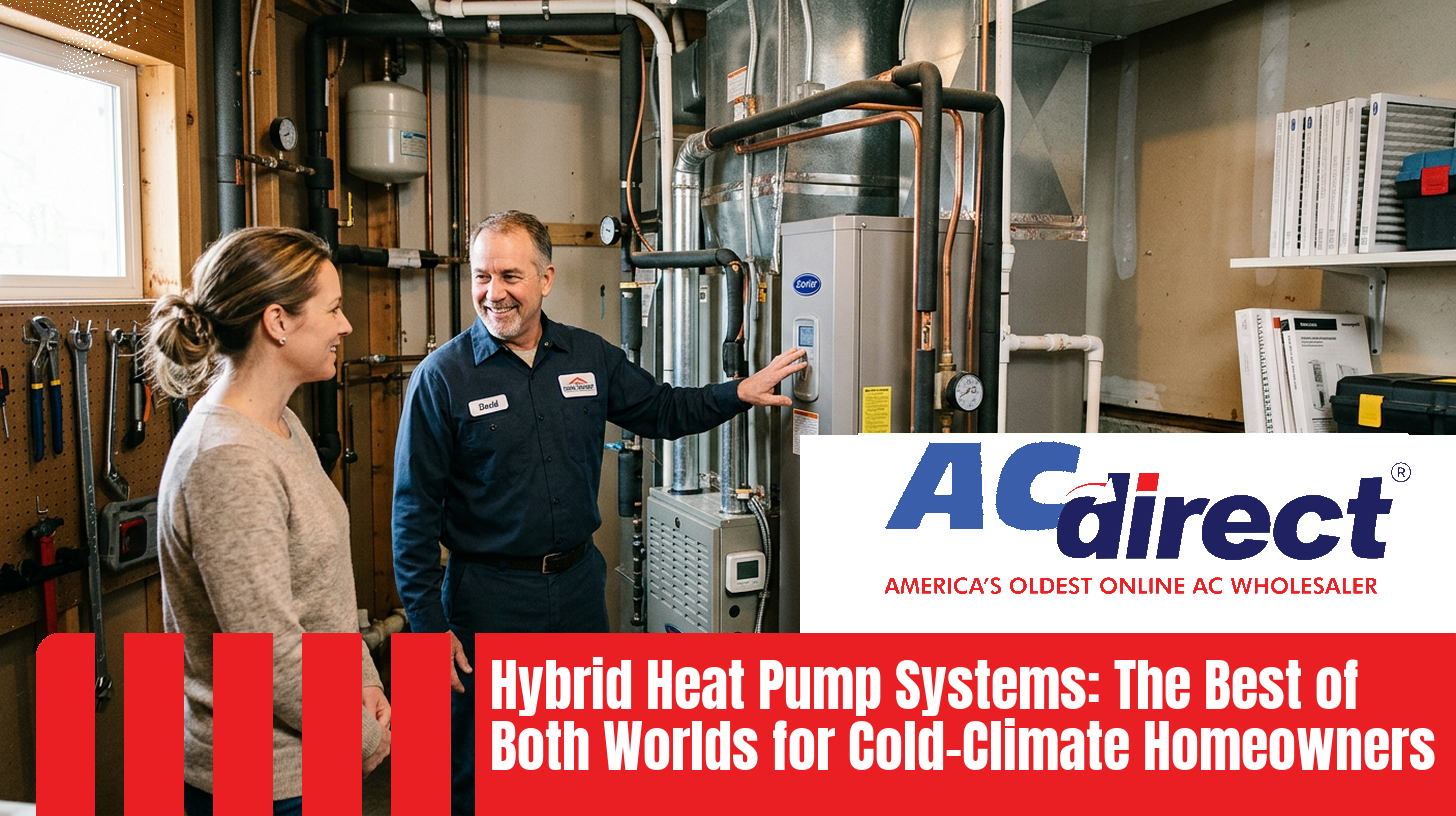
If you are replacing a gas furnace and live somewhere that sees extended stretches below freezing, a dual-fuel (hybrid) system might be the smartest move. This pairs your new heat pump with your existing furnace. The heat pump handles the vast majority of heating days - everything from mild fall nights down to around 25 to 35 degrees, depending on the system. When temperatures drop below the "balance point" where the heat pump's efficiency falls below the furnace's, the gas furnace takes over automatically.
This approach makes the most sense when:
- Your existing furnace is still in decent condition and has years of life left
- Your area has very cold winters (regularly below 20 degrees Fahrenheit)
- Natural gas is inexpensive in your region compared to electricity
- You want the savings of a heat pump without worrying about extreme cold performance
The good news: whether you are installing in new construction or retrofitting a replacement, the federal incentives are the same. The Inflation Reduction Act does not distinguish between the two scenarios.
For current rebate details and qualifying models, visit the AC Direct heat pump rebate page or search the DSIRE database for your state.
Tell your builder you want an all-electric heat pump system. This informs electrical panel sizing, duct design, and eliminates the gas line from the budget.
Do not let anyone guess at the system size. The calculation should use your actual insulation specs, window ratings, and local climate data.
Aim for at least 16 SEER2 and 8.5 HSPF. In new construction you have the most flexibility to choose premium efficiency since you are not constrained by existing infrastructure.
Even in new construction, the $2,000 federal credit applies. Many state programs do too. File with your taxes the following year.
Before shopping for equipment, find out if your panel can handle the additional load. This determines whether your budget needs an extra $2,000 to $4,000.
A qualified contractor should check duct sizing, sealing, and insulation. Ask specifically whether the ducts can handle the higher airflow a heat pump requires.
Do not assume you need the same tonnage as your old furnace. The calculation accounts for your home's actual heating and cooling needs.
If your furnace still has life in it and your winters are harsh, dual fuel may offer the best balance of savings and peace of mind.
Make sure backup heat strips are sized to the actual gap in your heating load, not just the biggest option available. Oversized strips cost you money every time they run.
Yes, slightly. A gas furnace blasts air at 120 to 140 degrees in short, intense bursts. A heat pump delivers air at 90 to 105 degrees in longer, steadier runs. The room gets to the same temperature, but the sensation is different - more even, less dramatic. Most people prefer it once they adjust. If you have ever walked past a vent and felt scalded by furnace air, you will not miss that.
In cold weather, frost builds up on the outdoor unit's coil. The heat pump periodically runs a brief defrost cycle (3 to 10 minutes) to clear it, during which you might notice slightly cool air from the vents. This is completely normal. It is not a malfunction. Our defrost vs. problem guide explains exactly what to look for.
Modern inverter heat pumps run significantly quieter than older models, typically in the 55 to 65 decibel range at full speed - comparable to a normal conversation. At low speed they can drop below 50 decibels. In both new construction and replacement, place the outdoor unit away from bedroom windows and on a stable mounting surface to minimize noise and vibration.
The industry is transitioning to lower-impact refrigerants. Newer models use R-32 or R-454B, which have significantly lower global warming potential than the older R-410A. If you are buying new equipment in 2025 or later, most manufacturers are already shipping with these newer refrigerants. This is worth noting because older R-410A models will become harder and more expensive to service over time.
If you are building new, install a heat pump. The economics, the design flexibility, and the long-term efficiency all favor it. Skip the gas line entirely and size everything right from the start. Your total installed cost will likely be $5,000 to $12,000, and you will save money every month compared to gas.
If you are replacing a gas furnace, the decision is still strongly in favor of a heat pump, but go in with open eyes. Budget for a potential electrical panel upgrade and duct evaluation. Consider dual fuel if your winters are harsh and your furnace still works. Get a proper load calculation. Your total project cost may run $7,000 to $18,000 before incentives, but the $2,000 federal tax credit plus state rebates and 30 to 60% lower heating bills mean the payback is real.
Either way, the equipment is the same. AC Direct carries it all at wholesale prices - no contractor markup - whether you are a homeowner managing your own project or a contractor buying for a client.
AC Direct offers wholesale pricing on inverter heat pump systems from top manufacturers. Browse by size, efficiency, or refrigerant type. Ships nationwide, no middleman markup.