Use Code MEGA3 for an Extra 3% Off
Free Shipping On Orders Over $1500

America's Leading Discount HVAC Supplier Since 2001 ... and now, NASCAR Racing Sponsor

Ask an Expert
866 862 8922


 Hours of Operation
 8am - 8pm EST
8am - 8pm EST


The Complete Furnace Buying Guide
Fuel, then size, then efficiency. In that order.
Most people shop for a furnace the way they shop for a television: they look at the brand, then the price, then maybe one number on the box. That works for a television because a television does not have to match your house.
A furnace does. It has to match your fuel, your square footage, your climate, your ductwork and the way your house lets it breathe. Get those right and almost any good furnace will serve you well for twenty years. Get them wrong and the best brand on the market will short-cycle, run loud and cost you money every winter.
Last updated October 9, 2026
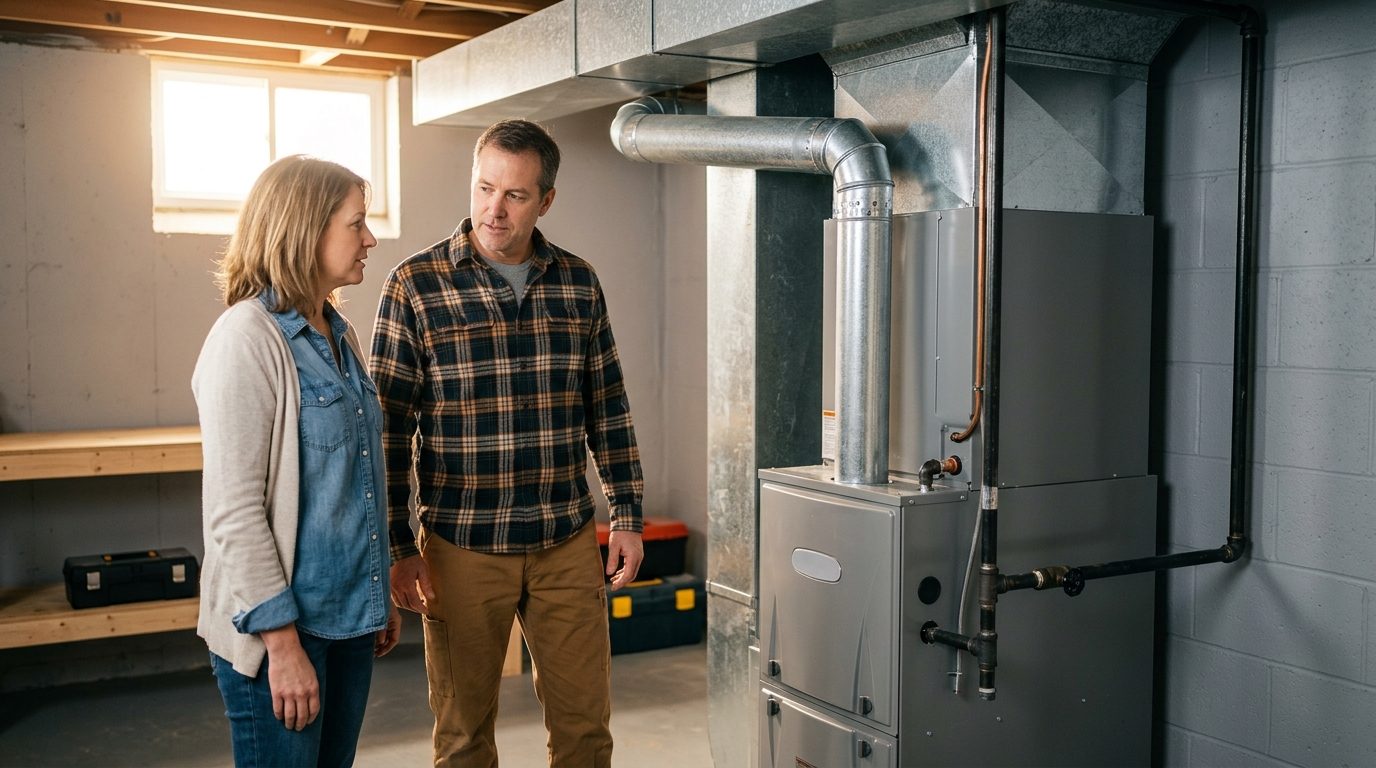
This guide walks through the decisions in the order they actually get made. Each section gives you the short answer, explains what moves it one way or the other, and points you to the full article when you want the detail.
None of it requires an engineering degree. It does require answering the questions in order, because each one narrows the next. There is no point comparing two-stage burners on a furnace that is the wrong size.
Questions This Guide Will Answer
- Should you buy a gas, propane or electric furnace?
- What size furnace do you need?
- Should you buy an 80% or a 95%+ AFUE furnace?
- Single-stage, two-stage or modulating?
- How will the furnace vent, and where can it go?
- What happens inside a furnace?
- What does a new furnace cost?
- Should you repair or replace your old furnace?
- Which furnace brand should you buy?
- How does a furnace work with an air conditioner or heat pump?
- What about a mobile or manufactured home?
- What if your furnace is acting up right now?
- What should you check before you order?
How Do You Choose the Right Furnace?
Choose a furnace by deciding five things in order: the fuel your house has (natural gas, propane or electric), the heating output in BTU your house needs, the efficiency (80% AFUE or 95% and up), the burner staging (single-stage, two-stage or modulating), and the cabinet configuration and venting the space allows. Compare brands and prices only after those five are settled, because they decide which furnaces are even candidates.
Should You Buy a Gas, Propane or Electric Furnace?
Short answer: use the fuel your house already has. If natural gas is piped to the house, a gas furnace is almost always the cheapest heat to run. If you are on propane, a gas furnace with a propane conversion kit does the same job. Electric furnaces cost the least to buy and the most to run, and they make sense mainly in mild climates or where there is no gas at all.
Switching fuels is possible, but it is a bigger project than a furnace swap: a new gas line or tank, new venting, sometimes a new electrical service. Price that work before you fall in love with the fuel bill on the other side.
Every Goodman and ACiQ gas furnace we sell runs on natural gas out of the box and converts to propane with the manufacturer's LP propane conversion kit.
Go deeper: propane vs natural gas furnace, electric vs gas furnace, furnace vs boiler and furnace vs air handler.
What Size Furnace Do You Need?
Short answer: most homes need 30 to 60 BTU of heating output per square foot. Warm southern climates sit at the low end, the far north at the high end, and insulation, ceiling height and window area move you within that range.
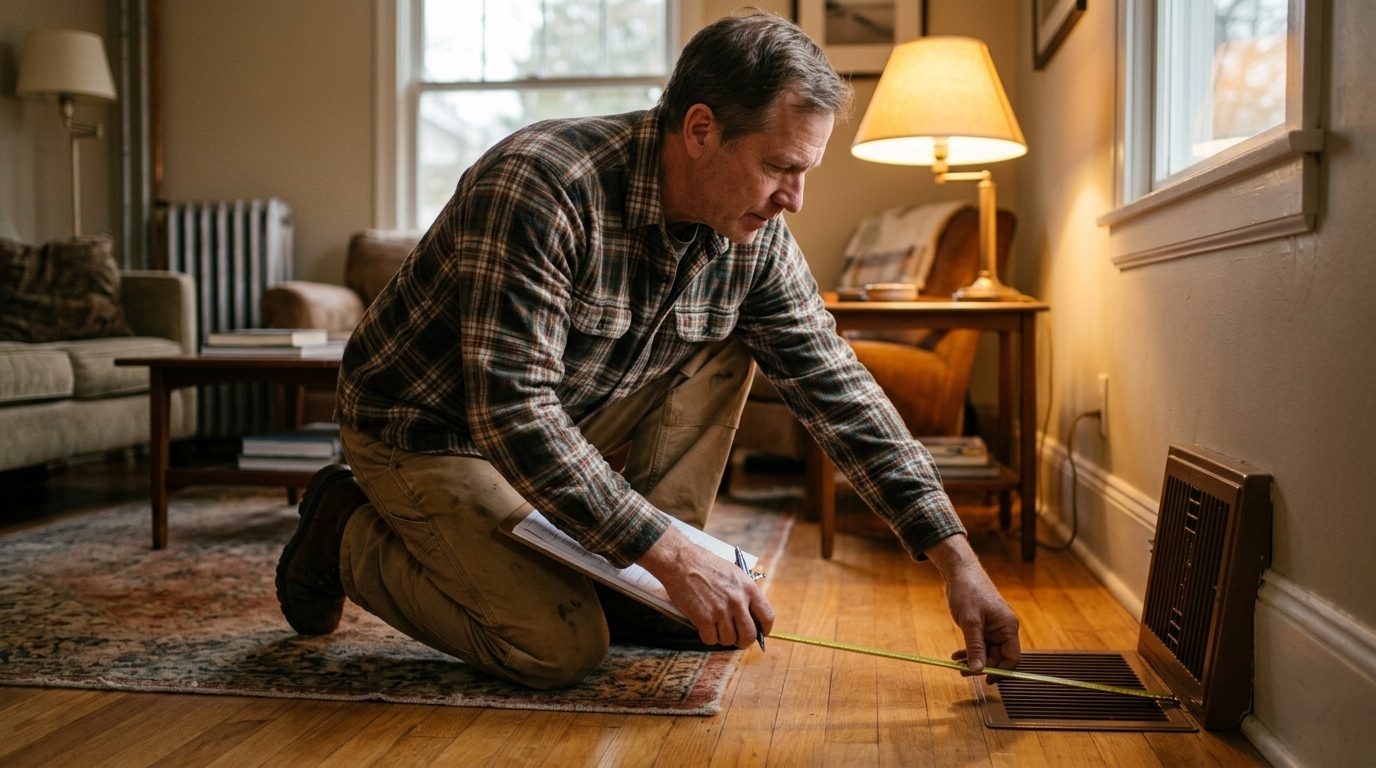
Two details trip people up. First, furnaces are sold by input BTU, the gas they burn, while your house needs output BTU, the heat that reaches the ducts. An 80,000 BTU furnace at 80% AFUE delivers 64,000 BTU of heat; the same input at 96% delivers about 76,800. Second, bigger is not safer. An oversized furnace heats the house in short bursts, shuts off and starts again, which wastes fuel, wears parts and leaves the far rooms cold.
Our furnace sizing calculator gives you a starting number by climate zone and square footage, and the BTU by square footage chart shows the math. For a house with an addition, a finished basement or a wall of windows, a Manual J load calculation is worth the money.
Go deeper: oversized vs undersized furnace.
Should You Buy an 80% or a 95%+ AFUE Furnace?
Short answer: in a cold climate with a long heating season, buy high efficiency. In a mild climate, or in a house where adding a new vent and a condensate drain is hard, an 80% furnace is often the smarter money.
AFUE is the share of the fuel you pay for that ends up as heat in the house. An 80% furnace sends about a fifth of it up the flue. A 96% furnace captures most of that with a second heat exchanger that cools the exhaust until water condenses out of it, which is why high efficiency furnaces are also called condensing furnaces. That design changes the installation: the exhaust is cool enough to vent through plastic pipe, often out a side wall, and the furnace needs a drain.
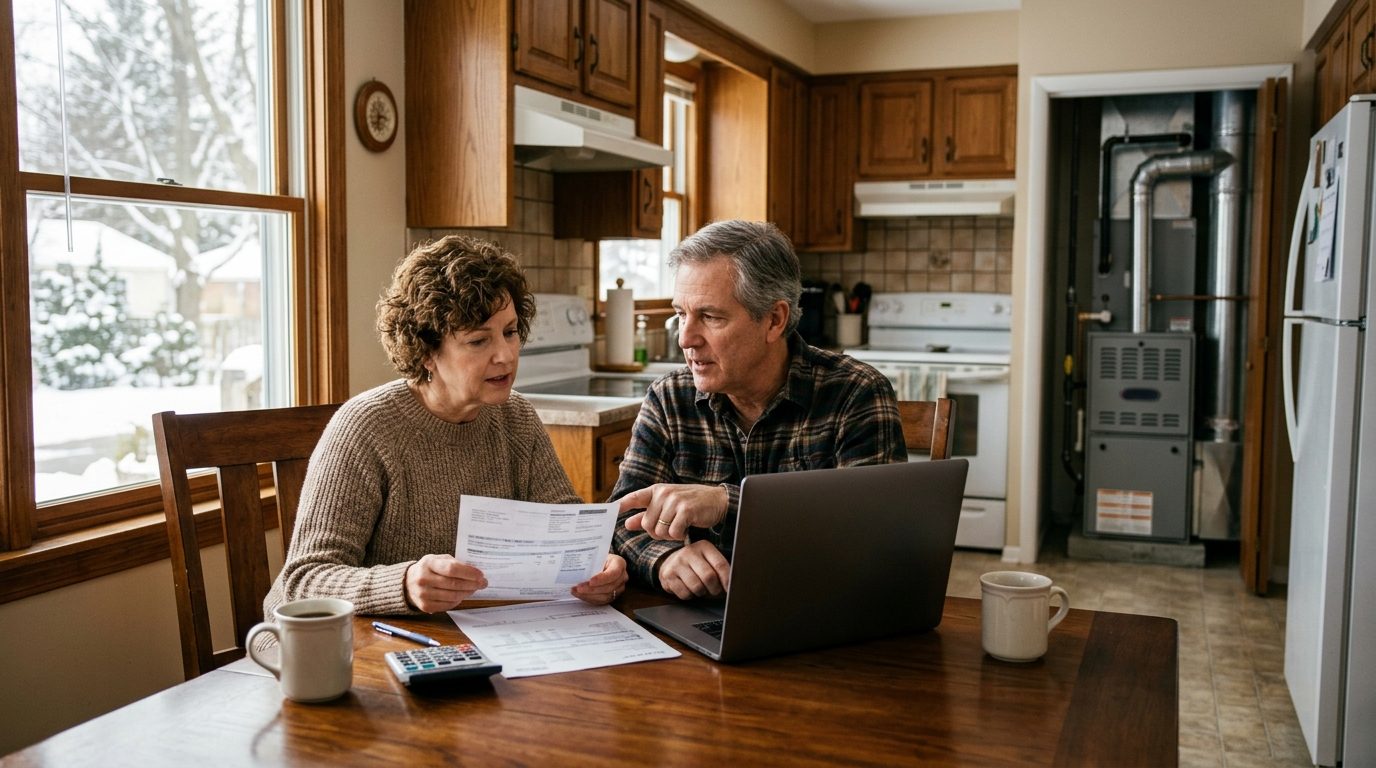
The payback math is simple. The more gas you burn in a year, the faster the higher efficiency pays for itself. A house in Minnesota burns several times the gas of the same house in Georgia, so the same upgrade can pay back in a few winters up north and take far longer down south.
Shop our high efficiency gas furnaces at 96% and 97% AFUE.
Go deeper: 80% vs 95% AFUE furnace, what AFUE means, what makes a furnace high efficiency, how a condensing furnace works and primary and secondary heat exchangers.
Single-Stage, Two-Stage or Modulating?
Short answer: single-stage is the value choice, two-stage is the comfort sweet spot for most cold-climate homes, and modulating is for people who want the most even temperatures and will pay for them.
A single-stage furnace has one speed: full fire. A two-stage furnace has a low setting, typically about 65 to 70% of its capacity, and spends most of the winter there, running longer and quieter with fewer temperature swings. A modulating furnace adjusts in small steps across a wide range so its output tracks the heat loss of the house almost exactly. Pair any of them with a variable-speed blower and the air moves more quietly too, which also helps your air conditioner in summer.
Go deeper: single-stage vs two-stage furnace and single-stage, two-stage and modulating furnaces compared.
How Will the Furnace Vent, and Where Can It Go?
Short answer: an 80% furnace vents up a metal flue, usually into a chimney or a B-vent, so it fits where the old 80% furnace was. A 95%+ furnace vents through plastic pipe, usually out a side wall or the roof, and needs a condensate drain. The vent and the drain often decide which efficiency is practical in your house.
Configuration matters as much as venting. Furnaces come in upflow (basements and closets), downflow (slab homes with ducts in the floor) and horizontal (attics and crawl spaces), and many current models are multi-position, so one cabinet can be set up any of those ways. Measure the space, the duct connections and the clearances before you order.
Go deeper: furnace venting requirements, multi-position furnaces, putting a furnace in the attic and how the condensate drain works.
What Happens Inside a Furnace?
Short answer: the thermostat calls for heat, the inducer motor clears the vent, a pressure switch confirms it, the igniter lights the burners, the heat exchanger warms up, the blower moves house air across it, and the exhaust leaves through the flue. Safety switches check every step before the next one starts.
You do not need to know this to buy a furnace. It helps when you compare features, read a spec sheet, or try to work out why the old one keeps locking out.
Go deeper: how a gas furnace works and how furnace ignition works.
What Does a New Furnace Cost?
Short answer: the total is two numbers: the equipment and the installation. Current equipment pricing shows on every product page. Installation depends on your region and on how much changes: a same-size, same-efficiency swap is the least expensive job, and a switch to a condensing furnace with new venting and a drain costs more.
Buying the equipment direct and hiring a licensed installer for the labor separates those two numbers, so you can see what each one costs instead of one bundled quote.
Go deeper: new furnace cost, furnace equipment cost vs installed cost and furnace financing.
Should You Repair or Replace Your Old Furnace?
Short answer: replace when the furnace is past 15 to 20 years old and the repair is expensive, when the heat exchanger is cracked, or when repairs are coming every season. Repair when the furnace is young and the failed part is a switch, a sensor or an igniter.
Replacing a furnace is also the moment to fix what was wrong with the old one. If it was oversized, size the new one correctly. If rooms were always cold, look at the ductwork while it is exposed. You keep the ducts, the thermostat wiring and usually the gas line; the cabinet, the venting and sometimes the coil are what change.
Go deeper: replacing a furnace, repair or replace your furnace and cracked heat exchanger.
Which Furnace Brand Should You Buy?
Short answer: the brand matters less than the size, the installation and the warranty paperwork. A correctly sized furnace from any major manufacturer, installed well and registered on time, will outlast a premium brand installed badly.
What separates brands is the warranty terms, how easy parts are to get in your area, and which features come at which price. AC Direct sells Goodman gas furnaces and ACiQ gas furnaces, in 80% and high efficiency models, and Goodman furnaces carry the AC Direct Price Promise.
Go deeper: how to judge a furnace brand.
How Does a Furnace Work With an Air Conditioner or Heat Pump?
Short answer: the furnace blower moves the air for the air conditioner too, so the two are a system. If you are replacing both, buying them as a matched gas furnace and AC system makes sure the coil, the blower and the condenser are rated to work together.
A heat pump with a gas furnace as backup, called dual fuel, uses the heat pump in mild weather and switches to the furnace when it gets cold enough that gas is cheaper. It is a strong option in cold climates with moderate electric rates.
Go deeper: heat pump vs gas furnace, the balance point in freezing weather and dual fuel heat pump systems.
What About a Mobile or Manufactured Home?
Short answer: manufactured homes need a furnace built and listed for them. A standard residential furnace is not a substitute. They are sized and vented differently and usually install as downflow units in a closet.
We carry mobile home gas furnaces from Intertherm, Revolv and Coleman.
Go deeper: how to choose a mobile home furnace.
What If Your Furnace Is Acting Up Right Now?
Plenty of people start shopping because the old furnace quit on a cold night. Before you replace it, it is worth knowing what failed. Many lockouts come from a clogged filter, a dirty flame sensor or a tripped switch, and the fix is small. These guides walk through the usual suspects.
Most Common Furnace Problems
Symptoms, causes and what to check first.
Read the guide → 02Furnace Not Turning On
Power, thermostat and switches, in the order to check them.
Read the guide → 03Furnace Won't Ignite
Reading the ignition sequence to find the failed step.
Read the guide → 04Furnace Blowing Cold Air
The usual causes and what each one looks like.
Read the guide → 05Furnace Keeps Shutting Off
Safety lockouts and what trips them.
Read the guide → 06Furnace Smells Like Burning
First-run dust or a real problem.
Read the guide → 07Furnace Pressure Switch
What it does, why it trips and what it tells you.
Read the guide → 08Furnace Inducer Motor
What failure sounds like and what it means.
Read the guide → 09Furnace Control Board
The furnace's brain and its error codes.
Read the guide → 10Furnace Rollout Switch
Why it trips and why you should never just reset it.
Read the guide → 11Changing the Furnace Filter
How often, and how to find the right size.
Read the guide → 12Cracked Heat Exchanger
What it means and whether to repair or replace.
Read the guide →What Should You Check Before You Order?
- Fuel: natural gas, propane (order the LP kit) or electric.
- Output BTU: from a load calculation or the climate-zone estimate, then the input size at the AFUE you choose.
- Efficiency: 80% with a metal flue, or 95%+ with plastic venting and a drain your installer has confirmed.
- Configuration: upflow, downflow or horizontal, and the cabinet width that fits your space and ducts.
- Staging and blower: single-stage, two-stage or modulating, and a variable-speed blower if comfort and quiet matter.
- The air conditioner: if you have one, confirm the coil fits the new cabinet, or buy a matched system.
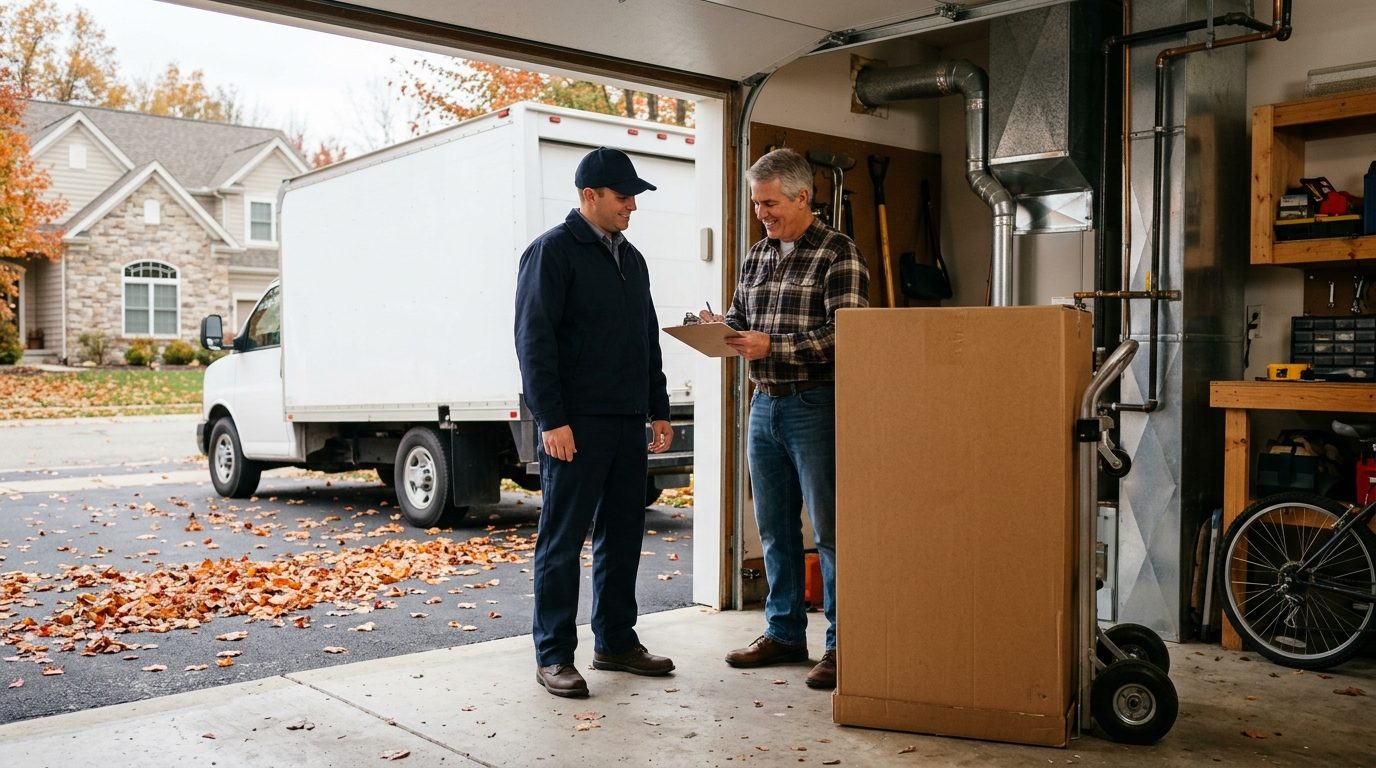
- The installer: a licensed HVAC contractor lined up before the furnace arrives, with the permit handled.
- Warranty registration: register the furnace with the manufacturer within the window it requires.
Questions on any of it? Our team has been sizing and shipping furnaces since 2001. Call 1-866-862-8922 and talk it through before you order.
Ready to Shop?
Current pricing shows on every product page, and every furnace ships direct to your door.
Frequently Asked Questions About Buying a Furnace
How do I choose the right furnace for my home?
Decide in this order: fuel (natural gas, propane or electric), heating output in BTU from a load calculation or a climate-zone estimate, efficiency (80% AFUE or 95% and up), burner staging, and the cabinet configuration and venting your house allows. Brand comes last, once those five are settled.
What size furnace do I need?
Most homes need roughly 30 to 60 BTU of heating output per square foot, depending on climate zone, insulation and ceiling height. Furnaces are sold by input BTU, so divide the output you need by the AFUE to find the input size. A Manual J load calculation gives the most accurate number.
Is a 95% AFUE furnace worth it over an 80% furnace?
Usually yes in cold climates with long heating seasons and high gas prices, because the extra efficiency pays back through lower fuel bills. In mild climates, or where adding PVC venting and a condensate drain is difficult, an 80% furnace can be the better buy.
What is the difference between single-stage, two-stage and modulating furnaces?
A single-stage furnace runs at full output every cycle. A two-stage furnace has a low and a high setting and spends most of the season on low, which gives steadier heat and quieter operation. A modulating furnace adjusts its output in small steps across a wide range for the most even temperatures.
Can I install a furnace myself?
Furnace installation involves gas piping, venting, electrical work and combustion testing, and most areas require a licensed installer and a permit. AC Direct sells the equipment; plan on a licensed HVAC contractor to install and start it up so the manufacturer warranty is protected.
Which furnace brands does AC Direct sell?
AC Direct sells Goodman and ACiQ gas furnaces in 80% and high efficiency models, plus Intertherm, Revolv and Coleman furnaces for mobile and manufactured homes.