Use Code MEGA3 for an Extra 3% Off
Free Shipping On Orders Over $1500

America's Leading Discount HVAC Supplier Since 2001 ... and now, NASCAR Racing Sponsor

Ask an Expert
866 862 8922


 Hours of Operation
 8am - 8pm EST
8am - 8pm EST


How Inverter Air Conditioners & Heat Pumps Work: The Complete Guide
Your Car Changes Speed. Your Air Conditioner Should Too.
For decades, most residential air conditioners have had a remarkably simple operating strategy: turn on at full capacity, run until the thermostat is satisfied, shut off, then wait for the house to get uncomfortable enough to do it all over again. It works.
So does stopping your car by driving into the garage door.
Last updated October 8, 2026
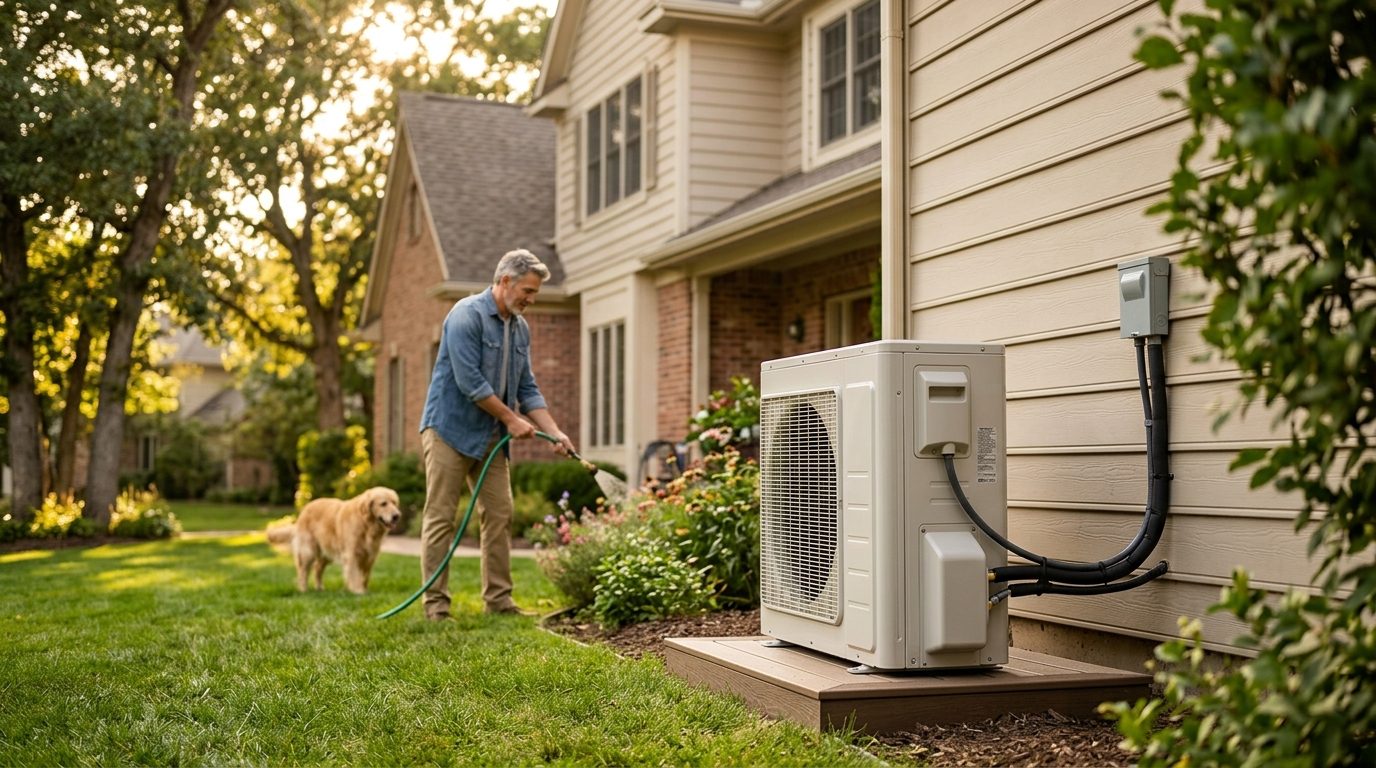
Inverter technology takes a much more intelligent approach. Instead of forcing an air conditioner or heat pump to choose between 100% and nothing, it allows the compressor to continually adjust its output to match what your home actually needs. That one difference changes almost everything: temperature control, humidity removal, noise, energy use and even the way the system feels when it is running.
And that last part matters. Most HVAC discussions start with efficiency ratings because efficiency can be reduced to a number. Comfort is harder to put on a yellow sticker.
But control is really the story behind inverter technology. An inverter system can respond to what your house needs right now instead of delivering maximum capacity every time the thermostat calls. Once you understand that, most of the other benefits make sense.
If you're trying to decide whether an inverter system belongs in your home, we'll help you understand exactly what you're buying without requiring an engineering degree first.
Questions This Guide Will Answer
- What is an inverter air conditioner?
- How does an inverter air conditioner work?
- What is an inverter heat pump?
- Do inverter heat pumps work in cold weather?
- What is the difference between single-stage, two-stage and inverter HVAC?
- Why do inverter air conditioners feel more comfortable?
- Are inverter systems better at controlling humidity?
- Why do inverter air conditioners run longer?
- Are inverter air conditioners quieter?
- Do inverter air conditioners save energy?
- What is SEER2?
- What is the difference between inverter, variable-speed and communicating HVAC?
- Is an inverter air conditioner the same as a mini-split?
- Are side-discharge air conditioners always inverters?
- How should an inverter HVAC system be sized?
- Can an inverter system still be oversized?
- Does an inverter system need different ductwork?
- Are inverter HVAC systems reliable?
- Are inverter systems more expensive to repair?
- Does an inverter system require a special thermostat?
- Are inverter systems better for hot, humid climates?
- How do inverter heat pumps perform in cold climates?
- What is a dual-fuel inverter system?
- Who gets the most value from an inverter?
- Are inverter air conditioners worth it?
- What are the disadvantages of inverter air conditioners?
- How much does an inverter air conditioner cost?
- What should you compare before buying an inverter system?
What Makes an Inverter HVAC System Different?
An inverter air conditioner or heat pump uses a variable-capacity compressor that adjusts its output to match the heating or cooling your home actually needs. Instead of repeatedly operating at full capacity and shutting completely off, it can run longer at lower output, helping maintain steadier temperatures, better humidity control, quieter operation and improved efficiency.
Now let's look at how it actually does that.
What Is an Inverter Air Conditioner?
An inverter air conditioner is an air-conditioning system that can vary the speed and output of its compressor instead of repeatedly switching the compressor completely on and off.
That's the short answer. The more useful answer is that an inverter gives an air conditioner something conventional systems have never been particularly good at: throttle control.
Imagine your house needs 22,000 BTUs of cooling at this particular moment. A traditional 36,000-BTU single-stage air conditioner cannot decide to produce 22,000. It has two choices: 36,000 BTUs or zero. The thermostat may be asking politely for a little cooling, but the equipment has no little. Diplomacy was never part of the design.
An inverter system can reduce compressor speed and operate much closer to the actual cooling requirement of the house. As conditions change (the outdoor temperature rises, people come home or afternoon sun hits the windows), the compressor can increase or decrease output with them.
That ability to match capacity to demand is the central idea behind inverter HVAC. Everything else follows from it.
The Easiest Way to Understand an Inverter: Think About Your Car
Suppose you're driving 65 MPH on the interstate and come to a hill. Your car needs more power, so the engine produces more power. Once you're over the hill, it produces less. Cruise control continually makes small adjustments to keep the car around 65 MPH.
Now imagine designing the car differently. There is no accelerator. Instead, the engine can operate only at idle or redline. Every time the car falls below 65 MPH, the engine immediately goes to maximum RPM. Once the car passes 65, the engine shuts off completely. When the car slows down again, the engine screams back to redline.
You could probably get to Tampa. Your relationship with law enforcement might become less predictable.
That is essentially the difference between conventional single-stage air conditioning and inverter air conditioning. A conventional compressor is mostly an ON/OFF machine. An inverter compressor can change RPM.
When your house needs a great deal of cooling on a 96-degree afternoon, the system can accelerate. When it needs far less cooling later that evening, it can slow down.
The clever part isn't that it works harder. It finally learned when not to.
Ready to See What Inverter Systems Actually Cost?
Understanding the technology is useful. Eventually, however, somebody has to put a price on the thing.
Here are several popular inverter systems so you can get a feel for current equipment prices, efficiency levels and available configurations.
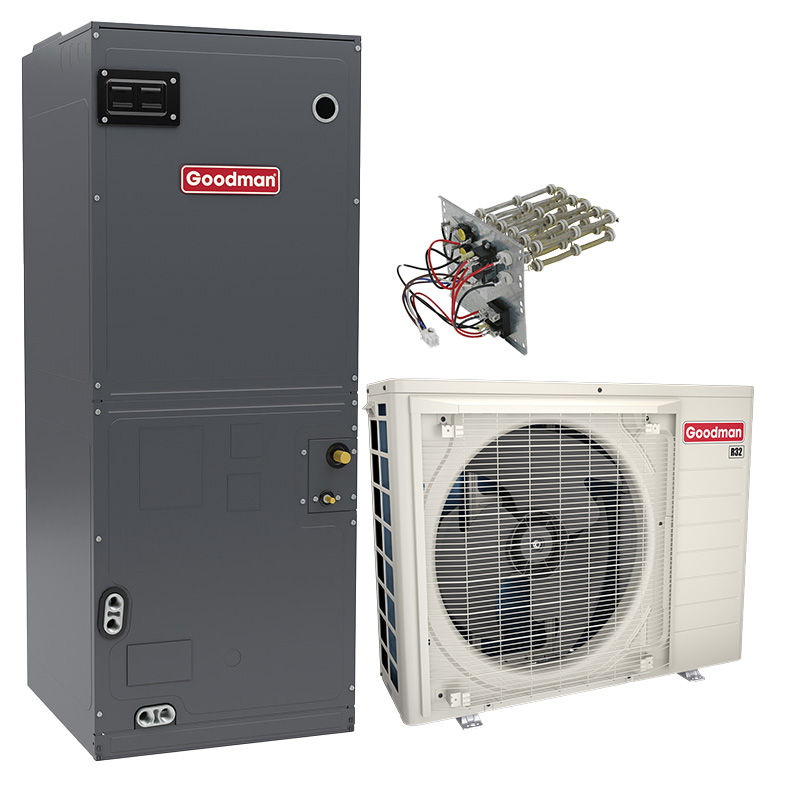
Goodman 2 Ton 18 SEER2 Inverter AC With Electric Heat
- Variable-speed inverter compressor
- 18 SEER2, R-32 refrigerant
- Side-discharge condenser
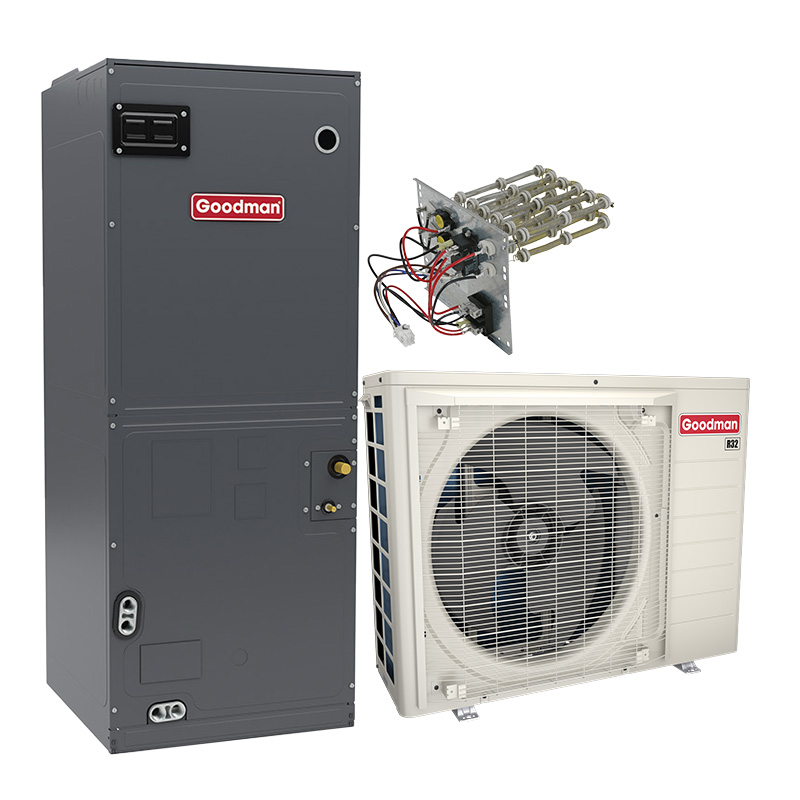
Goodman 3 Ton 19 SEER2 Inverter Heat Pump System
- Heating and cooling from one unit
- 19 SEER2, R-32 refrigerant
- Variable-speed side-discharge heat pump
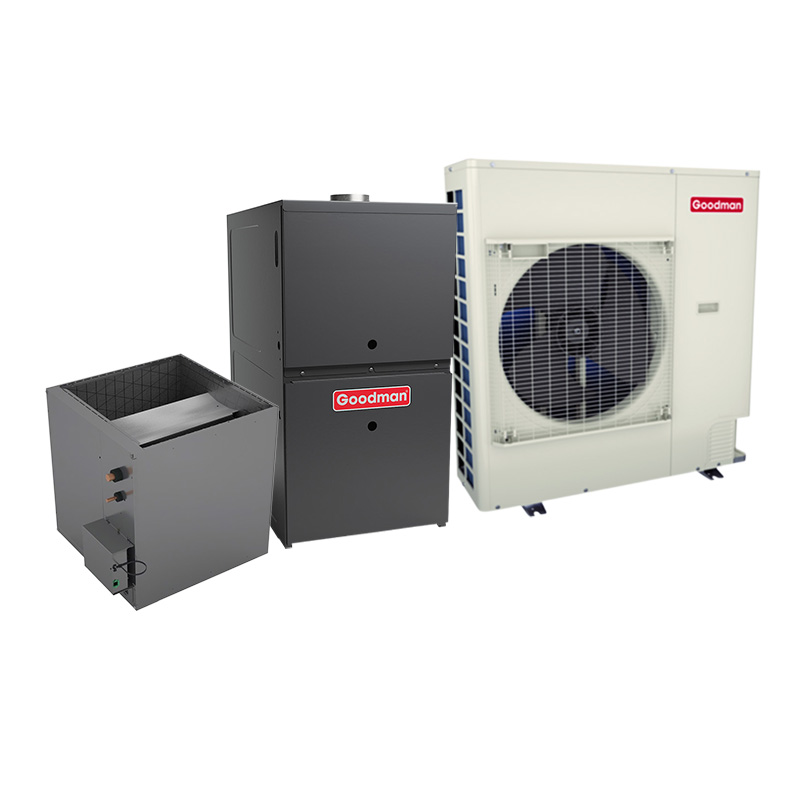
Goodman 4 Ton 16.6 SEER2 Dual Fuel Inverter System
- Inverter heat pump plus gas furnace
- 16.6 SEER2
- Side-discharge heat pump
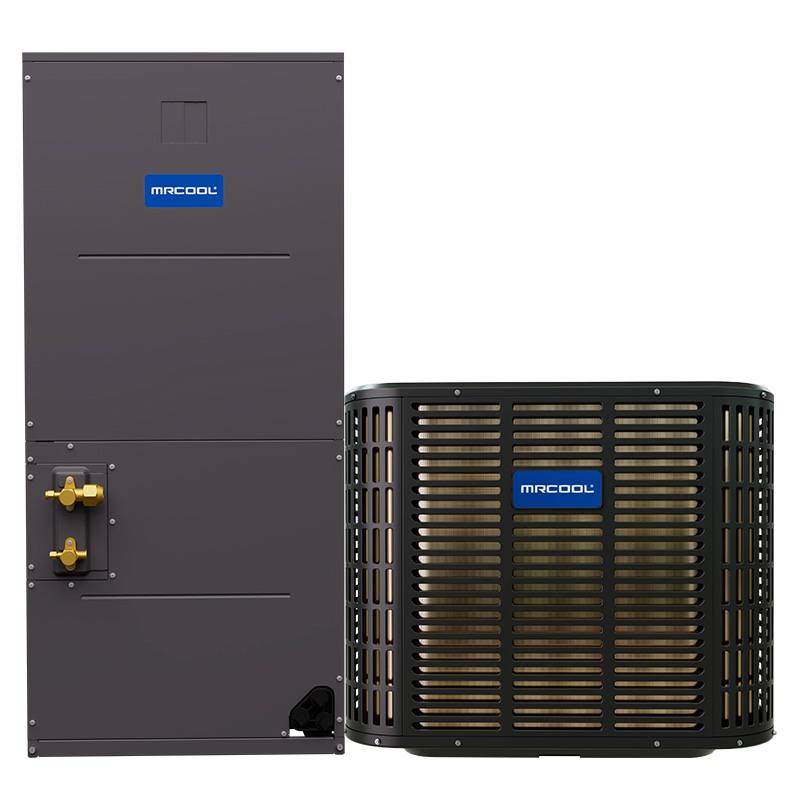
MRCOOL TruInverter 3 Ton 19 SEER2 Central Heat Pump
- Central ducted inverter heat pump
- 19 SEER2, R-454B refrigerant
- Multi-position air handler
How Does an Inverter Air Conditioner Work?
An inverter air conditioner works by electronically changing compressor motor speed so the refrigeration system can increase or decrease cooling capacity as conditions change.

The compressor is the heart of the refrigeration system. It circulates refrigerant and creates the pressure difference that allows an air conditioner or heat pump to move heat from one place to another. In a conventional single-stage system, the compressor motor operates at essentially one working speed.
An inverter system adds sophisticated electronic control between the incoming electrical power and the compressor motor. The inverter changes the electrical characteristics supplied to the motor, allowing compressor speed to change. Slow the compressor down and refrigerant flow and system capacity generally decrease. Speed it up and capacity increases.
Sensors and controls continually monitor operating conditions and adjust compressor output accordingly. That description is technically accurate, but here's the part you actually care about:
Your air conditioner stops treating every cooling request like a five-alarm fire.
Want the full tour of the compressor, blower, expansion valve and controls? Read how inverter HVAC works.
What Is an Inverter Heat Pump?
An inverter heat pump is a variable-capacity heat pump that can adjust compressor speed while providing both cooling and heating.
During summer, it removes heat from your house and transfers that heat outdoors. During winter, it reverses the refrigeration cycle and transfers heat from outside into your home.
Yes, there is still heat available in outdoor air when it's cold. A refrigerator performs a similar trick every day. The inside of your refrigerator is cold, yet the refrigeration system still finds heat there and moves it into your kitchen.
ENERGY STAR explains that heat pumps move heat rather than converting it from fuel, the way combustion heating systems do.
The inverter makes that process much more adaptable because compressor output can change with outdoor conditions and the heating demand of the house. On a mild 48-degree morning, your home may require only a fraction of the heat pump's maximum heating capacity, so the system slows down. When the outdoor temperature falls dramatically, it can speed up.
Same machine. Different RPM. Sound familiar?
Do Inverter Heat Pumps Work in Cold Weather?
Yes. Modern inverter heat pumps can operate below freezing, and equipment designed for cold climates can retain substantial heating capacity at temperatures where older heat pumps struggled.
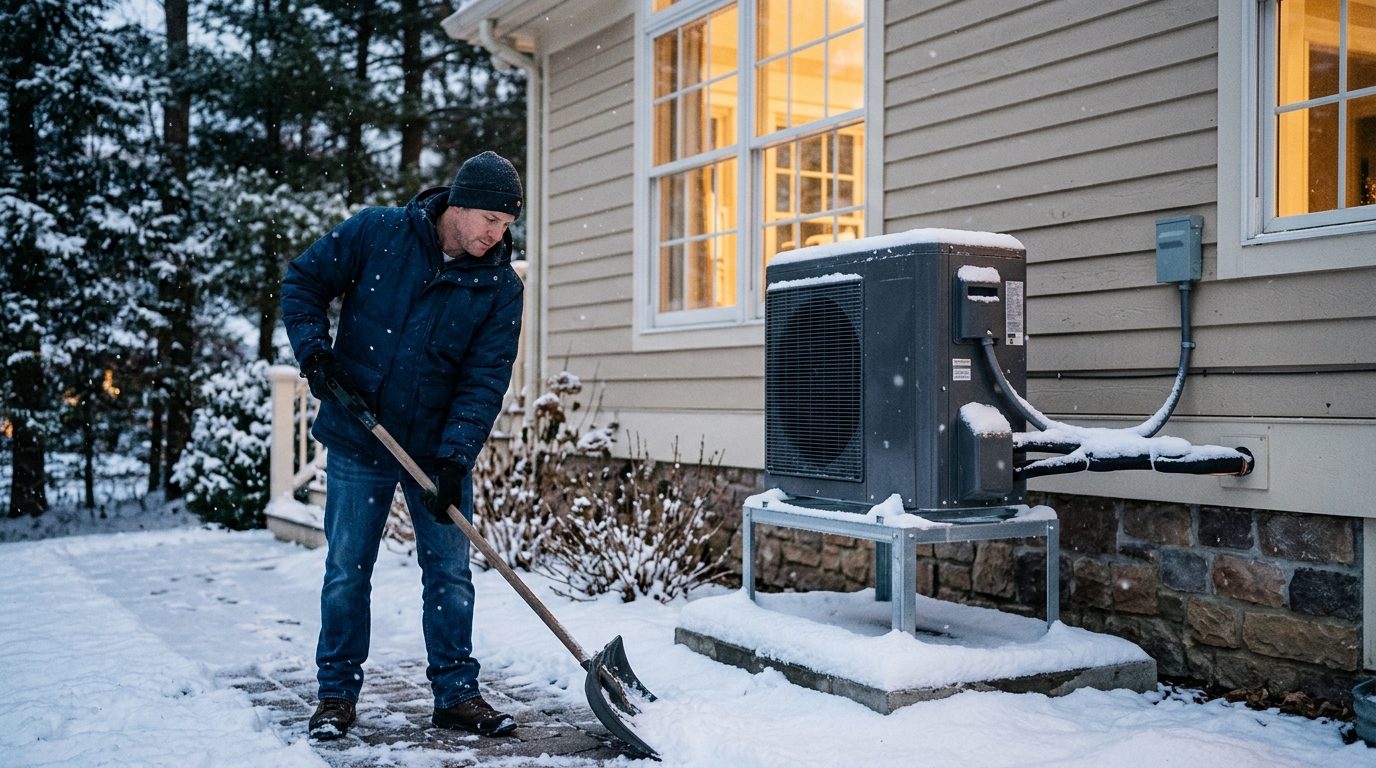
That does not mean every heat pump performs equally well in cold weather. Equipment selection still matters, and this is where you should look beyond the giant snowflake on the brochure.
Northeast Energy Efficiency Partnerships (NEEP), which maintains a cold climate air-source heat pump specification and product list, notes that variable speed compressors allow operation at 5°F and below without supplementary electric heat. Performance data at a specific cold temperature tells you considerably more than a brochure shouting, "Operates down to -15°F."
There is a major difference between a heat pump being capable of running at -15°F and producing enough heat at -15°F to keep your house comfortable. When comparing cold-weather heat pumps, you want to know how cold the equipment can operate, how much heating capacity it retains and how efficiently it produces that heat.
Those are three different questions, and we explore them much more deeply in our guide to inverter heat pumps in cold climates, because this subject deserves more than one paragraph and a snowflake icon.
Single-Stage vs. Two-Stage vs. Inverter: What's the Difference?
Single-stage HVAC generally operates at full capacity or shuts off. Two-stage equipment adds a lower operating stage. An inverter system can vary its output through a much broader capacity range.
Single-Stage HVAC: The Light Switch
A single-stage system has essentially two choices: full capacity or off. There is nothing inherently terrible about that. Millions of single-stage systems keep homes comfortable every day, and their relative simplicity can make them economical to purchase and repair.
Two-Stage HVAC: Low or High
Two-stage equipment improves on single-stage operation by adding another capacity level. The equipment can operate at a lower stage when the home needs less heating or cooling and move to full capacity when conditions require it.
Inverter HVAC: The Dimmer
An inverter goes considerably further. Instead of choosing between one or two fixed outputs, the compressor can continually change speed and remain much closer to the actual heating or cooling requirement of the house.
A single-stage system is the light switch. A two-stage system adds "medium." An inverter is the dimmer.
That is why an inverter system can feel different even before anyone opens the electric bill.
| Comparison | Single-Stage | Two-Stage | Inverter / Variable Capacity |
|---|---|---|---|
| Capacity Control | Full output or off | Low, high or off | Broad variable range |
| Temperature Control | Good | Better | Best potential |
| Humidity Control | Good when properly sized | Better | Excellent potential |
| Operating Sound | Most noticeable | Quieter | Quietest at lower speeds |
| Cycling | Most frequent | Reduced | Long, steady operation |
| Efficiency Potential | Basic to high | Higher | Very high |
| Upfront Cost | Lowest | Moderate | Highest |
| System Complexity | Lowest | Moderate | Highest |
See the side-by-side in real houses in single-stage vs two-stage vs inverter AC.
Why Do Inverter Air Conditioners Feel More Comfortable?
Inverter systems can maintain more consistent indoor conditions because they make smaller capacity adjustments rather than repeatedly hitting the house with full output and shutting down.

Most people think the thermostat number tells the whole story. It doesn't. Two houses can both be 74°F and feel remarkably different because comfort is influenced by temperature, humidity, air movement, radiant heat from surrounding surfaces and how much those conditions fluctuate.
A conventional single-stage air conditioner tends to create a repeating pattern: the temperature rises, the system turns on at full capacity, the temperature falls, the system shuts off and the temperature starts rising again.
An inverter tries to flatten that roller coaster.
Think again about cruise control. Your car doesn't wait until you slow from 65 MPH to 50 MPH and then floor the accelerator until you hit 72. It makes small corrections. That's essentially what an inverter HVAC system is trying to do with your house.
Instead of repeatedly rescuing the house from discomfort, it spends more time preventing the discomfort from showing up in the first place. That's a very different job description.
Temperature Is Only Half the Comfort Story
Here's a simple experiment. Walk outside in Florida on a 74-degree winter morning, then walk into a 74-degree house with high indoor humidity during the summer.
Same temperature. Not remotely the same experience.
Humidity affects how efficiently perspiration evaporates from your skin, which changes the way your body experiences temperature. That's why a thermostat can say 74°F while the room still feels sticky.
The thermostat isn't lying. It simply has limited jurisdiction.
Are Inverter Air Conditioners Better at Controlling Humidity?
They can be. Longer cooling cycles at reduced capacity can give an inverter system more time to remove moisture while maintaining the desired indoor temperature.
Air conditioners don't simply remove heat; they also remove moisture. Warm indoor air passes across the cold evaporator coil, and when the coil temperature falls below the air's dew point, water vapor condenses on the coil and eventually drains away.
The important part is time.
A conventional oversized or single-stage system can cool the house rapidly, satisfy the thermostat and shut down. The temperature may be acceptable, but the system may not have operated long enough to remove as much moisture as you would like.
An inverter can often continue operating at reduced capacity rather than shutting off immediately. That matters because the EPA recommends keeping indoor relative humidity below 60 percent, ideally between 30 and 50 percent, and a house at 74°F with well-controlled humidity can feel considerably more comfortable than a damp house at exactly the same temperature.
The thermostat may have declared victory. Humidity has retained counsel.
The full explanation of latent heat and coil temperature is in do inverter air conditioners remove more humidity.
Why Do Inverter Air Conditioners Run Longer?
Long run times can be completely normal for an inverter system because the equipment is often operating at reduced capacity instead of repeatedly turning fully on and off.
This one makes homeowners nervous. "My new air conditioner seems to run all the time."
With conventional equipment, unusually long operation can sometimes indicate a problem. With an inverter, long periods of low-capacity operation may be exactly what the equipment was designed to do.
The goal isn't to minimize the number of minutes the compressor operates. The goal is to maintain comfort while using only the capacity the house requires.
Return to our car for a moment. An engine cruising gently at 1,600 RPM for an hour isn't necessarily working harder than an engine repeatedly accelerating toward redline and shutting off.
Running and working hard are not the same thing.
That distinction is fundamental to understanding inverter HVAC. For the line between normal and a real problem, see why an inverter AC runs all the time.
Are Inverter Air Conditioners Quieter?
Usually, yes. Because the compressor and fans can operate at reduced speeds when the home requires less capacity, an inverter system can spend much of the day operating considerably more quietly.

Noise generally follows effort. A compressor running at reduced speed produces less sound than one running at maximum output, while variable-speed fans can also move air more gently.
To put decibels into perspective, rustling leaves are around 20 dBA, a whisper about 30 dBA, a refrigerator roughly 40 dBA, and normal conversation around 60 dBA. Some inverter outdoor units can operate in the mid-40-dBA range under quieter operating conditions.
How Quiet Is an Inverter Air Conditioner?
The National Institute on Deafness and Other Communication Disorders puts normal conversation at roughly 60 to 70 decibels, which is a useful anchor for the scale above.
Instead of repeatedly hearing the outdoor unit roar to life and the indoor blower announce itself through the supply registers, an inverter system may quietly maintain conditions in the background.
You bought air conditioning. It doesn't need to introduce itself every twenty minutes.
Do Inverter Air Conditioners Save Energy?
They can, particularly when replacing older, lower-efficiency fixed-capacity equipment. But there is no honest universal savings percentage that applies to every home.
This is where we need to resist advertising math. Your actual savings depend on what you're replacing, climate, utility rates, thermostat settings, home construction, insulation, duct leakage, system sizing, equipment efficiency and how much your HVAC system operates.
Consider two homeowners. Homeowner A lives outside Orlando and is replacing a 15-year-old single-stage system that runs relentlessly through a long cooling season. Homeowner B lives in a mild climate and is replacing a relatively new high-efficiency system that barely runs during spring and fall.
They purchase identical inverter equipment, but their energy savings will not be identical. Same inverter, different house, different climate, different result.
That's why we prefer to explain how inverter technology saves energy rather than throw a giant percentage onto the page and hope nobody asks where it came from. There are plenty of websites available for that.
Why Inverters Can Be More Efficient at Part Load
For much of the year, your home does not need the maximum capacity of its air conditioner.
Suppose your house requires approximately 36,000 BTUs per hour on one of the hottest afternoons of the year. That does not mean the house needs 36,000 BTUs at 9:00 in the morning, on a cloudy afternoon, during a mild evening, in April or in October.
For much of the cooling season, the house is operating at part load. A traditional 3-ton single-stage air conditioner still has roughly one answer: three tons. An inverter has considerably more vocabulary.
Staged, multi-speed and inverter-driven compressors all exist to let equipment operate closer to the capacity actually required as conditions change. That's the engineering advantage hiding underneath nearly every consumer benefit we've discussed.
How to estimate savings for your own house is in inverter efficiency and energy costs.
Which Type of Inverter System Is Right for Your Home?
The technology is only part of the decision. You also need to decide how you want to heat and cool the house.
Inverter Air Conditioner Systems
Variable-capacity cooling paired with an air handler, electric heat or gas furnace.
Shop Inverter Air ConditionersInverter Heat Pump Systems
Variable-capacity heating and cooling from one refrigeration system.
Shop Inverter Heat PumpsDual-Fuel Inverter Systems
An inverter heat pump combined with a gas furnace for flexible heating.
Shop Dual-Fuel Inverter SystemsNot sure which one fits your home? Ask an AC Direct HVAC Expert
What Is SEER2?
SEER2 stands for Seasonal Energy Efficiency Ratio 2 and is the current standardized measure used to rate the seasonal cooling efficiency of central air conditioners and heat pumps.
Higher is generally more efficient, but there's some history worth knowing. Beginning in 2023, residential HVAC efficiency metrics transitioned from SEER, EER and HSPF to SEER2, EER2 and HSPF2 under revised federal test procedures. In other words, the laboratory test became somewhat less polite.
That's useful, but SEER2 still isn't the whole story. It doesn't tell you whether your system is correctly sized, whether the ductwork leaks, whether the refrigerant charge is correct, how well the system controls humidity in your particular house or whether you will actually enjoy living with it.
A beautifully rated air conditioner connected to terrible ductwork remains connected to terrible ductwork.
Engineering can only forgive so much.
Inverter vs. Variable-Speed vs. Communicating HVAC: What's the Difference?
An inverter compressor, a variable-speed blower and a communicating HVAC system are different technologies, although manufacturers often combine them in the same system.
HVAC terminology has developed a habit of putting several different technologies into the same verbal drawer. An inverter or variable-capacity compressor changes the speed and capacity of the compressor. A variable-speed blower changes the speed of the indoor fan motor. A communicating HVAC system allows major system components to exchange operating information electronically.
They can all work together, but they are not the same thing.
Some inverter systems also use communicating controls that allow the outdoor unit, indoor equipment and thermostat to continually exchange information. Other inverter systems contain more of the modulation logic inside the equipment and can operate without a proprietary communicating thermostat.
This distinction matters because the phrase "variable-speed" can describe several very different pieces of HVAC equipment. We've devoted articles to variable-speed ECM blower motors and communicating HVAC systems. They earned them.
Is an Inverter Air Conditioner the Same as a Mini-Split?
No. Mini-split describes the configuration of an HVAC system. Inverter describes how compressor capacity is controlled.
Most modern mini-splits happen to use inverter compressors, which is probably why the two terms are frequently confused. But central ducted air conditioners and heat pumps can use inverter technology too.
You can buy a central inverter air conditioner connected to an evaporator coil and gas furnace, a central inverter heat pump connected to a ducted air handler or a ductless mini-split using inverter technology.
A system can be both a mini-split and an inverter, but an inverter does not have to be a mini-split.
Are Side-Discharge Air Conditioners Always Inverters?
Usually but not always.
Many inverter systems use compact side-discharge outdoor units, particularly equipment influenced by ductless and variable-refrigerant-flow designs. But inverter compressors can also be installed in more traditional top-discharge outdoor units.
Buy the operating technology, capacity range, efficiency, sound level and heating performance that make sense for your home. The fan pointing sideways isn't the part paying your electric bill.
How Should an Inverter HVAC System Be Sized?
An inverter HVAC system should be sized according to the actual heating and cooling load of the home, not simply by square footage.
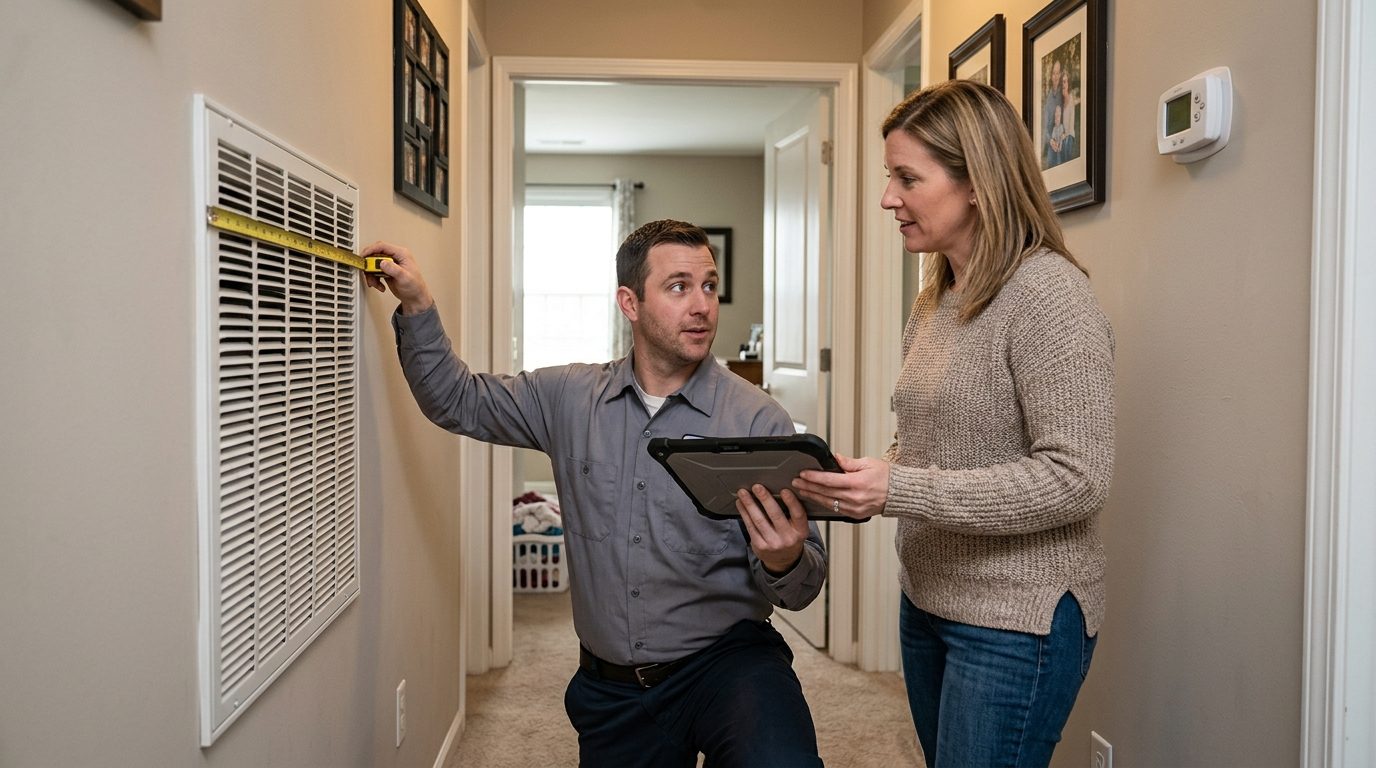
There is a dangerous idea floating around that because inverter equipment can turn itself down, proper sizing no longer matters. It does. Every inverter still has a minimum and maximum operating range.
Consider two 2,000-square-foot homes. House A is newer, well insulated, has high-performance windows, modest western exposure and tightly sealed ductwork inside conditioned space. House B was built decades earlier, has leaky ducts in a brutally hot attic, large west-facing windows and insulation that appears to have left town sometime during the Carter administration.
Same square footage. Completely different cooling loads.
That's why choosing air-conditioning tonnage from square footage alone is, at best, a rough screening method. ACCA Manual J is the nationally recognized residential load-calculation procedure used to determine heating and cooling requirements based on the actual characteristics of a home.
Square footage matters, but so do windows, insulation, orientation, air leakage, climate, duct location, ceiling height and several other variables.
The house gets a vote.
What a real load calculation includes is in Manual J load calculation explained.
Can an Inverter HVAC System Still Be Oversized?
Yes. Every inverter has a minimum operating capacity, and if that minimum is still greater than what the home needs, the equipment may still cycle more than intended.
Suppose an inverter system can reduce itself to 30% of nominal capacity. That sounds impressive, but if even 30% is more cooling than the house requires during mild conditions, the equipment may still satisfy the thermostat and shut down.
You paid extra for modulation. It would be nice to let it modulate.
Proper sizing helps keep the equipment inside the operating range where inverter technology can do what it was designed to do: run steadily, control temperature, remove moisture and reduce unnecessary cycling.
Inverter technology can forgive some sins. It was never asked to forgive all of them.
Does an Inverter System Need Different Ductwork?
Not necessarily. Many central inverter systems can use existing ductwork if the duct system is properly sized, reasonably sealed and capable of delivering the required airflow.
The important phrase there is if the ductwork is properly sized and sealed.
Replacing equipment without evaluating the duct system is a little like installing a larger engine while leaving a potato in the exhaust pipe. The equipment and air-distribution system work together.
Poor airflow can reduce capacity, efficiency, humidity control and equipment life regardless of how sophisticated the compressor happens to be. A variable-speed indoor blower can adapt airflow much more intelligently than many older fixed-speed motors, but it still cannot negotiate with a collapsed return duct.
Why duct resistance matters so much is in HVAC static pressure explained.
Are Inverter HVAC Systems Reliable?
A properly designed inverter system can be highly reliable, but inverter equipment trades some mechanical simplicity for considerably more sophisticated electronic control.
There isn't a responsible one-word answer. Inverter equipment has some mechanical advantages, including reduced repeated full-capacity starts and stops, but it also introduces more sophisticated electronics.
Depending on the system, there may be inverter boards, sensors, variable-speed motors, electronic expansion valves, communication circuits and other components that either don't exist or are much simpler on basic equipment.
Modern automobiles followed a similar path. Electronic fuel injection is considerably more complicated than a carburetor, yet almost nobody is asking Detroit to bring the carburetor back.
Complexity is not automatically unreliability, but sophistication does make installation quality, diagnosis, parts availability and manufacturer support more important.
Are Inverter Systems More Expensive to Repair?
Some repairs can be. Inverter systems use sophisticated electronic controls and variable-speed components that may cost more to diagnose or replace than basic conventional HVAC components.
This is one of the disadvantages inverter sales pages occasionally misplace. A basic contactor or capacitor on conventional equipment is relatively inexpensive and familiar to virtually every HVAC technician. An inverter control board, compressor drive or proprietary electronic component can cost considerably more, and diagnosis may require a technician who understands the particular equipment.
That doesn't automatically make inverter technology a poor investment. It means you should consider more than SEER2 and purchase price. Warranty coverage, manufacturer support, replacement-parts availability and service knowledge all matter.
Price is important on Tuesday. Support becomes considerably more interesting on Saturday night in August.
What owning one looks like over the years is in inverter reliability, maintenance and lifespan.
Does an Inverter System Require a Special Thermostat?
Sometimes. Some inverter systems require proprietary communicating controls, while others contain more of their modulation logic inside the equipment and can use more conventional thermostat interfaces.
Neither architecture is automatically better for every homeowner. Communicating systems can provide extremely sophisticated control, diagnostics and component coordination, but they can also make you more dependent on proprietary controls and compatible replacement components.
Ask how the system communicates, what thermostat it requires and what happens if that thermostat eventually fails. Those are considerably more useful questions than asking whether the thermostat has a color touchscreen.
Are Inverter Systems Better for Hot, Humid Climates?
They can be an excellent fit because long cooling seasons give efficiency improvements more opportunity to matter, while longer low-capacity cycles can also help with humidity control.
There are two reasons. First, HVAC systems in hot climates accumulate a lot of operating hours. When equipment runs for a large portion of the year, efficiency improvements have more opportunity to make a difference.
Second, humidity. Longer low-capacity cooling cycles can help maintain better moisture control than short bursts of oversized full-capacity operation.
That combination makes inverter technology particularly interesting in Florida, Texas, Louisiana, Georgia and other hot-humid regions. But inverter technology isn't a Florida-only story anymore. Cold-climate inverter heat pumps have dramatically expanded the geographic range where variable-capacity equipment can make sense.
The better question isn't, "Does an inverter work in my state?" It's, "How does this particular inverter system perform in my climate?"
Much better question.
How Do Inverter Heat Pumps Perform in Cold Climates?
Modern inverter heat pumps can provide meaningful heating capacity in cold climates, but actual low-temperature performance varies substantially from one model to another.
Older heat pumps generally lost heating capacity as the outdoor temperature dropped and often required considerable supplemental resistance heat. Modern equipment still faces the same basic physics (the colder it gets outside, the harder the job becomes), but technology has improved considerably.
Inverter-driven compressors can increase compressor output as outdoor temperatures fall, while modern heat exchangers, refrigerant controls and system designs help preserve low-temperature heating capacity.
Still, don't shop by badge alone. Look at the manufacturer's actual heating-capacity tables and compare output at 47°F, 17°F, 5°F, 0°F and below zero with the heating load of the home.
Now you're shopping for a heating system. Before that, you were shopping for adjectives.
What Is a Dual-Fuel Inverter System?
A dual-fuel inverter system combines an inverter heat pump with a gas furnace, allowing the home to use heat-pump heating under some conditions and furnace heat under others.
During milder weather, the heat pump provides the heating. As outdoor conditions change, the system can switch to the furnace based on the control strategy, equipment design or economics of the application.
Add an inverter heat pump and you gain another level of control because the heat pump itself can vary its output before the furnace ever needs to enter the conversation. For the right house, climate and utility rates, it can be an extremely capable combination.
How the handoff actually works is in dual fuel heat pump systems.
Who Gets the Most Value From an Inverter System?
An inverter deserves especially serious consideration if you live in a climate with a long cooling or heating season. It's also worth a close look if you struggle with indoor humidity, dislike temperature swings, want quieter equipment, plan to remain in your home for years or are replacing substantially older, lower-efficiency equipment.
And there's another group: people who simply care a great deal about comfort.
If your entire purchasing decision is based on calculating the shortest possible financial payback, a less expensive single-stage system may occasionally win the spreadsheet. If you also place value on quieter operation, steadier temperatures, better humidity control and the way your house feels every day for the next decade or more, the calculation changes.
Some improvements save money. Others improve Tuesday afternoon. Both count.
Who Might Not Need an Inverter System?
Not everyone does. If your home is rarely occupied, your climate is mild, annual HVAC use is low or your primary objective is simply the lowest possible upfront purchase price, conventional equipment may make perfectly good sense.
The same is true if the additional cost of a particular inverter system doesn't provide enough value for your situation. And sophisticated equipment installed badly isn't an upgrade.
A properly sized, properly installed conventional system can outperform a poorly designed premium inverter system where it actually matters: inside the house.
We sell inverter equipment. We still believe you should buy the system that makes sense for your home. Those two statements should be allowed in the same paragraph.
Are Inverter Air Conditioners Worth It?
For many homeowners, yes, particularly when comfort, humidity control, quiet operation and efficiency matter in addition to the lowest possible upfront price.
But probably not for the reason most advertising gives you. The strongest argument for inverter HVAC isn't simply that the compressor can use less electricity. It's that the system gains the ability to match its output much more closely to the constantly changing load of your house.
From that come the benefits people actually experience: steadier temperatures, longer and gentler cycles, better moisture control, quieter operation and improved part-load efficiency.
Think about your smartphone. It continually changes processor activity, screen brightness, radio power and background functions according to what you're asking it to do.
Imagine if its processor had only two settings: maximum power or dead.
Battery life would be spectacularly bad. Yet we accepted something remarkably similar from residential air conditioning for a very long time.
Now we don't have to.
What Are the Disadvantages of Inverter Air Conditioners?
The primary disadvantages are higher upfront cost, more sophisticated electronics and the possibility of more expensive repairs when inverter boards, controls or proprietary components fail.
Those disadvantages are real. Inverter systems can also require technicians who understand the particular equipment and, in some cases, proprietary thermostats or communicating controls.
Those drawbacks don't erase the advantages. They simply make warranty coverage, parts availability, manufacturer support and installation quality more important.
A good buying guide should tell you why to buy something. It should also tell you what might make you regret it.
How Much Does an Inverter Air Conditioner Cost?
Inverter HVAC equipment generally costs more upfront than comparable single-stage equipment, with actual pricing varying by capacity, efficiency, brand, system configuration and whether you're buying an air conditioner, heat pump or dual-fuel system.
Because equipment pricing changes with availability, manufacturer programs and system configuration, we prefer to show current live AC Direct prices rather than publish a permanent national price range that eventually becomes wrong.
View Current Inverter System Prices
The more useful comparison isn't simply inverter price versus conventional price. Compare what you are receiving for the additional investment: capacity modulation, efficiency, comfort characteristics, heating performance, warranty, equipment quality and support.
What Should You Compare When Buying an Inverter System?
Don't begin and end with the SEER2 number. Look at the whole machine.
Consider the compressor's modulation range and how low and high it can operate. If you're buying a heat pump, study low-temperature heating capacity and efficiency rather than merely the lowest outdoor temperature printed on the brochure.
Look at indoor blower technology, sound ratings, thermostat requirements, warranty coverage, replacement-parts availability and manufacturer support. Most importantly, make sure the equipment is appropriate for your climate and the actual heating and cooling load of your home.
You can also verify rated matched-system performance through the AHRI Directory of Certified Product Performance.
The alphabet soup exists for a reason. Occasionally it is even helpful.
Is the Highest-SEER2 Inverter Always the Best Choice?
No. A higher SEER2 indicates greater rated seasonal cooling efficiency, but efficiency alone does not determine whether a system is the best choice for your home.
Imagine two systems. System A has the highest efficiency rating you can find, but parts availability is poor, the required thermostat is expensive, local technicians rarely work on it and its low-temperature heating capacity isn't particularly strong.
System B has a slightly lower headline efficiency rating but excellent modulation, strong heating performance, readily available parts, good technical support and a strong warranty.
Which one is better? There isn't enough information in the SEER2 number to answer that question.
That's the point. You aren't buying a laboratory rating. You're buying a machine that will sit outside your house for many years and be expected to work whenever August decides to become personal.
Shop accordingly.
The questions worth asking are collected in buying an inverter system.
What Is the Biggest Advantage of Inverter Technology?
Control.
Efficiency, humidity control, quiet operation and temperature stability are all important, but they aren't four unrelated advantages. They're mostly different consequences of the same capability.
An inverter can change what the system is doing instead of repeatedly choosing between everything and nothing. That's why the most useful way to understand inverter HVAC isn't, "It's a more efficient air conditioner."
It's an air conditioner that can finally adjust itself to the job.
That distinction explains almost everything else.
The Bottom Line on Inverter HVAC
Traditional air conditioning was built around a simple question: Is the house warm enough to turn the air conditioner on?
Inverter technology asks a much better one: How much cooling does the house need right now?
Sometimes the answer is a lot. Most of the time, it isn't.
That ability to continually adjust output is what separates inverter systems from conventional single-stage air conditioners and heat pumps. It isn't magic, it isn't simply a higher SEER2 number, and it isn't a miniature air conditioner invented for people who enjoy reading thermostat manuals.
It is fundamentally a better way to control capacity.
Once you understand that, the quieter operation makes sense. The humidity control makes sense. The smaller temperature swings make sense. The efficiency makes sense. Even the long run times make sense.
That's why we believe inverter technology represents one of the most meaningful changes residential HVAC has seen in decades.
Not because the air conditioner suddenly learned how to work harder. Because it finally learned when not to.
Explore the Inverter Knowledge Center
This page gives you the big picture. If you want to go deeper (and we hope you do), we've divided inverter HVAC into individual subjects so you can learn as much or as little as you want.
Inverter Technology
Learn how inverter compressors, compressor RPM, electronic expansion valves, ECM motors, variable-speed blowers and communicating controls actually work.
Explore inverter technology → 02Inverter Comfort & Humidity
Learn why temperature alone doesn't determine comfort, how inverter systems manage moisture and why two homes set at exactly 74°F can feel completely different.
Explore comfort and humidity → 03Inverter Energy Efficiency
Understand SEER2, EER2, HSPF2, part-load efficiency, electricity consumption and realistic energy savings.
Explore energy efficiency → 04Inverter Heat Pumps & Climate
Learn about Florida heat, freezing winters, cold-climate performance, supplemental heat and dual-fuel systems.
Explore heat pumps and climate → 05Inverter Sizing & System Selection
Learn about Manual J, tonnage, minimum capacity, ducted versus ductless equipment and choosing between an inverter air conditioner and heat pump.
Explore sizing and selection → 06Inverter Installation & Ductwork
Learn about airflow, static pressure, ductwork, electrical requirements, refrigerant line work and installation quality.
Explore installation and ductwork → 07Inverter Maintenance & Repair
Understand maintenance requirements, inverter electronics, diagnostics, replacement parts and what ownership looks like after installation day.
Explore maintenance and repair → 08Buying an Inverter System
Compare equipment types, capacities, modulation ranges, warranties, brands, purchase price, operating costs and the questions worth asking before you buy.
Explore the inverter buying guide →Frequently Asked Questions About Inverter HVAC
What is an inverter air conditioner?
An inverter air conditioner uses electronic controls to vary compressor speed and cooling capacity rather than operating only at full capacity or shutting completely off.
Is inverter AC the same as variable-speed AC?
The terms are frequently used interchangeably when they describe the compressor, but "variable-speed" can also refer to the indoor blower motor or other components. Always determine which part of the system is actually variable.
Does an inverter air conditioner run constantly?
It can run for very long periods at low capacity. That may be completely normal and can help maintain steady temperature and humidity while reducing repeated on/off cycling.
Does an inverter air conditioner really save electricity?
It can, particularly when replacing older, lower-efficiency fixed-capacity equipment. Actual savings depend on climate, existing equipment, system sizing, ductwork, thermostat settings, utility rates and operating hours.
Is an inverter air conditioner better for humidity?
It can be. Longer cooling cycles at reduced capacity can provide more time for moisture removal, particularly when equipment is properly sized and airflow is correctly controlled.
Is an inverter air conditioner quieter?
Usually. Compressor and fan speeds can decrease when your home requires less capacity, reducing operating sound during much of the day.
Can an inverter heat my house?
An inverter heat pump can. A cooling-only inverter air conditioner cannot provide heat through its refrigeration cycle, although it can be paired with a gas furnace or electric heating equipment.
Do inverter heat pumps work below freezing?
Yes. Modern heat pumps can operate below freezing, and cold-climate equipment can retain substantial heating capacity at low outdoor temperatures. Performance varies by model, so actual low-temperature capacity data matters.
Is a higher SEER2 always better?
A higher SEER2 indicates greater rated seasonal cooling efficiency, but it doesn't automatically make the equipment the best choice for your home. Capacity, climate, installation, humidity control, heating performance, warranty, support and cost also matter.
How long does an inverter HVAC system last?
Service life depends on installation quality, operating conditions, climate, maintenance, manufacturer, equipment design and component quality. We'd be suspicious of anyone promising a universal lifespan based solely on the word "inverter."
Are inverter systems expensive to repair?
Some repairs can be more expensive because inverter equipment uses sophisticated electronic controls and variable-speed components. That makes warranty coverage, parts availability and manufacturer support especially important.
Does an inverter system need annual maintenance?
Yes. Variable-capacity control does not eliminate filters, coils, condensate drains, electrical connections, refrigerant circuits or airflow. Physics remains remarkably unwilling to accept software updates.
What size inverter system do I need?
The correct size should be based on the actual heating and cooling load of your home. ACCA Manual J is the nationally recognized residential load-calculation procedure used for this purpose.
Can I replace my current central AC with an inverter system?
Often, yes. Electrical requirements, refrigerant piping, indoor-equipment compatibility, ductwork, airflow and controls should all be evaluated as part of the replacement.
Is an inverter the same as a mini-split?
No. Mini-split describes a system configuration. Inverter describes how compressor capacity is controlled.
Is R-32 or R-454B what makes a system an inverter?
No. Refrigerant type and compressor-capacity control are separate characteristics.
Should I replace a perfectly good conventional AC just to get an inverter?
Usually not based on inverter technology alone. The economics become more attractive when you already need replacement equipment, operate your HVAC system heavily or place substantial value on the comfort improvements.
Can an inverter HVAC system still be oversized?
Yes. Every inverter has a minimum operating capacity. If that minimum is still greater than what the house requires during mild conditions, the equipment may still cycle more than intended.
Does an inverter system need special ductwork?
Not necessarily. Many central inverter systems can use properly designed existing ductwork, but airflow, duct sizing, leakage and condition should still be evaluated.
What are the main disadvantages of inverter air conditioning?
Higher upfront cost, greater electronic complexity, potentially more expensive repairs and, in some systems, greater dependence on proprietary controls and components.
How much does an inverter air conditioner cost?
Prices vary considerably according to system size, efficiency, brand and configuration. Because HVAC equipment pricing changes, AC Direct displays current equipment prices on the product listings rather than relying on a permanent national price estimate.
What is the single biggest benefit of inverter technology?
Control. Energy efficiency, quieter operation, humidity management and steadier temperatures largely flow from the system's ability to produce something closer to the capacity your home actually needs at that moment.
Ready to Compare Inverter Systems?
If you're replacing an air conditioner or heat pump, don't choose equipment from a SEER2 number and a logo. Start with the house, then the climate, then the way you want the house to feel. From there, compare the equipment.
AC Direct can help you evaluate inverter air conditioners, inverter heat pumps, dual-fuel inverter systems and other options based on what you're actually trying to accomplish, not simply what happens to have the largest number on the brochure.
Know What You Want?
Shop our complete selection of inverter air conditioners, heat pumps and dual-fuel systems, with current pricing and available financing.
Shop All Inverter SystemsWant Some Help First?
Get help comparing capacity, efficiency, heating performance, equipment configuration and compatibility before you buy.
Talk to an AC Direct HVAC ExpertAbout Michael Haines
His goal with the AC Direct Inverter Knowledge Center is simple: explain increasingly complicated HVAC technology in language homeowners can actually use to make better buying decisions.
Sources & Further Reading
Northeast Energy Efficiency Partnerships (NEEP): Cold Climate Air Source Heat Pump Specification and Product List
The cold climate air-source heat pump specification and product list, including how variable speed compressors allow heating at 5°F and below. Read the NEEP ccASHP specification and product list
ENERGY STAR: Air Source Heat Pumps
How air-source heat pumps move heat to cool and heat a home. Read ENERGY STAR's air source heat pump guide
U.S. Environmental Protection Agency: A Brief Guide to Mold, Moisture and Your Home
Indoor humidity guidance for healthy, comfortable homes. Read the EPA moisture guide
AHRI Directory of Certified Product Performance
A searchable database for checking certified performance ratings for matched HVAC equipment combinations. Visit the AHRI Directory
Air Conditioning Contractors of America: Manual J
The nationally recognized residential load-calculation procedure used to determine heating and cooling equipment sizing requirements. Read about ACCA Manual J
National Institute on Deafness and Other Communication Disorders: Noise-Induced Hearing Loss
Common sound levels in decibels, used for the sound comparison on this page. Read the NIDCD noise guide