

R-410A PT Chart Explained: How to Use It (For Technicians)
-
 By
Michael Haines
By
Michael Haines
- May 8, 2026
A working technician's guide to reading pressure-temperature charts, calculating superheat and subcooling, and diagnosing R-410A systems in the post-2025 service landscape.
You roll up to a service call in mid-2026. The condenser is an R-410A unit, the customer wants it diagnosed, and your manifold is already on the truck. The work hasn't changed. The PT chart you've used for 15 years still tells you exactly what's happening inside that system. What HAS changed is the conversation around the equipment, the pricing of replacement gas, and the inventory landscape behind it.
This article is a focused refresher on using the R-410A PT chart in the field - what it is, how to apply it to superheat and subcooling, and where it earns its keep when something doesn't add up. For the full numerical reference table, pair this with our R-410A Pressure & Temperature Chart: Complete Technician Reference.
A pressure-temperature chart is a lookup table. It correlates the gauge pressure of a refrigerant to its saturation temperature - the temperature at which the refrigerant is changing phase between liquid and vapor. The numbers on the chart only describe what's happening inside the saturated zone of the system: the evaporator and the condenser, where boiling and condensing are taking place at the same time.
R-410A makes this simple compared to most blends. It's a near-azeotropic mix of 50% R-32 and 50% R-125, classified A1 (non-flammable, low toxicity) by ASHRAE. Glide is so small in field practice that you can read one number off the chart for both bubble point and dew point and not get into trouble. That's a real advantage when you're standing on a 100-degree rooftop trying to charge a unit.
Under moderate conditions on a properly charged system, you should see numbers in these neighborhoods:
| Condition | Low Side (Suction) | High Side (Discharge) |
|---|---|---|
| 70°F outdoor ambient | 118 - 135 psi | ~250 psi |
| 90°F outdoor ambient | ~125 psi | ~272 psi |
| 95°F outdoor ambient | ~135 psi | 370 - 420 psi |
| Defrost / extreme cold (-34°F) | ~17 psi | varies |
High side should remain below 600 psi at 95°F ambient on a healthy system. Anything climbing past that with normal load is telling you something - usually airflow, non-condensables, or overcharge.
Three jobs, in order of frequency:
Pressure alone won't tell you if the charge is correct. Pressure converted to saturation temperature, compared against measured line temperature, will. That's the entire point of the chart.
A restricted metering device, a dirty condenser coil, a failing compressor, and an undersized line set all leave fingerprints on the gauges. Pattern recognition starts with knowing what "normal" looks like for the conditions you're working in.
After a coil cleaning, filter swap, TXV replacement, or recharge, you confirm the work landed by re-reading pressures, superheat, and subcooling against expected values. No verification, no closeout.
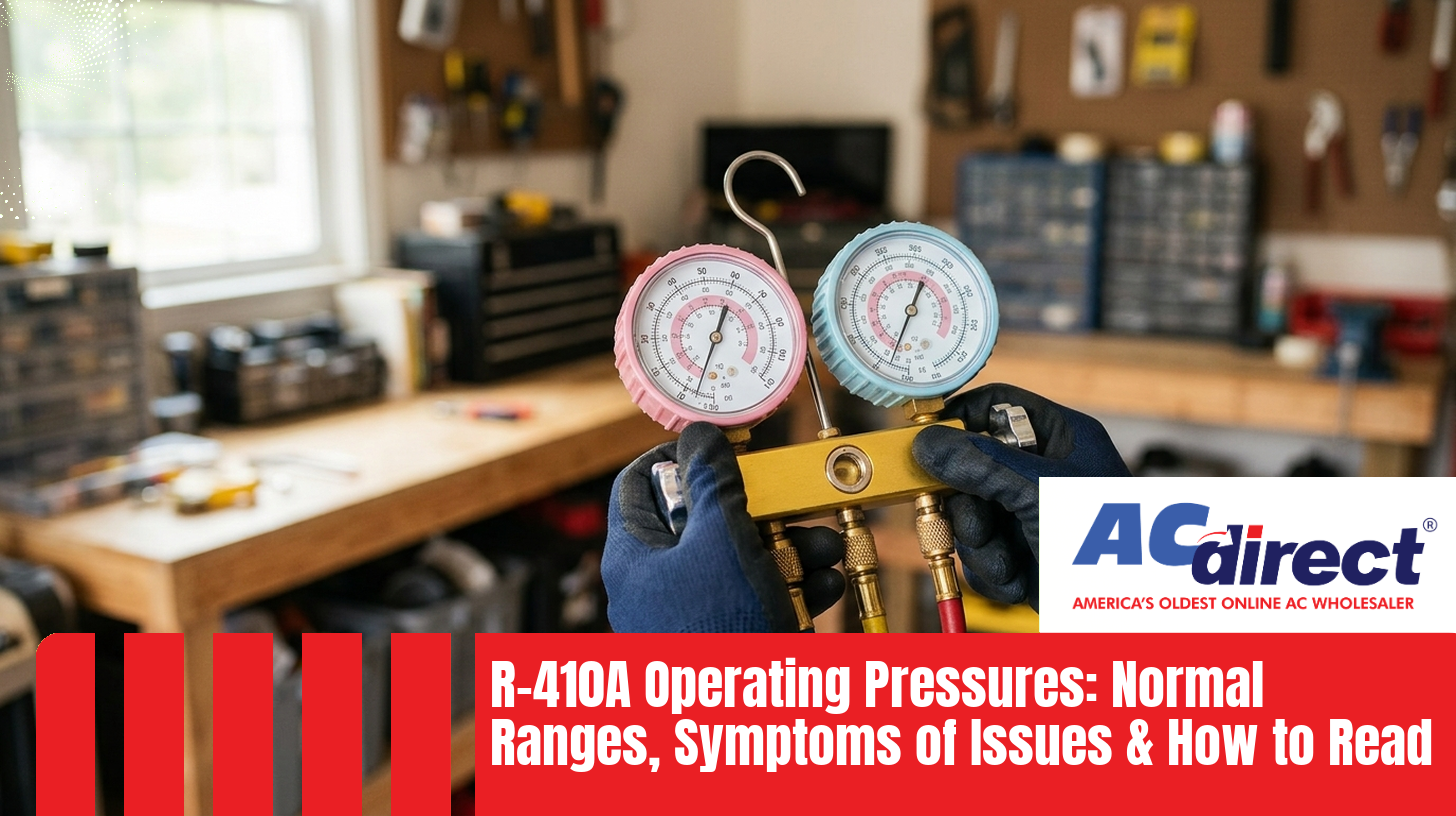
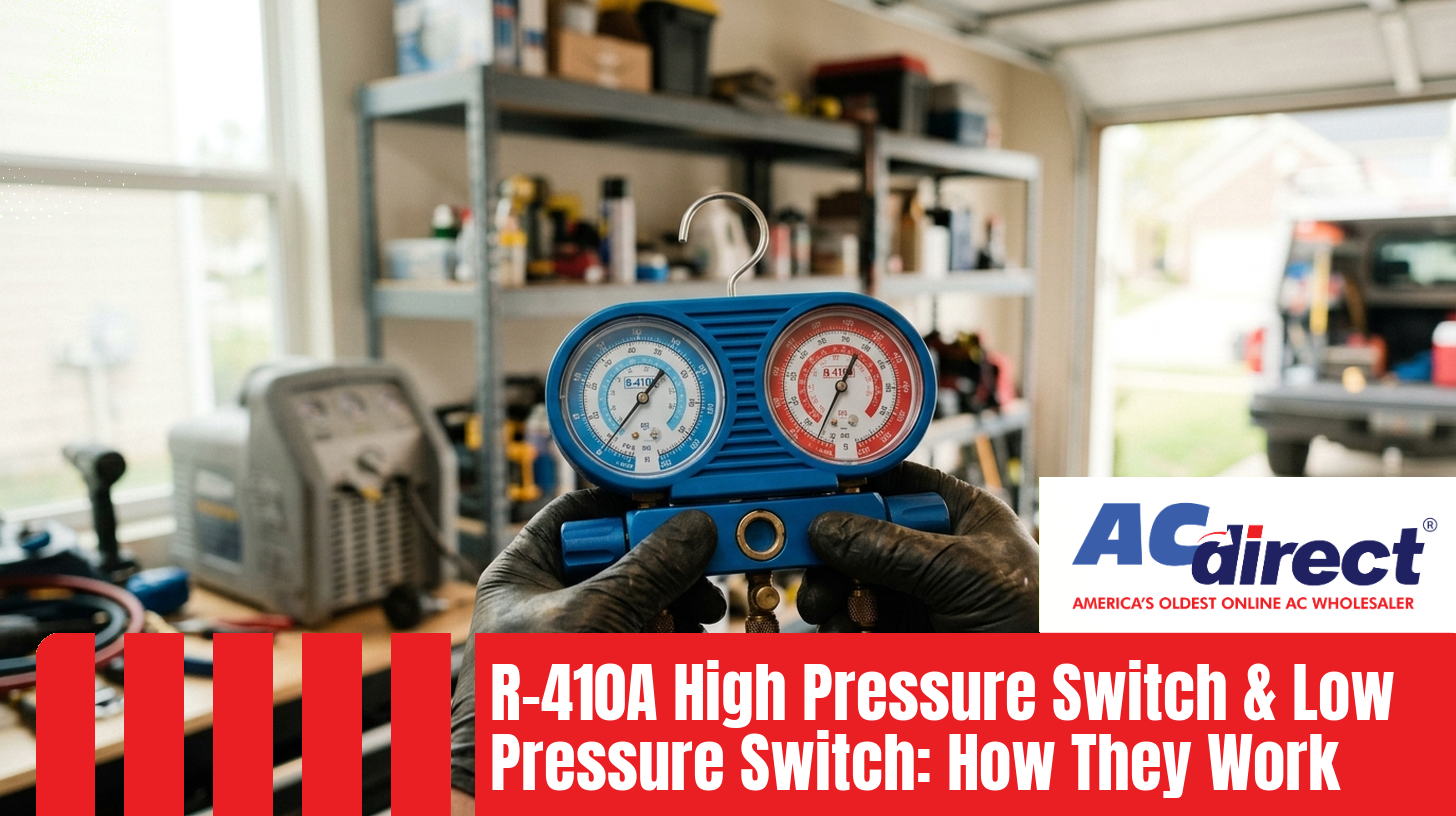
For a deeper breakdown of what each side of the gauge set is telling you, see our companion piece on interpreting R-410A high-side and low-side pressures. If your manifold itself is the question, our guide to R-410A manifold gauges covers the equipment side.
This is the daily-driver use of the PT chart. Two measurements, two formulas, two answers.
Superheat tells you how much heat the evaporator is absorbing past the boiling point of the refrigerant. It's how you protect the compressor from liquid slugging and confirm the evaporator is being fed correctly.
Suction line temperature - Saturation temperature (from PT chart at suction pressure) = Superheat
Target range for R-410A: typically 10°F to 15°F under normal operating conditions. Always defer to the manufacturer's spec for the unit on the wall.
Reading too low? You're flooding the evaporator - overcharge, TXV stuck open, or low load on the coil. Reading too high? Starved evaporator - undercharge, restriction, dirty filter, low airflow. Same chart, two opposite stories, both told in degrees of superheat.
Subcooling tells you how much heat has been pulled out of the liquid past the condensing point. It's the primary charge indicator on TXV systems.
Saturation temperature (from PT chart at liquid line pressure) - Liquid line temperature = Subcooling
Target range for R-410A: typically 8°F to 12°F. Manufacturer data plate is the final word.
Low subcooling on a TXV system usually means undercharge or a refrigerant leak. High subcooling means overcharge, a restricted liquid line, or a non-condensable problem in the high side. The chart converts your gauge readings into temperatures so the math actually means something.
- Let the system run at steady state - 15 minutes minimum, longer in extreme weather.
- Connect manifold gauges, record both pressures.
- Clamp a calibrated temperature probe on the suction line, 6 inches from the service port. Insulate it.
- Clamp a second probe on the liquid line at the condenser.
- Convert suction pressure to saturation temp using the PT chart. Subtract from suction line temp = superheat.
- Convert liquid line pressure to saturation temp. Subtract liquid line temp = subcooling.
- Compare both against the manufacturer's target. Diagnose the gap.
Some service calls are textbook. Others are not. The chart earns its keep on the ones that aren't.
R-410A refrigerant pricing has shifted significantly. Retail costs are running roughly $40 to $75 per pound for the gas itself, with installed pricing reaching $50 to $80 per pound and contractor reports of installed pricing as high as $199 to $250 per pound on some jobs. With numbers like that, "throw a couple pounds in and see what happens" is no longer the right approach. You confirm the charge state with subcooling and superheat readings BEFORE you crack a tank.
The 2026 service landscape includes a lot of R-410A equipment built before the January 1, 2025 manufacturing cutoff alongside newer R-454B and R-32 systems. Each refrigerant has its own PT relationship. R-454B operates at pressures roughly 2-5% higher than R-410A but exhibits about 1.5°F of glide, meaning you'll use bubble point for subcool and dew point for superheat on those systems. R-32 is single-component and reads more like R-410A. Confusing the charts between systems is a real way to misdiagnose.
The economics of repair-vs-replace have shifted. Average residential system replacement cost has roughly doubled from about $6,000 in 2020 to around $12,000 in 2024-2025. That math frequently makes a careful repair on an existing R-410A system the right call for the customer, especially when overstock R-410A equipment is still available for true component replacements. Accurate PT diagnostics keep you from condemning a system that just needed a coil cleaning.
Servicing existing R-410A systems remains fully legal. The EPA's Technology Transitions Rule targeted the manufacturing of new R-410A residential and light commercial equipment as of January 1, 2025 - it did not ban service refrigerant or grandfathered systems. The HFC allowance allocation steps down to 15% of historic baseline by 2036, so virgin R-410A will get pricier over time, but it isn't going anywhere this year. Equipment manufactured before the cutoff remains legal to install in 2026 under current EPA enforcement discretion.
Two things are true at the same time in 2026. First, R-454B cylinder pricing climbed from around $345 in 2021 to over $2,000 by 2025, and many contractors reported being unable to source R-454B at any price during peak season. Second, R-410A overstock - systems built before January 1, 2025 - is still moving through the channel, with industry estimates of stranded inventory exceeding $500 million nationwide.
For technicians installing replacement systems for customers, that means the r32 vs r410a (the comparison they're searching) question often comes down to availability and budget rather than ideology. Both R-454B (Carrier, Trane, Lennox, Rheem, Johnson Controls) and R-32 (Daikin, Amana, Goodman) are legitimate low-GWP paths forward. R-410A overstock is the third path - same refrigerant your customers already own, available now, often at attractive pricing while inventory holds.
If you're sourcing for a job, browse r410a price on current overstock systems. Need help matching a unit to a specific application? Call to talk to an R-410A expert at AC Direct - real humans, no scripts.
Yes. The pressure-temperature relationship for R-410A is a physical property of the refrigerant. It hasn't changed and won't. What's changed is the regulatory landscape around new equipment manufacturing - not the diagnostics on the equipment in front of you.
No. R-454B has different pressures (roughly 2-5% higher than R-410A at comparable conditions) and exhibits about 1.5°F of temperature glide as a blend. You need to use bubble point for subcooling and dew point for superheat. Use the manufacturer-provided R-454B chart, not the R-410A one.
Superheat typically falls between 10°F and 15°F, and subcooling between 8°F and 12°F under normal operating conditions. These are starting points - the manufacturer's data plate or installation manual gives the exact target for the specific unit you're servicing.
Yes. The EPA's rules under the AIM Act target the manufacturing and import of new R-410A equipment. Service, repair, and recharge of existing systems remain legal throughout the equipment's useful life. Virgin R-410A supply will continue to step down, but the refrigerant itself isn't banned from the service truck.
High subcooling with apparently normal pressures often points to overcharge, a partially restricted liquid line, or non-condensables in the high side. Pull a temperature reading across the condenser, check the liquid line drier for a temperature drop indicating restriction, and verify the charge by weight if you have the original spec. The PT chart pointed you at the right area to investigate.
That's a starved evaporator. Pressure can read in-range while the coil isn't getting enough refrigerant due to a low charge, a restriction upstream of the evaporator, or a TXV not opening properly. High superheat with normal-ish pressure is exactly the kind of finding that pure pressure-only diagnostics misses, which is why the PT-chart-plus-temperature workflow exists.
AC Direct carries pre-2025 manufactured R-410A overstock from major brands at wholesale pricing. Legal to install in 2026, ships nationwide, and inventory is finite as the channel works through stock.