

R-454B vs R-410A Pressures: Side-by-Side Pressure Chart Comparison
-
 By
Michael Haines
By
Michael Haines
- May 7, 2026
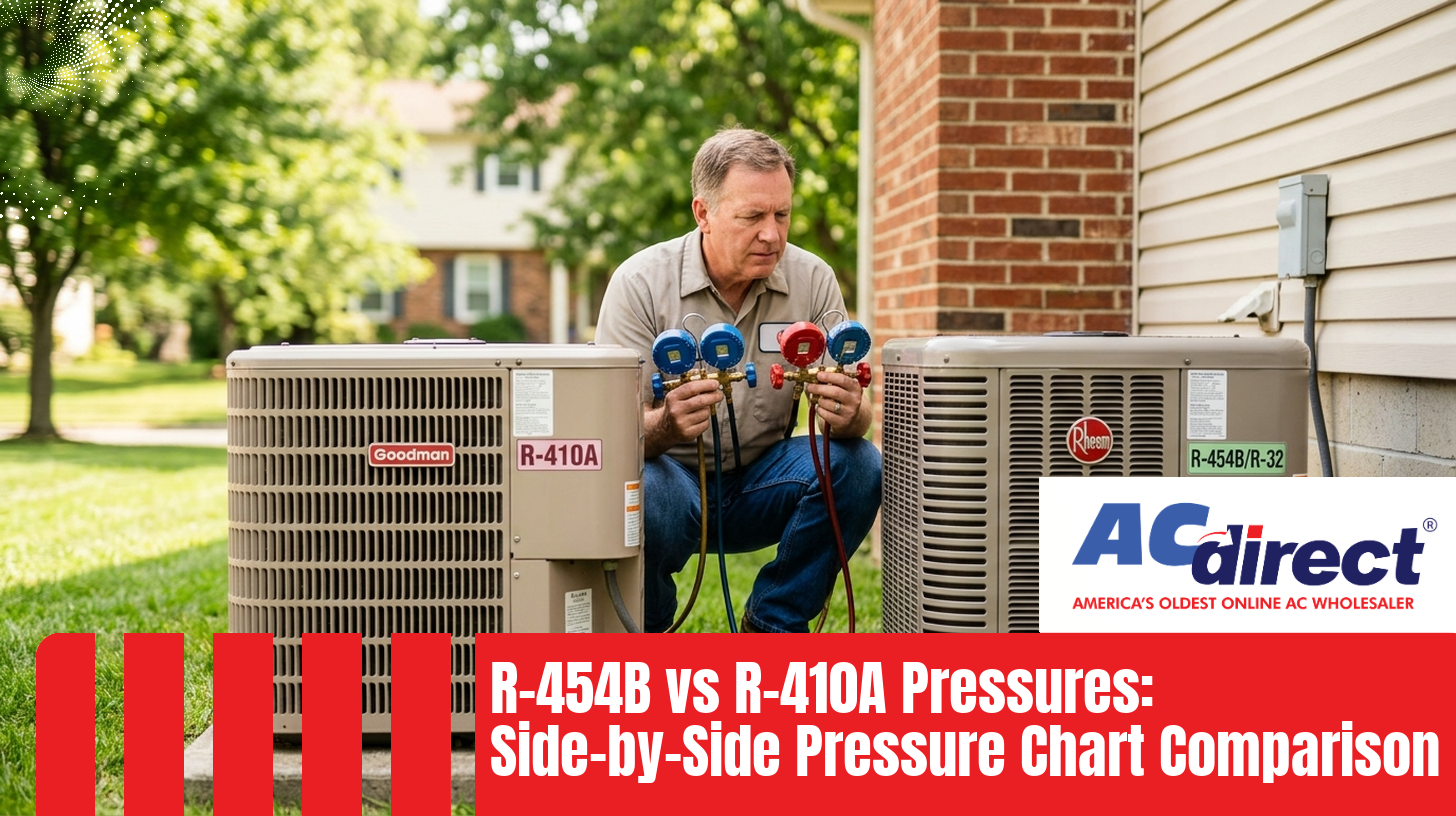
Real numbers, not hand-waving. What technicians and homeowners need to know about the pressure differences between R-410A, R-454B, and R-32 - and what those differences mean for service work in 2026.
If you have ever stuck a manifold gauge on an R-410A system and watched the high side climb past 400 psi, you already know modern refrigerants run hot. The question on every technician's mind in 2026 is straightforward: how does R-454B - the A2L blend replacing R-410A in most new ducted equipment - actually compare on pressure? And how does R-32, the other major replacement, fit in? This article walks through the pressure-temperature data side by side, explains why the numbers differ, and covers what those differences mean when you're standing at the unit with a set of gauges.
For the broader picture across all four refrigerants, see our complete refrigerant comparison guide covering R-32, R-410A, R-454B, and R-22. This piece zooms in on the pressure data specifically.
R-454B is a zeotropic blend - 68.9% R-32 and 31.1% R-1234yf. Because it is zeotropic, it has a temperature glide, meaning the bubble point and dew point are not identical. That matters when you're charging or reading a PT chart: you have to know which value (liquid or vapor) you're working with at a given saturation temperature.
At a high level, R-454B operates at roughly 5% higher pressure than R-410A at the same saturation temperature. The numbers are close - close enough that the gauge needles look familiar - but they are not identical, and the small spread is consistent across the operating range.
Typical R-454B field operating pressures look like this on a 70°F day with a properly charged residential split system:
- Suction (low side): approximately 120 to 140 psi
- Discharge (high side): approximately 390 to 440 psi
- Superheat: 10 to 15°F (manufacturer-specific)
- Subcooling: 8 to 12°F (unit-specific)
Here is the pressure-temperature comparison across the three refrigerants you are most likely to encounter on residential and light commercial calls in 2026. Values are saturation pressures (psig) at common service temperatures. R-454B values shown are mid-glide for quick reference.
| Saturation Temp | R-410A | R-454B | R-32 |
|---|---|---|---|
| 20°F | ~78 psig | ~82 psig | ~88 psig |
| 32°F | ~101 psig | ~106 psig | ~114 psig |
| 40°F | ~118 psig | ~124 psig | ~134 psig |
| 50°F | ~143 psig | ~150 psig | ~163 psig |
| 70°F | ~201 psig | ~211 psig | ~228 psig |
| 90°F | ~274 psig | ~288 psig | ~311 psig |
| 110°F | ~365 psig | ~383 psig | ~414 psig |
| 130°F | ~476 psig | ~500 psig | ~540 psig |
For typical R-410A field operating pressures by ambient temperature, see our R-410A high side / low side pressure chart.
The pressure spread between these three refrigerants comes down to chemistry. Each one has a different composition, and each component contributes its own vapor pressure curve.
R-410A is 50% R-32 and 50% R-125. The two components have similar enough boiling points that the blend behaves almost like a single fluid - the technical term is "near-azeotropic." Glide is minimal, so technicians can read PT charts without worrying much about whether they're looking at liquid or vapor saturation.
R-454B keeps R-32 (the higher-pressure component, at 68.9%) but swaps R-125 for R-1234yf (the lower-pressure, lower-GWP component, at 31.1%). The result is a blend with a small but real temperature glide - a few degrees - and a slightly higher overall pressure than R-410A because there's more R-32 in the mix.
R-32 is a single-component refrigerant. No blend, no glide, no bubble-point versus dew-point distinction. It also runs at the highest pressure of the three because R-32 itself is the high-pressure component the others are diluting. That higher pressure pairs with denser vapor, which is part of why R-32 systems can move the same heat with a smaller refrigerant charge - up to 30% less in some designs.
The pressure numbers themselves are not dramatically different. The service implications around them are.
Both R-454B and R-32 are classified ASHRAE A2L - mildly flammable. R-410A is A1, non-flammable. That difference drives a real tooling investment: A2L-rated manifold gauges, A2L-compatible recovery machines, A2L-rated leak detectors, and spark-resistant practices around the equipment. Existing R-410A tooling is not automatically rated for A2L service. Check your gauge set's labels before you assume.
You cannot retrofit an R-410A system with R-454B or R-32. The pressure differences are part of it, but the bigger issues are:
- Compressor design. R-454B and R-32 systems use compressors and components designed for A2L service, with sealed electricals and different displacement ratings.
- Leak detection requirements. A2L systems require active refrigerant detection sensors (Rheem's PlusOne system, for example) and mitigation circuits that R-410A units don't have.
- Oil compatibility. All three use POE lubricant, but residual oils and cross-contamination from blended charges create reliability issues.
- Charge precision. R-454B's glide makes it sensitive to even small charging errors that R-410A would shrug off.
Here's what gets lost in headlines: R-410A is not banned. The EPA AIM Act stopped manufacturing of new R-410A residential equipment as of January 1, 2025, but service refrigerant remains legal indefinitely, existing systems are grandfathered, and new equipment manufactured before the cutoff (overstock inventory) is still legal to install. The EPA also issued enforcement discretion on the original installation deadline, so pre-2025 R-410A units continue to be installed into 2026 without federal enforcement priority. State rules vary - New York is the notable exception with stricter installation timing.
The practical effect for technicians: you'll be servicing R-410A systems for the next 10 to 15 years easily. R-410A refrigerant in 2026 runs roughly $40 to $90 per pound installed, with wholesale 25-pound cylinders at $75 to $200. Those prices are trending up as supply tightens. For the broader buying picture, see our breakdown of R-454B versus R-410A as a system-purchase decision.
For homeowners replacing a system in 2026, brand-new R-410A equipment manufactured before the January 2025 cutoff is still being sold at meaningful discounts versus equivalent new A2L units. R-454B cylinder prices have spiked over 300% since 2021 due to supply constraints, which has flowed into installed-system pricing. AC Direct holds remaining R-410A overstock inventory at phase-out pricing on the r410a air conditioning system lineup. Once it's gone, it's gone.
Questions about specific units, refrigerant charges, or whether overstock R-410A makes sense for your replacement? Call to talk to an R-410A expert.
Close, but not identical. R-454B runs approximately 5% higher pressure than R-410A at the same saturation temperature. At 90°F sat, R-410A sits near 274 psig and R-454B near 288 psig. The needle positions look familiar, but R-454B has a small temperature glide that R-410A doesn't, so you need to charge by subcooling and read PT charts carefully.
Only if they're rated for A2L refrigerants. R-454B is mildly flammable (A2L), and tools used on it must be rated accordingly. Many older R-410A manifold sets are not A2L-rated. Check the manufacturer's spec on your gauges, hoses, and recovery machine before working on R-454B or R-32 equipment.
R-32 runs higher than both. At 90°F saturation, R-32 is around 311 psig versus R-410A's 274 psig - roughly 13% higher. R-32 is a single-component refrigerant with no glide, which simplifies charging compared to R-454B, but the higher pressure and A2L safety class still require A2L-compatible tooling and unit design. For a deeper look, our r32 vs r410a (the comparison they're searching) page covers the buyer-side trade-offs.
No. R-454B requires compressors, components, and leak-detection circuitry specifically designed for A2L service. Pressure differences, oil residue concerns, and safety classification all rule out a drop-in retrofit. If your R-410A system fails, your two real options are repairing it (refrigerant is still legal for service) or replacing the whole system with new A2L equipment - or with overstock R-410A if it's still available.
No. Manufacturing of new R-410A residential equipment ended January 1, 2025, but service refrigerant remains legal, existing systems can be repaired and recharged indefinitely, and new R-410A equipment manufactured before the cutoff is still legal to install in most states. The EPA issued enforcement discretion on the original installation deadline. New York maintains stricter state-level rules - check your local jurisdiction.
From wholesalers still holding pre-2025 manufactured inventory. AC Direct stocks remaining R-410A overstock at phase-out pricing - browse the current aircon r410a selection while inventory lasts.