
America's Leading Discount HVAC Supplier Since 2001 ... and now, NASCAR Racing Sponsor

Ask an Expert
866 862 8922


 Hours of Operation
 8am - 8pm EST
8am - 8pm EST


-
![]()
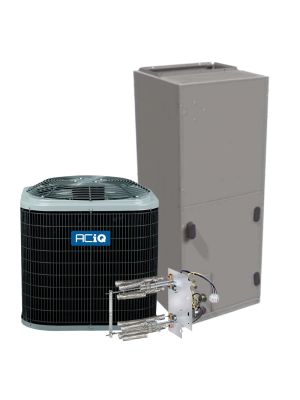
ACiQ 2 Ton Heat Pump AC System | 15.5 SEER2 AC | 21" Wide Variable Speed Multi-Positional Modular Air Handler | R454B
PRICE TOO LOW TO ADVERTISENO PERSONAL INFO NEEDEDStart atAs low as $5,076.00

-
![]()
ACiQ 2 Ton Heat Pump AC System | 15.5 SEER2 AC | 17.5" Wide Variable Speed Multi-Positional Air Handler | R454B
PRICE TOO LOW TO ADVERTISENO PERSONAL INFO NEEDEDStart atAs low as $4,792.00
-
![]()
ACiQ 2 Ton Heat Pump AC System | 15.2 SEER2 AC | 17.5" Wide Multi-Positional Air Handler | R454B
PRICE TOO LOW TO ADVERTISENO PERSONAL INFO NEEDEDStart atAs low as $3,864.00
-
![]()
ACiQ 2 Ton Split Heat Pump AC System | 18.6 SEER2 High Efficiency Inverter Heats Down To -22° F and Beyond| Extreme+ Series R454B
PRICE TOO LOW TO ADVERTISENO PERSONAL INFO NEEDEDStart atAs low as $4,700.00
-
![]()
ACiQ 2 Ton Split Heat Pump AC System | 18.3 SEER2 High Efficiency Inverter Heats Down To -22° F and Beyond | R454B
PRICE TOO LOW TO ADVERTISENO PERSONAL INFO NEEDEDStart atAs low as $4,320.00
-
![]()
ACiQ 2 Ton Split Heat Pump AC System | 18.1 SEER2 High Efficiency Inverter Heats Down To 5° F and Beyond | R454B
PRICE TOO LOW TO ADVERTISENO PERSONAL INFO NEEDEDStart atAs low as $4,220.00




Shop Today - No Credit Needed
View the quick video for 7 nights of resort accommodations from over 3500 popular destinations. (Complimentary with orders over $3,000).
View the quick video for 7 nights of resort accommodations from over 3500 popular destinations. (Complimentary with orders over $3,000).
Goodman Heat Pump Selection. Choose From 1.5 to 5 ton and 14 SEER to 20 SEER2
Compare product
Heat and Air Conditioning Pumps: AC Heat Pump Systems from 1.5 to 5 Ton
An air conditioning heat pump system is a single unit that handles both summer cooling and winter heating from one outdoor condenser and one indoor air handler. This heat pump cooling and heating system moves thermal energy rather than generating it, delivering two to three times more efficiency than electric resistance heat, with SEER2 ratings up to 20 for cooling and HSPF2 ratings that directly reduce winter energy bills.
When comfort matters across every season, a heat pump air conditioner heater delivers a complete heating and cooling solution from a single system. Unlike a straight cool air conditioner that handles only summer, an AC heat pump system reverses its refrigerant cycle to extract heat from outdoor air in winter and deliver it indoors. Whether you are replacing an existing AC system or upgrading your heating system, the result is year-round comfort, one maintenance schedule, and, in most U.S. climates, meaningfully lower energy bills than running separate equipment.
AC Direct carries the full range of heat and air conditioning pumps from 1.5 to 5 tons, from 14 SEER2 entry configurations to high-efficiency inverter models that are among the best heat pump systems for summer cooling and winter heating alike. Goodman heat pump systems, ACiQ Extreme Series, and MRCOOL cold-climate configurations are all stocked, ship free on orders over $1,500, and carry a 10-year factory warranty.
Why Choose a Heat Pump for Heating and Air Conditioning
A heat pump HVAC system earns its place as the leading residential heating system and cooling solution for millions of American homes because of one fundamental advantage: it moves thermal energy rather than generating it. An electric furnace converts one unit of electricity into one unit of heat. Air-source heat pump technology moves two to three units of thermal energy into your home for every unit of electricity consumed, making it far more efficient than electric resistance heating across most operating conditions.
For homes across the South, Southeast, and coastal regions, an HVAC heat pump unit delivers complete climate control system capability from a single piece of equipment at a fraction of the cost of maintaining separate heating and cooling solutions. For colder climates, today's cold-climate models operate reliably well below 0 degrees Fahrenheit, making an energy-efficient HVAC system based on heat pump technology the right choice across most of the continental United States. The practical benefits include:
- One outdoor condenser and one indoor air handler replace both a standalone air conditioner and a furnace
- Lower annual heating costs than electric resistance heat in virtually every climate
- One of the most cost-effective home comfort systems available, with one unit to maintain, service, and warranty rather than two
- Eligibility for the federal Section 25C tax credit of up to $2,000 per year on qualifying high-efficiency installations
- Each heat pump AC unit from ACiQ and MRCOOL uses inverter-driven technology to self-adjust output continuously, running at partial capacity during mild weather and ramping up only when conditions require it
Understanding SEER2 and HSPF2: The Two Efficiency Numbers That Determine Your Bills
Heat pump AC systems carry two efficiency ratings, one for each operating mode. Both numbers appear in every product listing, and both directly affect your utility costs.
SEER2, Cooling Efficiency
SEER2 (Seasonal Energy Efficiency Ratio 2) measures how efficiently the system cools over an entire season. The federal minimum is 14 SEER2. The systems in this catalog range from 14 SEER2 on Goodman entry models to 18.8 SEER2 on ACiQ Extreme Plus inverter systems. A higher SEER2 rating means less electricity consumed per unit of cooling delivered, a difference that compounds into measurable utility savings over the 15-20 year life of the system, particularly in climates where cooling runs 6 months or more per year.
HSPF2, Heating Efficiency
HSPF2 (Heating Seasonal Performance Factor 2) is the heating-mode equivalent of SEER2. It measures total heating output divided by total electrical energy consumed across an entire heating season. The federal minimum is 7.5 HSPF2. A system at 9.0 HSPF2 delivers roughly 20% more heating per unit of electricity than the minimum-rated system. This directly reduces your winter energy bill. For all-electric homes replacing a gas furnace or electric resistance heating, HSPF2 is the more important number to prioritize when comparing models. Always evaluate both ratings together when selecting a heat pump for a climate with meaningful winters.
What Size Heat Pump Do I Need? Tonnage by Square Footage
Correct tonnage is the most important variable in heat pump selection. An undersized system runs at full capacity continuously without reaching the set temperature. An oversized system short-cycles, switching on and off rapidly, which reduces humidity control, creates temperature swings, and shortens compressor life. In cold climates, the heating load may require one tonnage step above what the cooling calculation alone suggests, because the system must handle peak winter demand without falling back entirely on backup electric heat strips.
|
System Size |
Well-Insulated Home |
Average Home |
Common Application |
|---|---|---|---|
|
1.5 Ton |
600-900 sq ft |
500-750 sq ft |
Small home, apartment, or single zone |
|
2 Ton |
900-1,200 sq ft |
750-1,000 sq ft |
Small to mid-size home |
|
2.5 Ton |
1,200-1,500 sq ft |
1,000-1,250 sq ft |
Standard single-story home |
|
3 Ton |
1,500-1,800 sq ft |
1,250-1,500 sq ft |
Mid-size two-story home |
|
3.5 Ton |
1,800-2,200 sq ft |
1,500-1,800 sq ft |
Larger two-story home |
|
4 Ton |
2,200-2,600 sq ft |
1,800-2,200 sq ft |
Large home or light commercial |
|
5 Ton |
2,600-3,200 sq ft |
2,200-2,800 sq ft |
Large home or commercial space |
Figures assume 8-foot ceilings and a moderate climate. In climate zones 5-7, size the heating load first. Use the AC Direct sizing calculator for a climate-adjusted tonnage recommendation before purchasing.
Use the heat pump sizing calculator to get a precise tonnage recommendation based on your home's square footage, insulation, and climate zone.
Goodman, ACiQ, and MRCOOL Heat Pump Systems
Goodman
Goodman heat pump configurations are available from 1.5 to 5 tons in single-stage and two-stage models, with SEER2 ratings spanning 14 to 17.2 and HSPF2 up to 9.0. Two-stage Goodman heat pump units run at reduced capacity during mild weather and ramp to full output only when conditions demand it, delivering better humidity control and quieter part-load operation than single-stage models. All Goodman systems carry a 10-year parts and compressor warranty when registered by a licensed contractor.
ACiQ
ACiQ's Extreme Series heat pump systems use inverter-driven compressors that continuously modulate output based on real-time demand, achieving SEER2 ratings of 16.5 to 18.8 across the lineup. Critically for cold-climate buyers, the ACiQ Extreme Series maintains 100% heating capacity at 0 degrees Fahrenheit and 80% capacity at -22 degrees Fahrenheit; backup electric heat strips only engage below that threshold. This makes ACiQ a genuine cold-climate option alongside MRCOOL, not merely a value-tier brand. Variable-speed air handlers communicate directly with the inverter condenser for system-wide efficiency optimization.
MRCOOL
MRCOOL's split system heat pumps offer inverter-driven performance with cold-climate ratings of 100% heating output at -5 degrees Fahrenheit and beyond, with SEER2 reaching 17.4. MRCOOL systems include smart thermostat compatibility and are engineered for straightforward installation. For buyers who need ductless heat pump performance rather than a ducted split system, MRCOOL's ductless lineup is available through AC Direct's ductless mini split catalog.
Are Heat Pumps Effective in Cold Winters?
The short answer: modern cold-climate heat pump systems are effective well below freezing. The longer answer depends on which system you choose.
Standard heat pumps begin losing heating capacity below 35-40 degrees Fahrenheit and lean more heavily on backup electric heat strips as temperatures drop. In mild to moderate climates, the South, Southwest, and Pacific Coast, this is rarely a meaningful limitation. In climate zones 5 through 7, where winter temperatures regularly fall below 20 degrees Fahrenheit, a standard heat pump without cold-climate ratings is not the right choice.
ACiQ Extreme Series and MRCOOL cold-climate models are specifically engineered for these conditions. ACiQ maintains full heating capacity at 0 degrees Fahrenheit and 80% capacity at -22 degrees Fahrenheit. MRCOOL's cold-climate configurations deliver 100% rated output at -5 degrees Fahrenheit. For homeowners in the upper Midwest, Northeast, and Mountain regions who want the efficiency advantage of a heat pump without sacrificing winter comfort, these models close the performance gap that older heat pump technology left open. For more on cold-climate heat pump performance backed by field data, see Heat Pumps Work in Seriously Cold Weather.
Pairing a Heat Pump with a Gas Furnace: Dual Fuel Systems
For homes in cold climates that already have a gas furnace, a dual fuel hybrid configuration pairs an AC heat pump with the existing furnace on a single thermostat. The heat pump handles the majority of heating hours, everything above the balance point where gas becomes more cost-effective, typically around 25-30 degrees Fahrenheit. The furnace takes over automatically on the coldest nights. This approach captures heat pump efficiency for 80-90% of the heating season while eliminating the cold-weather limitation entirely. Browse dual fuel heat pump and gas furnace systems for matched condenser and furnace configurations, and read the Hybrid Heat Pump Systems guide for a full breakdown of balance point economics and system selection.
R32 and R454B: Current Refrigerant Standards
All new heat pump systems in this catalog use either R32 or R454B refrigerant, the current and forthcoming low-GWP successors to R410A under the EPA AIM Act phasedown. R410A is no longer manufactured for new residential equipment. Both R32 and R454B are classified as A2L, mildly flammable under specific conditions, safe in standard residential installations, and requiring an EPA 608-certified technician with A2L authorization for installation and service. Refrigerant type is specified in each product listing.
Key Features to Evaluate When Selecting a Heat Pump HVAC System
- Tonnage: Match system size to your home's square footage and climate zone using the sizing calculator above. In cold climates, size the heating load first.
- SEER2 and HSPF2: Evaluate both ratings together. SEER2 determines cooling cost. HSPF2 determines winter heating cost. Higher numbers on both mean lower utility bills year-round.
- Inverter vs. single-stage: Inverter models from ACiQ and MRCOOL modulate output continuously for better efficiency at part load. Goodman's two-stage models offer a reliable middle ground.
- Cold-climate rating: If your climate regularly sees temperatures below 20 degrees Fahrenheit, verify the system's minimum rated operating temperature. Not all heat pump air conditioner models are cold-climate rated.
- Heat pump for AC replacement: If you are replacing a cooling-only unit and adding heating capability at the same time, an AC heat pump gives you both functions in a single system with no furnace required in mild climates.
- Split vs. package: Split system configurations suit homes with existing ductwork and interior mechanical space. Package units house all components in a single outdoor cabinet. Browse heat pump package units for single-cabinet options.
- Financing and warranty: All systems include a 10-year factory warranty when registered by a licensed contractor. AC Direct offers 0% financing for qualified buyers and free shipping on orders over $1,500.
Federal Tax Credits for Heat Pump Systems in 2026
The Inflation Reduction Act Section 25C tax credit provides up to $2,000 per year for qualifying heat pump installations. To qualify, systems must meet Energy Star Most Efficient criteria, generally SEER2 of 16 or higher and HSPF2 of 9.0 or higher. The credit is non-refundable and applies against federal income tax liability. Many utility companies offer additional rebates of $200 to $1,000 or more on top of the federal credit. Stacked incentives can meaningfully reduce the net system cost for buyers selecting a qualifying high-efficiency heat pump. Confirm eligibility with your local utility provider or the DSIRE database.
Frequently Asked Questions
1. How does a heat pump system work?
A heat pump moves thermal energy rather than generating it. In cooling mode, it removes heat from inside the home and expels it outdoors. In heating mode, a reversing valve switches refrigerant flow direction, extracting heat from outdoor air and delivering it indoors. Because heat is moved rather than created, a heat pump delivers two to three units of thermal energy for every unit of electricity consumed, far more efficient than electric resistance heating.
2. What is HSPF2, and why does it matter?
HSPF2 stands for Heating Seasonal Performance Factor 2. It measures a heat pump's heating efficiency over an entire heating season, the heating equivalent of SEER2 for cooling. The federal minimum is 7.5 HSPF2. A system at 9.0 HSPF2 delivers roughly 20% more heating output per unit of electricity than a 7.5 HSPF2 system. For all-electric homes, HSPF2 is the most direct predictor of your winter heating bill.
3. Are heat pumps effective in winter?
Modern cold-climate heat pump systems are effective well below freezing. ACiQ Extreme Series models maintain 100% heating capacity at 0 degrees Fahrenheit and 80% at -22 degrees Fahrenheit. MRCOOL cold-climate systems deliver 100% rated output at -5 degrees Fahrenheit. Standard (non-cold-climate) heat pumps lose efficiency below 35-40 degrees Fahrenheit and rely more on electric backup strips, making system selection by climate zone critical.
4. What are the benefits of a heat pump?
The core benefits are efficiency, simplicity, and cost savings. A heat pump air conditioning system replaces both a furnace and an air conditioner in a single unit, reducing equipment cost, installation complexity, and long-term maintenance. In moderate climates, a heat pump delivers two to three times more heating output per unit of electricity than electric resistance heat, and high-efficiency models qualify for the federal Section 25C tax credit of up to $2,000 per year.
5. Can a heat pump replace my furnace?
In mild to moderate climates, a properly sized cold-climate heat pump with electric backup strips can handle the full heating load without a furnace. In colder climates, a dual-fuel hybrid configuration that pairs a heat pump with an existing gas furnace is often the more practical choice. The heat pump covers the majority of heating hours efficiently, and the furnace handles the coldest nights automatically.
6. What size heat pump do I need?
Start with 20 BTUs per square foot for a well-insulated home in a moderate climate, increasing to 25-30 BTUs per square foot for average to poorly insulated homes. In cold climates, size the heating load first, which may require one tonnage step above the cooling-only calculation. Use the AC Direct heat pump sizing calculator for a climate-adjusted recommendation before purchasing.
7. Is a heat pump more efficient than a gas furnace?
In moderate climates, yes, a heat pump delivers two to three times more heating per unit of electricity than electric resistance heating, and operates more cheaply than gas in many regions. In very cold climates with cheap natural gas, the economics are more variable. A dual fuel hybrid system eliminates the tradeoff by using the heat pump for the majority of the season and the gas furnace as backup. The Heat Pump vs. Gas Furnace 2026 guide covers the full cost comparison by climate zone.
8. Do heat pumps require ductwork?
The split system heat pumps in this catalog require existing ductwork to distribute conditioned air. For homes without ductwork, ductless mini split heat pumps deliver the same heating and cooling without any duct installation, including multi-zone heat pump systems that connect one outdoor condenser to multiple independent indoor units for room-by-room climate control. AC Direct carries ductless mini split heat pump systems in configurations from single-zone up to 8-zone whole-home setups.
9. Which heat pump brands work best in cold climates?
ACiQ Extreme Series and MRCOOL cold-climate models are both verified for meaningful heating output below 0 degrees Fahrenheit. ACiQ maintains 80% capacity at -22 degrees Fahrenheit with backup electric strips only engaging below that point. MRCOOL delivers 100% rated output at -5 degrees Fahrenheit. For climates with extended periods below 20 degrees Fahrenheit, either of these inverter-driven systems is the correct choice over a standard single-stage heat pump.
10. What is the lifespan of a heat pump system?
A properly installed and maintained heat pump typically lasts 15-20 years. Inverter-driven models from ACiQ and MRCOOL often reach the upper end of that range because their variable-speed compressors run at partial load most of the time rather than cycling at full capacity, which reduces mechanical wear. Annual professional maintenance covering refrigerant levels, coil condition, electrical connections, and filter service is the most impactful factor in maximizing lifespan.
Free shipping over $1,500. 0% financing available. 10-year factory warranty.
Browse heat and air conditioning pumps above, or explore related categories: dual fuel hybrid systems, straight cool split systems, heat pump package units, and ductless mini split heat pumps. Questions? Call toll-free at 1-866-862-8922.