


Heat Pumps Work in Seriously Cold Weather
-
 By
Michael Haines
By
Michael Haines
- Mar 4, 2026
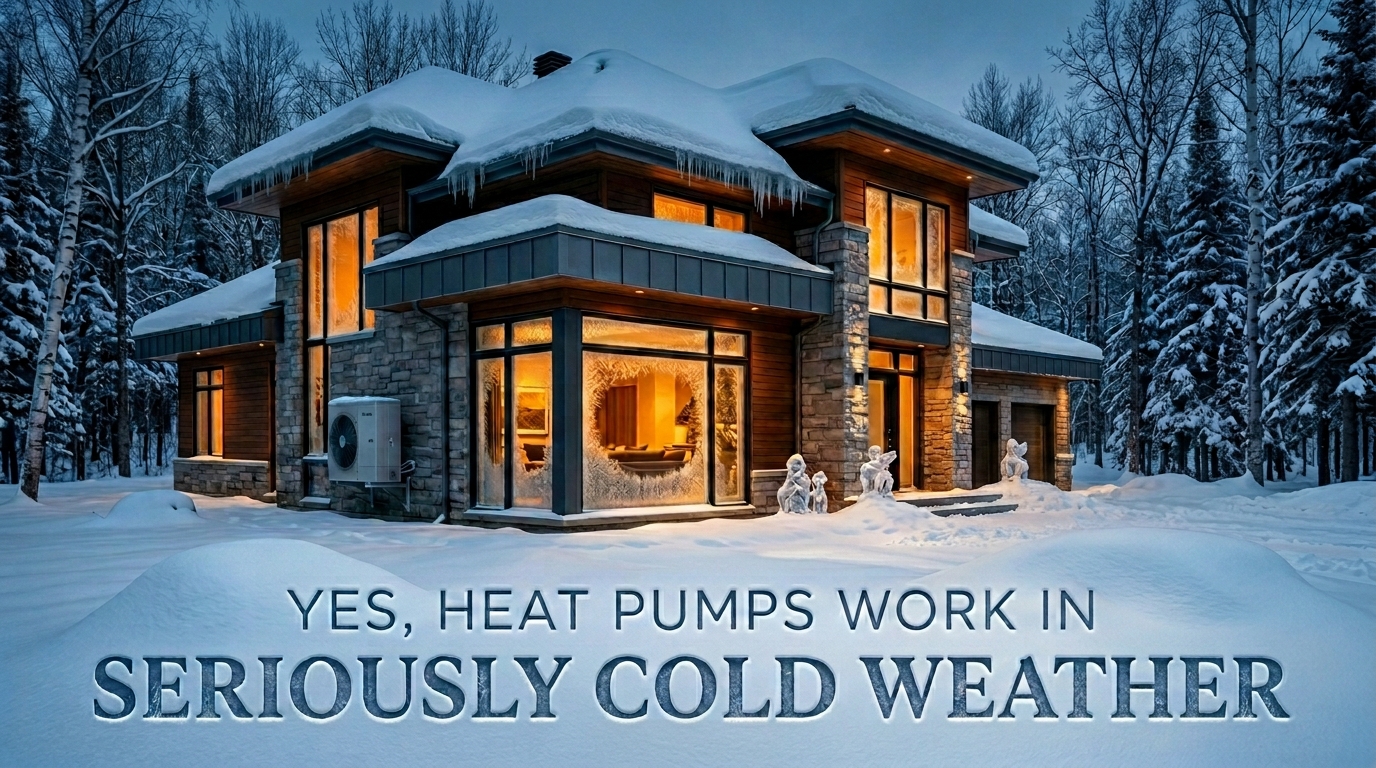
Everything you actually need to know about the technology quietly replacing furnaces across America, including in Alaska.
You have probably heard it before, maybe from a skeptical neighbor or someone at a dinner party, claiming that heat pumps "don't work when it gets really cold." Maybe you half-believed it. After all, the name sounds like something that just moves warmth around, not something that can pull usable heat from a 5-degree winter night.
Here's the thing: that reputation is decades out of date. Modern "cold climate" heat pumps are engineered specifically to perform in brutal winters, and the real-world data from Maine, Alaska, and Norway proves it. Old heat pumps really did have these limitations, but the technology has fundamentally changed.
This article explains how, in plain language. No engineering degree required.
The old assumption: if it's freezing outside, there's no heat to extract. That sounds logical. But thermodynamically, it's wrong.
Heat exists in air as long as the temperature is above absolute zero, which sits at about -460°F. By that standard, a 5°F winter day is practically tropical. There's plenty of thermal energy out there. The engineering challenge is simply: how do you grab it efficiently?
Efficiency is measured by COP (Coefficient of Performance). A COP of 3.0 means you get 3 units of heat for every 1 unit of electricity you spend. A gas furnace runs at roughly 0.95. An electric space heater is exactly 1.0, permanently. According to the U.S. Department of Energy, modern cold-climate heat pumps can deliver two to four times the energy they consume, even in cold weather.
Field data from the DOE Cold Climate Heat Pump Challenge (Pacific Northwest National Laboratory) validated median COPs of 1.9 in the 5°F to 17°F range. Even at -13°F, a certified cold-climate unit beats an electric space heater by 50%.
Cold-climate heat pumps are not just regular heat pumps with better marketing. They include specific engineering features that older systems never had.
Old heat pumps worked like a light switch: full blast or off. New ones work like a dimmer. An inverter-driven compressor can ramp up to 120% capacity during a brutal cold snap, or coast at 20% on a mild fall day. It never short-cycles, never wastes energy turning on and off, and it actually fights harder when the weather gets worse.
This is the secret weapon of extreme-cold performance. Systems like Mitsubishi's Hyper-Heating INVERTER (H2i) use a secondary refrigerant circuit to recapture energy that would otherwise be wasted, injecting it back into the compressor mid-cycle. The result: 100% of rated heating capacity at 5°F, and meaningful heat output down to -22°F. That capability simply did not exist in older equipment.
Heat pumps outsold gas furnaces in the U.S. for the first time ever in 2022 and have kept that lead since. Sales have more than doubled since 2004. Maine surpassed its initial goal of 100,000 installations ahead of schedule and has expanded its target to 275,000. New York saw a 37% jump in a single year. Neither of those is a warm-weather state.
Baseline
+115% Outsold gas
AC Direct carries a wide range of certified cold-climate heat pumps from the manufacturers pushing the hardest on low-ambient performance. Here are some standout options across different sizes and budgets. Not sure what size your home needs? Our sizing article walks through the calculation.
17 SEER2 · Heats to 5°F and beyond · R454B refrigerant · Self-adjusting inverter · Ideal for 1,200-1,500 sq ft
View Product17 SEER2 · R32 refrigerant · Inverter compressor · Variable output for efficient cold-weather heating
View Product17.5 SEER2 · R32 refrigerant · High-efficiency inverter · For homes up to 2,500 sq ft
View Product16.7 SEER2 · Heats to -22°F and beyond · R454B refrigerant · One of the most cold-resilient options available
View Product19 SEER2 · 80% capacity at -22°F · Learning mode optimizes performance to your home · R454B
View ProductR32 refrigerant · Variable-speed fans · Budget-friendly entry into cold-climate heating · Consistent airflow
View ProductPrefer a ductless setup? Browse multi-zone mini-split systems or read our full mini-split buyer's overview.
On cold, humid days you might notice your heat pump blowing slightly cool air for a few minutes. Is it broken? Almost certainly not. It's the defrost cycle, and it's completely normal. We have a full breakdown of what defrost mode looks like versus an actual problem, but here's the short version:
When humid air meets the cold outdoor unit, moisture freezes on the coil. Totally expected in cold weather.
Modern systems use "demand defrost," only triggering when sensors actually detect ice rather than on a fixed timer. Smarter and more efficient.
For 3 to 10 minutes, heat pumps outward to melt ice off the outdoor coil. This is why indoor air may feel briefly cool.
Cycle completes, coil is clear, full performance resumes. Happens automatically while you're watching TV.
| Heating System | Est. Annual Cost | vs. Cold Climate HP |
|---|---|---|
| Oil Furnace | $2,800 to $3,400 | $1,800+ more per year |
| Propane Furnace | $2,200 to $2,800 | $1,200+ more per year |
| Gas Furnace | $1,400 to $1,800 | Similar in mild winters |
| Electric Resistance | $2,600 to $3,200 | $1,600+ more per year |
| Cold Climate Heat Pump | $900 to $1,400 | Lowest cost baseline |
For a full breakdown of equipment and installation cost ranges, see our complete heat pump cost breakdown.
The Inflation Reduction Act made heat pumps meaningfully cheaper. Here's what's currently on the table. For current rebate details and eligible models, visit the AC Direct heat pump rebate page.
For the coldest climates, or homeowners who want a safety net, a hybrid "dual fuel" system pairs a heat pump with an existing gas or propane furnace. The heat pump handles 80 to 90% of your heating days, everything down to around 0°F. When a polar vortex pushes temperatures below that threshold, the furnace kicks in automatically.
Picking the right unit matters as much as picking the right brand. A heat pump that's sized for your cooling load only will be undersized for winter, meaning it leans too heavily on backup electric heat strips and your bills climb. For cold climates, the heating load always drives the sizing decision.
As a rough starting point:
| Home Size | Estimated BTU Needed | Typical System Size |
|---|---|---|
| 1,000 to 1,200 sq ft | 24,000 BTU | 2 Ton |
| 1,200 to 1,500 sq ft | 30,000 BTU | 2.5 Ton |
| 1,700 to 2,100 sq ft | 42,000 BTU | 3.5 Ton |
| 2,000 to 2,500 sq ft | 48,000 BTU | 4 Ton |
| 2,400 to 3,000 sq ft | 60,000 BTU | 5 Ton |
Your installing contractor will use a Manual J load calculation to get a precise number for your specific home.
A few simple habits keep a cold-climate heat pump running at its best through a hard winter:
- Elevate the outdoor unit. Mount it at least 12 to 24 inches above typical snow depth on "snow feet" or wall brackets. A buried heat pump is an inefficient one.
- Keep 2 feet clear around it. After big storms, make sure snow hasn't drifted against the unit and restricted airflow.
- Don't cover it in the off-season. Covers trap moisture. Just keep the area around it clear as needed.
- Don't panic during defrost. Brief cool air or steam from the outdoor unit is normal. See the section above.
- Maintain a steady setpoint. Heat pumps work best holding a steady temperature rather than swinging dramatically up and down.
If someone tells you heat pumps don't work in the cold, they're working from 20-year-old information. Modern cold-climate heat pumps have been field-validated in Alaska. Norway, one of the coldest inhabited countries on earth, runs more heat pumps per capita than almost anywhere. The technology works, it's more efficient than anything that burns fuel, and with current federal incentives the economics are better than they have ever been.
The only real question is which model and size fits your home. AC Direct carries the full lineup of certified cold-climate units, at wholesale prices, shipped directly to you or your contractor.
AC Direct offers wholesale pricing on certified cold-climate systems from ACiQ, Goodman, Mitsubishi, Daikin, and more. No installation markup. Ships nationwide.


