 and now, NASCAR Racing Sponsor


Heating Bill Shock: Why Your Bill Was High This Winter and What to Do Before Next Year
-
 By
Michael Haines
By
Michael Haines
- Mar 5, 2026

And exactly what to do before next winter so it doesn't happen again. Real numbers, no fluff, actual steps you can take right now.
You did everything you were supposed to do. You kept the thermostat at a reasonable number. You wore socks around the house. You told the kids to close the front door. And then the bill arrived in January or February, and it felt like someone had added a zero. If you're staring at a heating bill that made your stomach drop, you're not imagining things, and you're not alone. Millions of American homeowners experienced the same jolt this winter season.
The frustrating part is that the answer is rarely one simple thing. High heating bills are usually the result of several problems stacking on top of each other: aging equipment, leaking ductwork, poor insulation, volatile energy prices, and sometimes just a system that was never the right size for your home in the first place. The good news is that most of these problems are fixable, many of them before next winter even arrives.
This article breaks down the most common reasons your bill was high, puts real dollar amounts on each one, and walks through your options from cheapest fixes to full system upgrades. We'll use actual data from the U.S. Energy Information Administration and Department of Energy, not vague promises.
Before we diagnose your specific situation, let's establish a baseline. The Energy Information Administration (EIA) tracks what American households spend on heating every winter season (October through March). Here's where things stood for the 2025-2026 winter:
Electric heating households saw a 1.5% increase over the prior winter. Heating oil fell 3.8% but remains the most expensive option. Heat pump estimates reflect high-efficiency units in moderate climates where they can cut costs by up to 50% compared to traditional electric resistance heating.
If your heating bill this winter was significantly above those averages, something specific is going on with your home, your equipment, or both. Let's figure out what.
When homeowners post about bill shock on forums like Reddit's r/HVAC and r/homeowners, the same culprits show up over and over. Here they are, roughly in order from most common to least.
This is the biggest one. HVAC equipment doesn't age gracefully. A furnace that was 80% efficient when it was installed 15 years ago might be running at 70% or worse today, especially if maintenance has been inconsistent. That means for every dollar of fuel you burn, 30 cents or more is literally going up the flue pipe as wasted heat.
Think of it like fuel economy in a car. An old furnace with an AFUE (Annual Fuel Utilization Efficiency) of 80% is the equivalent of a vehicle getting 20 miles per gallon. A new high-efficiency furnace rated at 95%+ AFUE is getting 30 MPG on the same roads. A modern heat pump? That's the equivalent of 60-80 MPG, because it moves heat instead of creating it from scratch.
This is the silent budget killer that almost nobody thinks about. The ductwork hidden in your attic, crawl space, or walls develops gaps, cracks, and disconnections over time. When that happens, the warm air your system works hard to produce gets dumped into spaces you're not trying to heat, like your attic or the gap between your walls.
How much does this matter? Leaky ductwork can waste up to 30% of your heating and cooling energy. That's nearly a third of your bill going to heat spaces you'll never sit in. A professional duct sealing or even properly applied mastic sealant on accessible joints can recover a meaningful chunk of that loss.
Your HVAC system can be brand new and perfectly sized, but if your home is leaking conditioned air through gaps around windows, doors, outlets, and the attic hatch, you're fighting a losing battle. It's like running a space heater with the windows open. The system runs longer, works harder, and your bill climbs.
The biggest offenders are usually attic insulation (or lack of it), unsealed penetrations where wires and pipes enter the home, and single-pane or poorly sealed windows. An energy audit, often available at low cost through your utility company, can pinpoint exactly where your home is losing heat.
An oversized system cycles on and off constantly, never running long enough to reach peak efficiency. An undersized system runs nonstop, struggling to keep up, especially during cold snaps. Both scenarios waste energy and inflate your bill. Proper sizing requires a Manual J load calculation, not a contractor's rough guess based on square footage alone.
One of the most persistent misconceptions in home heating: cranking the thermostat up to 80 will heat your house faster. It won't. Your furnace or heat pump delivers heat at the same rate regardless of where you set the dial. Setting it to 80 just means it runs longer. Meanwhile, every degree above 68 adds roughly 3% to your heating costs.
A programmable or smart thermostat that lowers the temperature while you sleep or while the house is empty can save 8-12% annually, according to DOE estimates. For heat pump owners specifically, maintaining a steady setpoint tends to work better than dramatic setbacks, because the system operates most efficiently at a consistent output.
Sometimes the problem isn't your house at all. Electricity rates have been climbing in many regions, and households heating with electricity saw a 1.5% increase this winter season compared to last year. If you're heating with electric resistance (baseboard heaters, electric furnaces), you're paying full retail for every unit of heat. That adds up fast.
You don't have to do everything at once. Here's a practical sequence, starting with things that cost almost nothing and working up to the moves that deliver the biggest long-term savings.
A clogged filter restricts airflow and forces your system to run longer and harder. If you haven't changed it in more than 90 days, do it today. This is the single easiest thing you can do.
Grab a tube of caulk and a pack of weatherstripping. Seal gaps around windows, doors, electrical outlets on exterior walls, and anywhere you can feel a draft. A $30 afternoon project can meaningfully reduce heat loss.
If you're still using a basic dial thermostat, upgrade to a programmable or smart model. Set it to lower the temperature 5-8 degrees while you're asleep or away. Potential savings: 8-12% annually on heating.
A technician will clean components, check refrigerant levels (for heat pumps), test safety controls, and identify any issues reducing efficiency. Think of it as an oil change for your HVAC. Skipping it costs more in the long run.
If your ducts run through unconditioned spaces like attics or crawl spaces, having them professionally sealed and insulated can recover up to 30% of lost heating energy. This is one of the highest-return improvements you can make.
Heat rises, and in many older homes, it rises right through a thin layer of attic insulation and out through the roof. Bringing attic insulation up to current code levels (R-38 to R-60, depending on your climate zone) is one of the best investments in home comfort.
If your furnace or heat pump is 12-15+ years old, this is where the biggest savings live. A modern high-efficiency system, particularly a heat pump, fundamentally changes the economics of heating your home. More on this below.
Here's where we put real numbers on the upgrade question. The table below compares common heating system types, their efficiency ratings, and what that efficiency difference means for your annual bill. All figures assume a moderately sized home (around 2,000 sq ft) in a climate with a real winter.
| System Type | Efficiency Rating | Est. Annual Cost | Annual Savings vs. Old System |
|---|---|---|---|
| Old Gas Furnace (15+ yrs) | 80% AFUE or lower | $1,000 - $1,400 | Baseline (your current bill) |
| New High-Efficiency Gas Furnace | 95%+ AFUE | $800 - $1,200 | $150 - $200 per year |
| Old Electric Resistance Heat | 100% (COP 1.0) | $1,400 - $2,000+ | Most expensive to operate |
| New Heat Pump (moderate climate) | COP 2.5 - 4.0 | $700 - $1,000 | Up to 50% savings vs. electric |
| Cold Climate Heat Pump | COP 1.5 - 3.5 (varies w/temp) | $800 - $1,200 | 30-50% savings vs. old systems |
AFUE measures furnace efficiency (higher = better). COP measures heat pump efficiency (higher = better). A COP of 3.0 means you get 3 units of heat for every 1 unit of electricity. Sources: U.S. DOE, Energy Star.
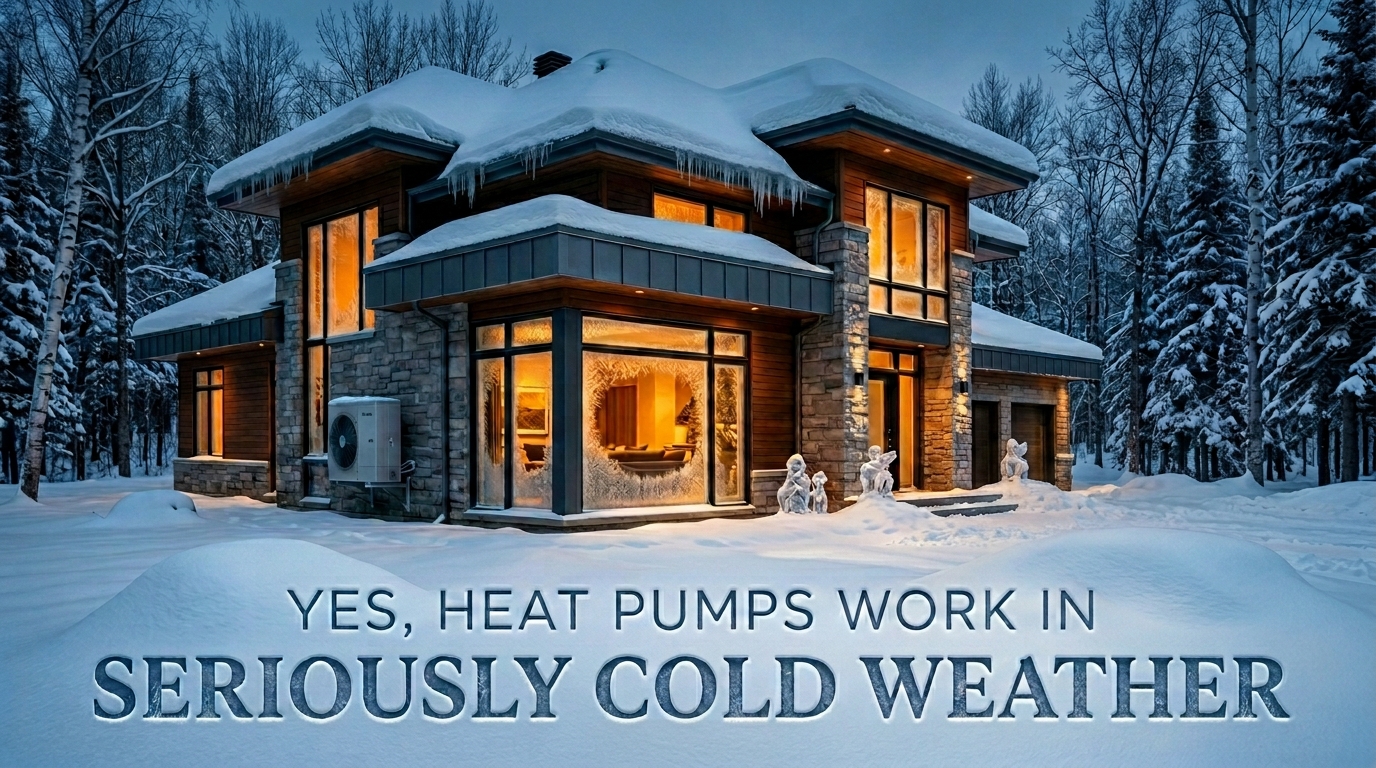
The standout here is the heat pump. Because it moves existing heat instead of generating it by burning fuel or running resistance coils, it gets more heating output per dollar of electricity than any other electric heating method. In moderate climates, a heat pump can deliver 2 to 4 times more heat energy than the electricity it consumes. Even in colder climates, modern cold-climate heat pumps maintain a COP above 1.5 down to around -13°F, which still beats electric resistance heat by 50%.
If you're not familiar with how heat pumps work, the savings numbers might sound too good to be true. Here's the short version.
A gas furnace burns fuel to create heat. An electric furnace or baseboard heater converts electricity directly into heat. Both approaches have a hard ceiling on efficiency: you can never get more heat energy out than the fuel or electricity you put in. A 95% efficient gas furnace turns 95 cents of every dollar of gas into heat. An electric resistance heater converts electricity to heat at exactly a 1:1 ratio, permanently.
A heat pump works differently. It doesn't generate heat. It uses a small amount of electricity to run a compressor and a refrigerant cycle that grabs heat from the outdoor air and concentrates it inside your home. Because it's moving heat rather than creating it, the output can be 2 to 4 times greater than the electrical input. That's not a marketing trick. That's thermodynamics. The U.S. Department of Energy confirms that modern heat pumps can deliver two to four times the energy they consume.
And here's the bonus: a heat pump heats in winter and cools in summer. It's one system doing both jobs. If your current setup is a furnace plus a separate air conditioner, a heat pump replaces both.
Let's be honest about the upfront numbers. New HVAC equipment isn't cheap. But the picture looks very different once you factor in federal incentives and long-term savings.
| System Type | Installed Cost Range | Federal Tax Credit Available |
|---|---|---|
| High-Efficiency Gas Furnace (95%+ AFUE) | $4,000 - $8,000 | Up to $600 (Section 25C) |
| Heat Pump System (installed) | $5,000 - $12,000 | Up to $2,000 (Section 25C) |
| High-Efficiency AC (16+ SEER) | $3,000 - $7,000 | Up to $600 (Section 25C) |
AC Direct sells equipment at wholesale prices, which typically reduces the equipment portion of the cost significantly. Installation is handled by your local contractor. For current rebate details, visit the AC Direct rebate page.
A heat pump that costs $7,000 installed, minus a $2,000 federal tax credit, puts your net cost at $5,000. If you save $700 per year on heating and cooling combined, that system pays for itself in about 7 years and then saves you money for the remaining 8-13 years of its lifespan. Buying the equipment at wholesale through AC Direct instead of paying full contractor markup can shorten that payback period even further.
There's a reason we're publishing this now and not in November. Late winter and spring are the ideal window to research, plan, and install a new system. Here's why:
- Contractor availability. HVAC contractors are slammed during the first heat wave and the first cold snap. Right now, many have open schedules. That means faster installation and more time for them to do the job right.
- No emergency pressure. When your furnace dies in January, you're making a panicked decision. When you're shopping in April, you have time to compare options, get multiple quotes, and make a smart choice.
- Better pricing. Demand-driven pricing is real. Equipment and labor are often more competitive during the shoulder season.
- Ready for summer and winter. Install a heat pump now and you get air conditioning this summer plus efficient heating next winter. Two problems solved with one project.
Whether you've already decided to upgrade or you're just starting to research, here are the errors that cost homeowners the most money and frustration:
- Choosing based on price alone. The cheapest system upfront is often the most expensive over 15 years. Operating cost matters more than sticker price.
- Skipping the load calculation. A reputable contractor will perform a Manual J calculation to determine exactly how much heating and cooling your specific home needs. If a contractor sizes your system based on square footage alone, or by just matching what was there before, that's a red flag.
- Ignoring ductwork. Installing a high-efficiency system on leaky ductwork is like putting premium fuel in a car with a hole in the gas tank. Fix the ducts first, or at the same time.
- Not getting multiple quotes. The Air Conditioning Contractors of America (ACCA) recommends getting at least three quotes from licensed, insured contractors. Compare not just price, but what's included in the installation scope.
- Overlooking variable-speed technology. Older systems are single-speed: full blast or off. Variable-speed (inverter) systems adjust their output to match your home's actual needs, running at lower speeds most of the time. The result is more consistent temperatures, quieter operation, and significantly better efficiency.
If you're comparing systems and feeling overwhelmed by acronyms, here's the cheat sheet:
A high heating bill isn't something you just have to accept. It's a signal. Maybe your system is aging out. Maybe your ducts are leaking. Maybe you're paying a premium for an inefficient fuel source. Whatever the cause, the solutions exist, and they range from a $5 air filter to a full system upgrade that can cut your heating costs in half.
The worst move is doing nothing and opening another surprise bill next January. The best move is using the spring shoulder season to research your options, lock in incentives while they're available, and get ahead of next winter.
AC Direct carries a full range of high-efficiency heat pumps, furnaces, and complete split systems at wholesale prices. No contractor markup on equipment. Browse systems, compare specs, and figure out what fits your home and your budget.
AC Direct offers wholesale pricing on high-efficiency heat pumps, inverter systems, and cold-climate units. Browse by size, efficiency, or brand. Ships nationwide.